Inverted & Conventional Roofs
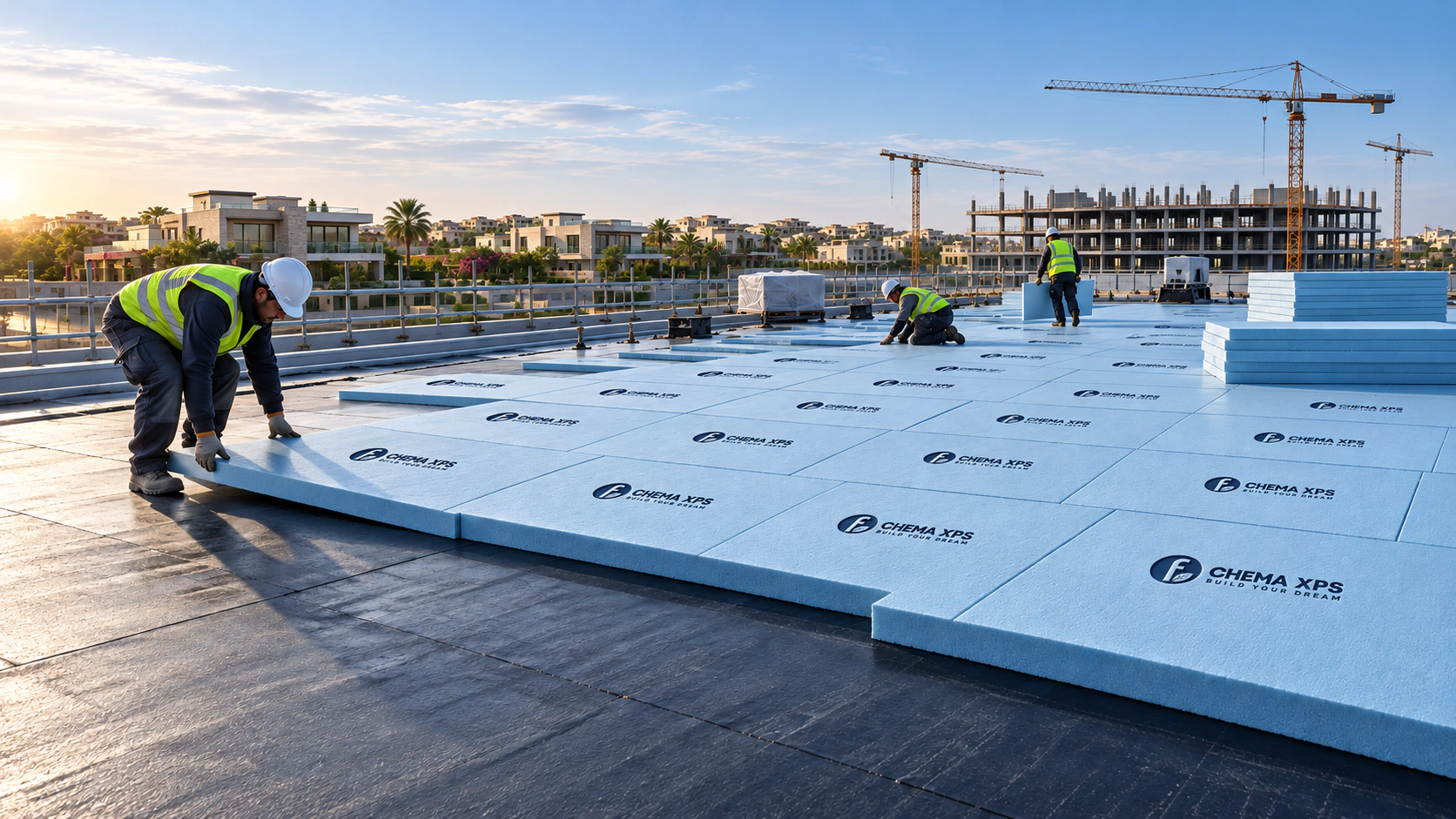
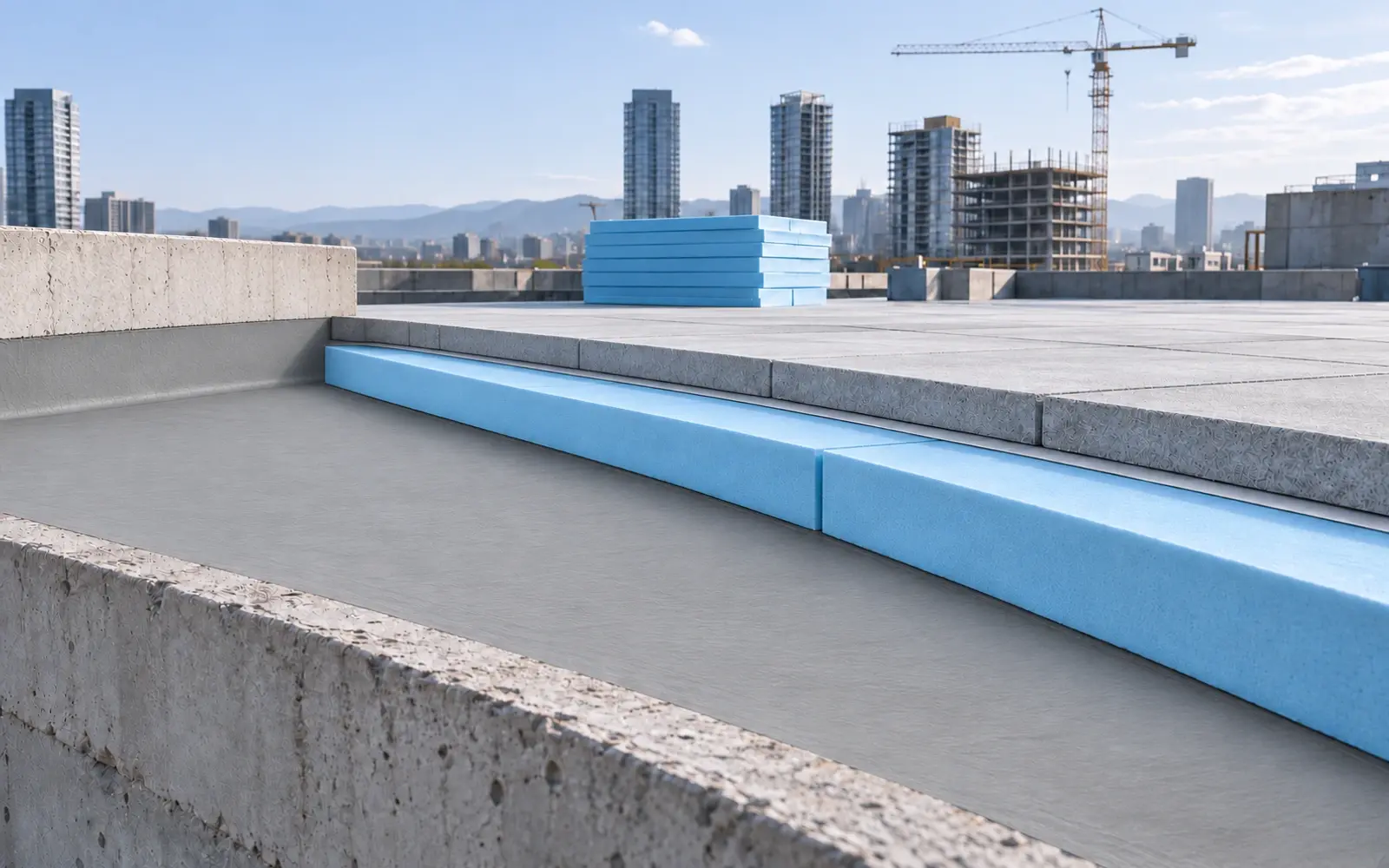
Insulate roofs using a build-up suited to exposure and maintenance loads. Position the membrane and insulation correctly, with continuous parapet and drain details.

BUILDING ENVELOPE & THERMAL CONTROL
A continuous insulation envelope slows conductive heat flow and keeps interior surface temperatures more stable. Closed-cell Chema XPS combines low water uptake with grade-specific compressive strength of 200–450 kPa and thermal conductivity of 0.030–0.033 W/(m·K). Chema EPS serves protected roof and wall zones, while Chema Ultra Light reduces solar absorption at the exposed roof finish.
System & approach
Heat bypasses otherwise adequate insulation through slab edges, parapets and discontinuities around services. In inverted roofs, absorbed water can erode thermal performance; in cold-store slabs, vapor migration can produce condensation or ice at an incorrectly positioned barrier. Concentrated floor loads also compress an unsuitable board, changing levels and transferring stress into screeds and waterproofing interfaces.
Trace continuous insulation across roof, wall and slab junctions, then calculate thickness from thermal resistance and the selected grade’s conductivity. Lay close-fitting staggered boards, protect drainage paths and connect the vapor-control layer at penetrations. XPS water absorption of 0.20–0.30% supports moisture-exposed use; load-spreading slabs and long-term creep checks determine the appropriate floor grade.

SYSTEM COMPONENTS
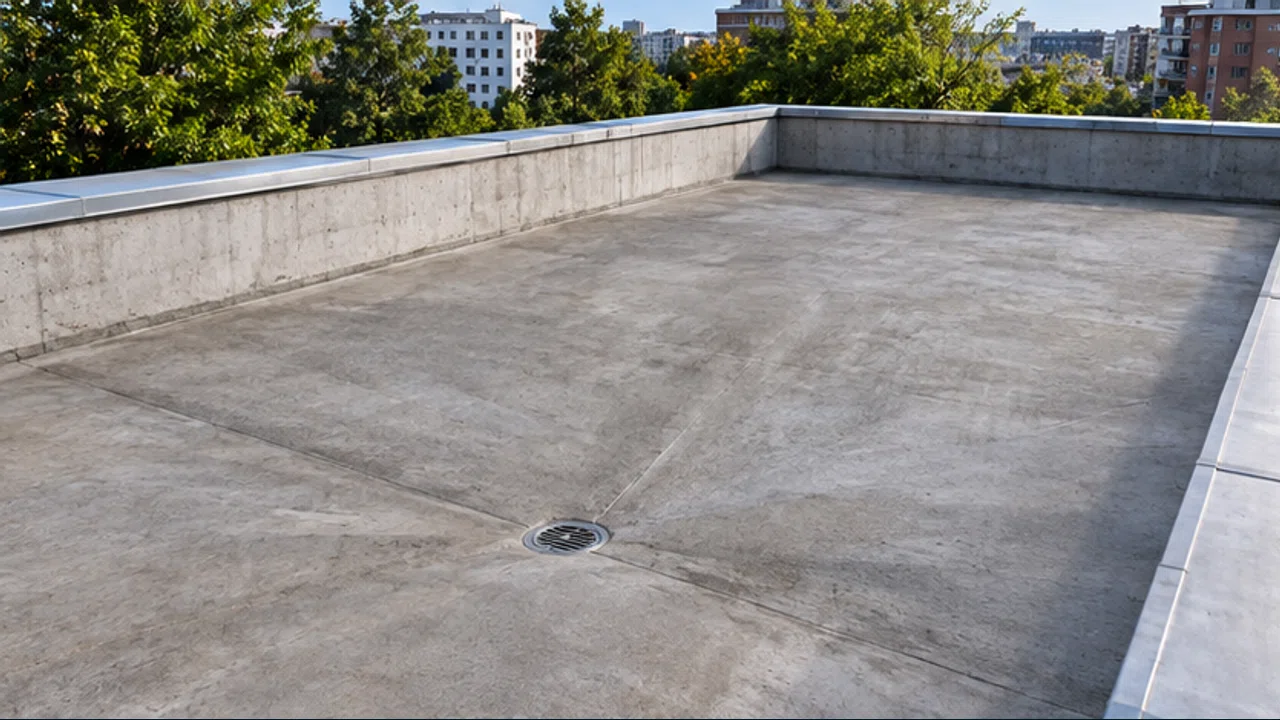
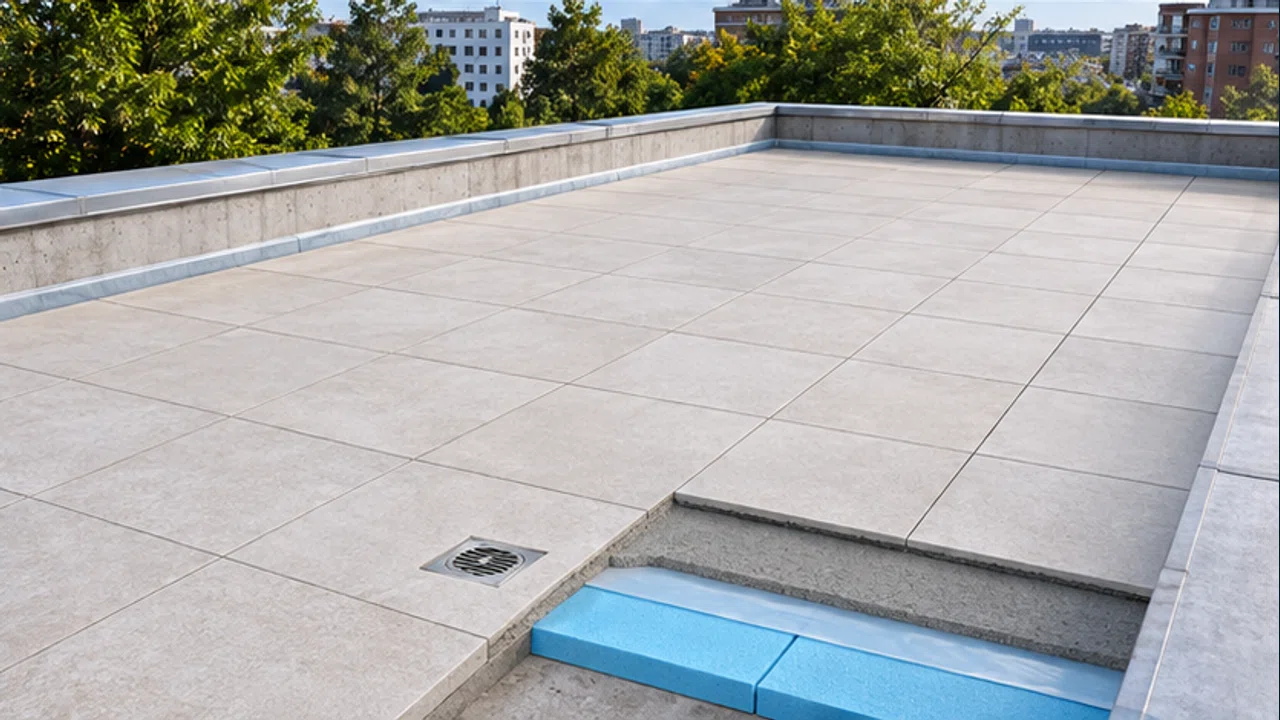
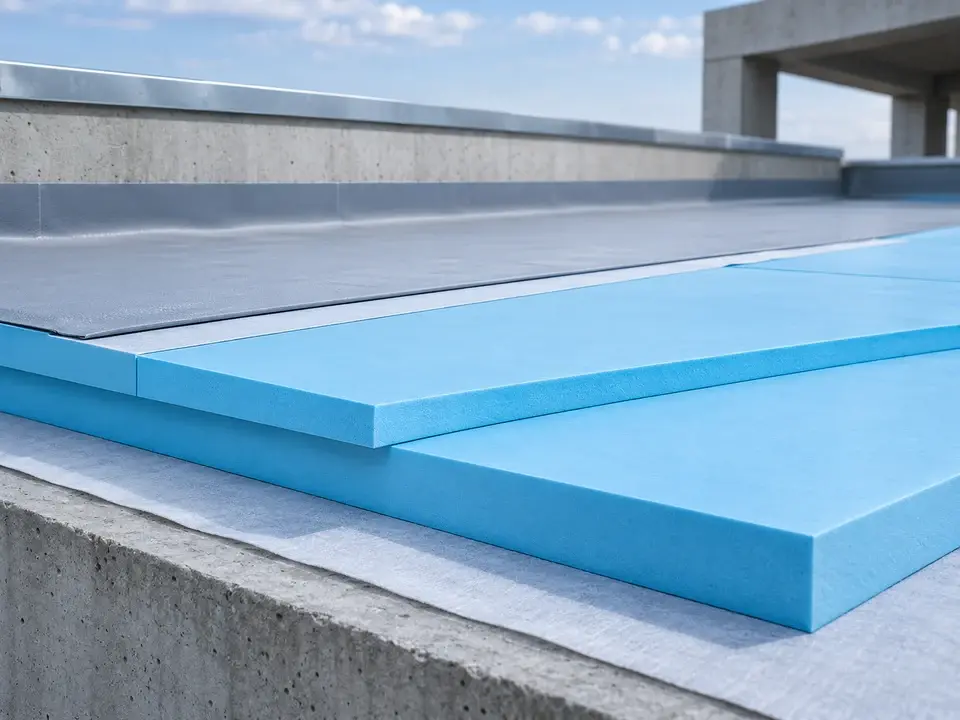
Follow the roof build-up from grey cementitious waterproofing to EPS / XPS boards, the HDPE protective sheet and the upper finishes.

Select a numbered component to review its role, specification and related products.
01 · CHEMA PROOF
Cementitious waterproofing forms the continuous grey layer beneath the thermal insulation.
Insulate roofs using a build-up suited to exposure and maintenance loads. Position the membrane and insulation correctly, with continuous parapet and drain details.
Maintain insulation continuity at wall cavities and concrete junctions. Coordinate fixings, moisture management and the specified fire-safe facade assembly.
Select the XPS grade for distributed and concentrated floor loads. Design the load-spreading slab, vapor control and long-term creep allowance before placing insulation.
Coordinate insulation with the temperature gradient and condensation risk. Seal vapor-control joints and specify a protective facing appropriate to hygiene, fire and service requirements.
Closed-cell · Basic / Standard / Pro / Advanced
Extruded polystyrene insulation in Basic, Standard, Pro and Advanced grades.
For moisture-exposed roofs and floors requiring a grade selected by thermal and long-term load calculations.
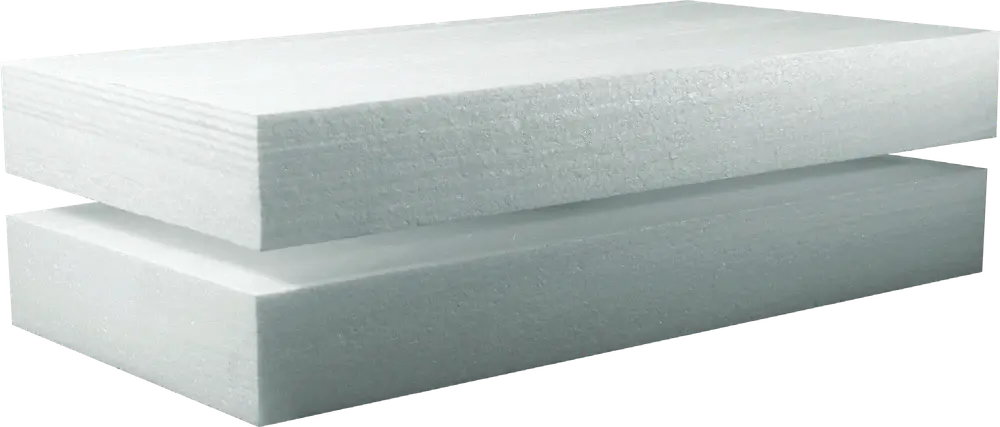
Expanded polystyrene · specified density
Expanded polystyrene (EPS) thermal insulation foam in seven densities for insulation, joint filling, packaging and lightweight fill.
For protected wall, cavity and lightweight insulation zones with project-specific density and fire detailing. Material: Expanded polystyrene (EPS) Listed densities: 10 / 12 / 15 / 20 / 25 / 30 / 35 kg/m³
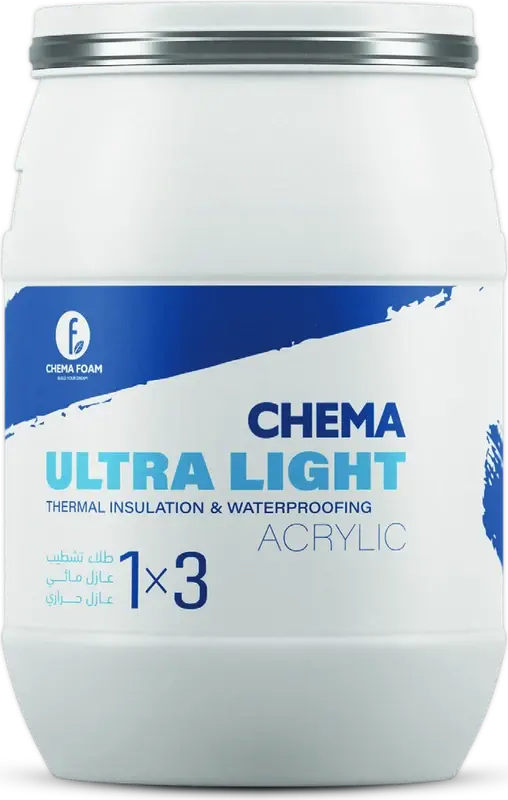
Reflective acrylic roof coating
Ready-to-use, single-component flexible acrylic coating for thermal insulation and waterproofing.
For a reflective exposed-roof finish; calculate insulation thickness independently of the coating. Packaging: 30 kg plastic drum Consumption rate: 4 ± 0.5 kg/m²
Map thermal bridges and set the target resistance. Check condensation, temperature and loading conditions for each zone.
Confirm the board grade and thickness against calculations. Complete leveling, waterproofing tests and compatible vapor-control details.
Fit boards tightly with staggered joints and clean cuts. Keep drains open and coordinate penetrations without avoidable gaps.
Install separation and the specified protective finish promptly. Inspect continuity and avoid leaving foam exposed to UV, heat or incompatible solvents.
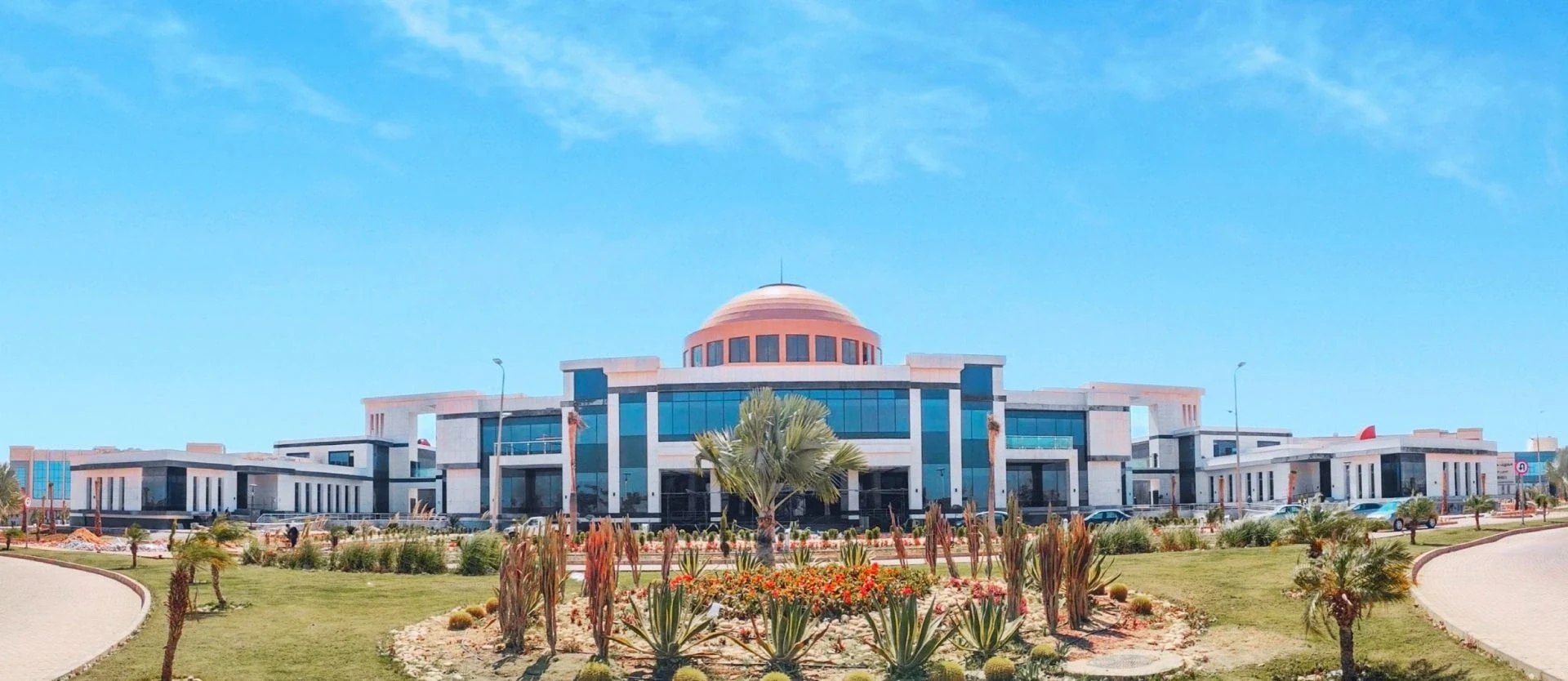
6th of October City, Giza, Egypt6th of October City, Giza, Egypt
Research laboratories and teaching buildings require continuity between controlled interiors, exposed roofs and shaded campus circulation.
View the case studyBUILDING TOGETHER
Share your application, quantities and project location to discuss the next step.
Calculate thermal resistance from thickness and the conductivity of the selected grade. Then check the complete envelope, including junctions and moisture conditions, against the project target.
No: published short-term compressive strengths differ between grades. Floor design must also check long-term creep, load duration and the distribution slab rather than treating the test value as an allowable load.
A reflective coating addresses solar exposure and waterproofing according to its specification. Insulation boards provide calculated thermal resistance, so their thickness is determined separately.
Its position depends on the temperature and humidity on both sides of the assembly. Cold-store floors, walls and roof systems require a project-specific condensation assessment and sealed continuity at joints.
A continuous insulation envelope slows conductive heat flow and keeps interior surface temperatures more stable. Closed-cell Chema XPS combines low water uptake with grade-specific compressive strength of 200–450 kPa and thermal conductivity of 0.030–0.033 W/(m·K). Chema EPS serves protected roof and wall zones, while Chema Ultra Light reduces solar absorption at the exposed roof finish.