

INSULATION & MATERIAL SELECTION ANSWERS
Your Questions, Answered.
Find information about products, applications, material planning and working with our team.
Frequently Asked Questions
564 questions
How do I choose a material for my project?
Start with your application, substrate and project conditions. Review the product page and current technical sheet, then discuss the requirements with our team.
Where can I find technical documents?
Visit Technical resources or the Downloads section on any product page. Documents are grouped by material and available language.
What should I share with technical support?
Include your application, surface condition, exposure, dimensions and any relevant drawings. These help the team understand the intended system.
Can one product be used for every application?
Product selection depends on the substrate and application. Confirm suitability in the technical sheet and with the technical team.
Are Chemasure quantities final?
The calculator estimates quantities using area, coverage and waste allowance. Confirm material coverage and quantities with the technical team before ordering.
How do I request a quotation?
Use Request a quote to prepare an email with your project and material requirements. You review and send it from your own email application.
Who are the courses for?
The course list includes engineers, technicians and applicators. Each course page shows its intended audience and topics.
How can I join the distribution network?
Open Distributors, then Become a distributor. Prepare your company profile, city and preferred product groups using the enquiry form.
Can I enquire about international supply?
Use the export enquiry form and include the destination country, requested products, approximate quantities and required documents.
What solutions does Chema Foam offer?
Waterproofing, Thermal insulation, Facades & finishes, Marine walkways, Geotechnical solutions, Advanced construction solutions.
How do I choose a product for my project?
Start with the application, substrate and project conditions. Share these details with our team to discuss the appropriate material and request the current technical information.
What should I include in a quote request?
Include your company name, project location, application, approximate dimensions or quantities, and any available drawings or specifications. Use the quote form to prepare an email for the team.
Where can I check how the site handles personal information?
See the privacy notice for information on data collected through the site and how to raise a question.
What should I check before using technical content from the site?
Read the site terms and verify the associated project documents and current technical sheets.
Where can I read about cookies on this site?
See the cookie notice for information about the kinds of cookies used here.
How do I select a system for my project?
Start with the intended application and exposure, then verify the selected build-up against the specification.
How can I find a project similar to mine?
Use the project categories and compare the scope and application in the case studies.
Which service should I contact first?
Choose design for system development, execution for site work, or technical support and consulting for a focused review.
Which document should I use for specification?
Start with the current data sheet for the exact product and grade. Use application guides for system details.
What does Chema Foam offer?
Explore the catalogue and solutions for insulation, waterproofing and specialist construction applications.
Can I ask for help before choosing a product?
Describe the intended use, exposure and substrate in the contact or technical support form.
Can you review an existing specification? — Design
Yes. Share the specification, drawings and proposed products. The review identifies missing performance criteria, incompatible interfaces and details requiring the consultant’s decision.
Can an existing leaking roof be repaired? — Projects & execution
First identify whether the cause is a joint, drain, penetration, substrate defect or membrane failure. A compatible local repair or a replacement system is then considered after assessment.
Can I choose insulation by density alone? — Ask Chema
No. Check declared conductivity, compressive performance, water absorption, dimensional stability and intended use. Compare tested properties for the specific grade rather than assuming all boards perform alike.
Are the example values product specifications? — Engineers' questions
No. They are explicitly stated assumptions for learning. Use the selected product’s current TDS and test reports for conductivity, compressive strength and water absorption.
What is the difference between a catalogue and a data sheet?
A catalogue introduces product ranges. A data sheet describes the uses, properties and conditions for a particular product.
How should I use an application guide?
Review the system layers and installation sequence, then check the project details and product sheets.
What should I include in a distributor application?
Provide your company profile, city, coverage area and preferred product groups.
How do I register for a course?
Use the registration link from the course page and provide your contact details and chosen course.
What does the “XPS insulation: from specification to site” course cover?
Understanding insulation applications · Reading product specifications · Roof and facade details · Practical planning workshop
What does the “Waterproofing systems workshop” course cover?
Surface assessment · System and product selection · Joints and service penetrations · Application and inspection planning
What does the “Construction materials: selection essentials” course cover?
Define the application · Compare material families · Read technical documents · Build a material schedule
What does the “Tile adhesives & site practice” course cover?
Tile and substrate assessment · Choosing adhesive and grout · Planning application · Practical workshop
Where can I read about the company’s development?
The History page presents its development and published milestones.
Where can I review quality and certification information?
Visit Quality and Certifications and check the product’s technical documents for relevant evidence.
How do I discuss a commercial partnership?
Use Contact and describe the type of partnership, the market and products you are interested in.
What challenge did the Zewail City of Science and Technology project address?
Research laboratories and teaching buildings require continuity between controlled interiors, exposed roofs and shaded campus circulation. For Zewail City of Science and Technology, the main constraints are different indoor requirements / dense service penetrations / maintainable campus details. Each condition affects how an insulation layer meets adjacent construction, especially at changes of level, penetrations and exposed edges. The team working with Zewail City of Science and Technology · ACE · EAOTAF needs coordinated construction details before follow-on work conceals those interfaces. Moisture control, load transfer and safe access therefore belong in the detail review, with application-specific limits checked against drawings rather than inferred from the material name alone.
What challenge did the Engineering Authority of the Armed Forces project address?
An institutional material dossier establishes a consistent technical vocabulary across engineering reviews and subsequent project submissions. For Engineering Authority of the Armed Forces, the main constraints are document revision control / limits of institutional review / traceable responsibility allocation. Each condition affects how an insulation layer meets adjacent construction, especially at changes of level, penetrations and exposed edges. The team working with EAOTAF · Engineering Authority of the Armed Forces needs coordinated construction details before follow-on work conceals those interfaces. Moisture control, load transfer and safe access therefore belong in the detail review, with application-specific limits checked against drawings rather than inferred from the material name alone.
What challenge did the R05 Residential District project address?
Repeated residential blocks in R05 require a clear distinction between EPS packages and XPS packages at roof and slab interfaces. For R05 Residential District, the main constraints are repeated block phasing / summer solar exposure / protection before follow-on trades. Each condition affects how an insulation layer meets adjacent construction, especially at changes of level, penetrations and exposed edges. The team working with urban communities authority · ECG · ALMarrasm needs coordinated construction details before follow-on work conceals those interfaces. Moisture control, load transfer and safe access therefore belong in the detail review, with application-specific limits checked against drawings rather than inferred from the material name alone.
What challenge did the Palm Hills New Cairo project address?
Low-rise homes and shared landscape edges call for lightweight EPS details that follow changing roof profiles without interrupting insulation continuity. For Palm Hills New Cairo, the main constraints are repeated block phasing / summer solar exposure / protection before follow-on trades. Each condition affects how an insulation layer meets adjacent construction, especially at changes of level, penetrations and exposed edges. The team working with Palm Hills New Cairo · SHAKER · Solid needs coordinated construction details before follow-on work conceals those interfaces. Moisture control, load transfer and safe access therefore belong in the detail review, with application-specific limits checked against drawings rather than inferred from the material name alone.
What challenge did the Military Security Approval project address?
Military security coordination supports the controlled movement of materials and specialist teams within construction environments. For Military Security Approval, the main constraints are document revision control / limits of institutional review / traceable responsibility allocation. Each condition affects how an insulation layer meets adjacent construction, especially at changes of level, penetrations and exposed edges. The team working with military ministry needs coordinated construction details before follow-on work conceals those interfaces. Moisture control, load transfer and safe access therefore belong in the detail review, with application-specific limits checked against drawings rather than inferred from the material name alone.
What challenge did the Mivida project address?
Villa roofs, terraces and transitions to landscaped spaces introduce moisture-sensitive junctions within a carefully composed residential environment. For Mivida, the main constraints are repeated block phasing / summer solar exposure / protection before follow-on trades. Each condition affects how an insulation layer meets adjacent construction, especially at changes of level, penetrations and exposed edges. The team working with EMAAR · AMG Al Amar Consulting Group · CRC needs coordinated construction details before follow-on work conceals those interfaces. Moisture control, load transfer and safe access therefore belong in the detail review, with application-specific limits checked against drawings rather than inferred from the material name alone.
What challenge did the Green River project address?
A continuous metropolitan landscape crosses structures and service zones, making protection layers and drainage coordination central to the material strategy. For Green River, the main constraints are irrigation moisture / landscape surcharge coordination / accessible drainage routes. Each condition affects how an insulation layer meets adjacent construction, especially at changes of level, penetrations and exposed edges. The team working with urban communities authority · DAR · HA&Orascom needs coordinated construction details before follow-on work conceals those interfaces. Moisture control, load transfer and safe access therefore belong in the detail review, with application-specific limits checked against drawings rather than inferred from the material name alone.
What challenge did the Mountain View iCity project address?
Elevated pedestrian landscapes and residential clusters create demanding transitions between occupied space, podium construction and outdoor terraces. For Mountain View iCity, the main constraints are repeated block phasing / summer solar exposure / protection before follow-on trades. Each condition affects how an insulation layer meets adjacent construction, especially at changes of level, penetrations and exposed edges. The team working with MountainView · DMA-ACE · Redcon Con. needs coordinated construction details before follow-on work conceals those interfaces. Moisture control, load transfer and safe access therefore belong in the detail review, with application-specific limits checked against drawings rather than inferred from the material name alone.
What challenge did the MSA University Extension project address?
An expanding university must connect new academic accommodation to existing campus circulation while keeping roof and service details maintainable. For MSA University Extension, the main constraints are different indoor requirements / dense service penetrations / maintainable campus details. Each condition affects how an insulation layer meets adjacent construction, especially at changes of level, penetrations and exposed edges. The team working with MSA University · Aloubor needs coordinated construction details before follow-on work conceals those interfaces. Moisture control, load transfer and safe access therefore belong in the detail review, with application-specific limits checked against drawings rather than inferred from the material name alone.
What challenge did the R03 Residential District project address?
The R03 district brings together multiple contracting packages, so grade identification and consistent details matter across separate R03 work fronts. For R03 Residential District, the main constraints are repeated block phasing / summer solar exposure / protection before follow-on trades. Each condition affects how an insulation layer meets adjacent construction, especially at changes of level, penetrations and exposed edges. The team working with urban communities authority · 5+ UDC · Concrete Plus · ministry of youth & sports · UDC · Concord · administrative capital urban authority needs coordinated construction details before follow-on work conceals those interfaces.
What challenge did the Gas Cool project address?
District-cooling support buildings combine equipment access, service penetrations and roof loading, requiring EPS and XPS packages to remain distinguishable. For Gas Cool, the main constraints are equipment maintenance access / concentrated construction loads / safe separation from hot equipment. Each condition affects how an insulation layer meets adjacent construction, especially at changes of level, penetrations and exposed edges. The team working with administrative capital urban authority · ALLied Consultant · Redcon Con. needs coordinated construction details before follow-on work conceals those interfaces. Moisture control, load transfer and safe access therefore belong in the detail review, with application-specific limits checked against drawings rather than inferred from the material name alone.
What challenge did the Madinaty Extension project address?
A phased urban extension needs repeatable roof insulation details that can move between residential packages without losing junction quality. For Madinaty Extension, the main constraints are repeated block phasing / summer solar exposure / protection before follow-on trades. Each condition affects how an insulation layer meets adjacent construction, especially at changes of level, penetrations and exposed edges. The team working with Talaat mostafa · EHAf Dar · Talaat Mostafa Group needs coordinated construction details before follow-on work conceals those interfaces. Moisture control, load transfer and safe access therefore belong in the detail review, with application-specific limits checked against drawings rather than inferred from the material name alone.
What challenge did the Wadi Al Natroun Animal Production and Dairy Complex project address?
Dairy production brings washdown humidity, refrigerated support spaces and hygiene-sensitive floor junctions into the same industrial envelope. For Wadi Al Natroun Animal Production and Dairy Complex, the main constraints are hygienic finish continuity / condensation risk at transitions / moisture and service loading. Each condition affects how an insulation layer meets adjacent construction, especially at changes of level, penetrations and exposed edges. The team working with NSPO · AMAR MISR · National Company for General Contracting and Supplies needs coordinated construction details before follow-on work conceals those interfaces. Moisture control, load transfer and safe access therefore belong in the detail review, with application-specific limits checked against drawings rather than inferred from the material name alone.
What challenge did the NEWGIZA project address?
EPS supports a development where stepped building levels complicate repetitive envelope details. For NEWGIZA, the main constraints are repeated block phasing / summer solar exposure / protection before follow-on trades. Each condition affects how an insulation layer meets adjacent construction, especially at changes of level, penetrations and exposed edges. The team working with NewGiza · Degla Project Mangment · Alhazek · DEGLA - ECG · Alshams · Redcon Con. needs coordinated construction details before follow-on work conceals those interfaces. Moisture control, load transfer and safe access therefore belong in the detail review, with application-specific limits checked against drawings rather than inferred from the material name alone.
What challenge did the Jewel of the Capital project address?
A prominent destination combines public arrival spaces and roof services, demanding an envelope strategy that supports comfort without disrupting architectural expression. For Jewel of the Capital, the main constraints are public arrival requirements / mixed service zones / architectural edge continuity. Each condition affects how an insulation layer meets adjacent construction, especially at changes of level, penetrations and exposed edges. The team working with EAOTAF · 5+ UDC · Gama needs coordinated construction details before follow-on work conceals those interfaces. Moisture control, load transfer and safe access therefore belong in the detail review, with application-specific limits checked against drawings rather than inferred from the material name alone.
What challenge did the R06 Residential District project address?
Large residential plots require coordinated roof protection and repeatable parapet junctions across successive blocks within the R06 district. For R06 Residential District, the main constraints are repeated block phasing / summer solar exposure / protection before follow-on trades. Each condition affects how an insulation layer meets adjacent construction, especially at changes of level, penetrations and exposed edges. The team working with EAOTAF · Engineering Authority of the Armed Forces needs coordinated construction details before follow-on work conceals those interfaces. Moisture control, load transfer and safe access therefore belong in the detail review, with application-specific limits checked against drawings rather than inferred from the material name alone.
What challenge did the Cairo University Faculty and Staff Housing project address?
Faculty and staff housing places long-term occupant comfort and serviceable roof details at the centre of an institutional residential programme. For Cairo University Faculty and Staff Housing, the main constraints are repeated block phasing / summer solar exposure / protection before follow-on trades. Each condition affects how an insulation layer meets adjacent construction, especially at changes of level, penetrations and exposed edges. The team working with Cairo university · Proff Tariq Abdul Latif · Wadi-Alnile needs coordinated construction details before follow-on work conceals those interfaces. Moisture control, load transfer and safe access therefore belong in the detail review, with application-specific limits checked against drawings rather than inferred from the material name alone.
What challenge did the Celia project address?
Residential buildings beside the capital’s landscape network require careful transitions between roof terraces, exposed edges and internal living spaces. For Celia, the main constraints are repeated block phasing / summer solar exposure / protection before follow-on trades. Each condition affects how an insulation layer meets adjacent construction, especially at changes of level, penetrations and exposed edges. The team working with Talaat mostafa · ACE · Talaat Mostafa Group needs coordinated construction details before follow-on work conceals those interfaces. Moisture control, load transfer and safe access therefore belong in the detail review, with application-specific limits checked against drawings rather than inferred from the material name alone.
What challenge did the Il Mondo project address?
Compact residential blocks rely on lightweight EPS packages and precise cutting at roof edges to preserve a coherent thermal envelope. For Il Mondo, the main constraints are repeated block phasing / summer solar exposure / protection before follow-on trades. Each condition affects how an insulation layer meets adjacent construction, especially at changes of level, penetrations and exposed edges. The team working with Rafco Developments · Space Consultant · Rafco needs coordinated construction details before follow-on work conceals those interfaces. Moisture control, load transfer and safe access therefore belong in the detail review, with application-specific limits checked against drawings rather than inferred from the material name alone.
What challenge did the Badr Egypt Housing Basic Education School project address?
Classrooms and shared circulation in a basic-education school need roof details that moderate solar exposure and remain straightforward to maintain. For Badr Egypt Housing Basic Education School, the main constraints are different indoor requirements / dense service penetrations / maintainable campus details. Each condition affects how an insulation layer meets adjacent construction, especially at changes of level, penetrations and exposed edges. The team working with Cairo university · Cairo- UNI · Alhendawia needs coordinated construction details before follow-on work conceals those interfaces. Moisture control, load transfer and safe access therefore belong in the detail review, with application-specific limits checked against drawings rather than inferred from the material name alone.
What challenge did the Egypt Post Headquarters project address?
A national postal headquarters brings offices, public service and technical support together, with different roof zones needing coordinated material documentation. For Egypt Post Headquarters, the main constraints are multi-package coordination / high occupancy continuity / service and waterproofing interfaces. Each condition affects how an insulation layer meets adjacent construction, especially at changes of level, penetrations and exposed edges. The team working with Egypt Post · ECG · Wadi-Alnile needs coordinated construction details before follow-on work conceals those interfaces. Moisture control, load transfer and safe access therefore belong in the detail review, with application-specific limits checked against drawings rather than inferred from the material name alone.
What challenge did the Assiut Steam Power Station project address?
The steam-power complex includes turbine and boiler infrastructure, but polystyrene beads belong only in suitably protected, temperature-compatible construction layers. For Assiut Steam Power Station, the main constraints are separation from turbine heat / trial-mix consistency / sequencing around heavy trades. Each condition affects how an insulation layer meets adjacent construction, especially at changes of level, penetrations and exposed edges. The team working with administrative capital urban authority · Pgesco · Orascom needs coordinated construction details before follow-on work conceals those interfaces. Moisture control, load transfer and safe access therefore belong in the detail review, with application-specific limits checked against drawings rather than inferred from the material name alone.
What challenge did the Network Node 1 project address?
A network-support node requires careful detailing around service entries and maintainable roof zones protecting technical accommodation. For Network Node 1, the main constraints are equipment maintenance access / concentrated construction loads / safe separation from hot equipment. Each condition affects how an insulation layer meets adjacent construction, especially at changes of level, penetrations and exposed edges. The team working with administrative capital urban authority · EHAF · Orascom needs coordinated construction details before follow-on work conceals those interfaces. Moisture control, load transfer and safe access therefore belong in the detail review, with application-specific limits checked against drawings rather than inferred from the material name alone.
What challenge did the Minya Faculty of Oral and Dental Medicine Extension project address?
Clinical teaching, dental laboratories and patient circulation demand reliable separation between a harsh external climate and controlled teaching accommodation. For Minya Faculty of Oral and Dental Medicine Extension, the main constraints are different indoor requirements / dense service penetrations / maintainable campus details. Each condition affects how an insulation layer meets adjacent construction, especially at changes of level, penetrations and exposed edges. The team working with New-Minia · Conserv needs coordinated construction details before follow-on work conceals those interfaces. Moisture control, load transfer and safe access therefore belong in the detail review, with application-specific limits checked against drawings rather than inferred from the material name alone.
What challenge did the Ministerial District project address?
A dense civic district combines multiple government buildings where consistent XPS roof details help coordinate separate government-building packages. For Ministerial District, the main constraints are multi-package coordination / high occupancy continuity / service and waterproofing interfaces. Each condition affects how an insulation layer meets adjacent construction, especially at changes of level, penetrations and exposed edges. The team working with administrative capital urban authority · DAR · Red-sea · GIECO needs coordinated construction details before follow-on work conceals those interfaces. Moisture control, load transfer and safe access therefore belong in the detail review, with application-specific limits checked against drawings rather than inferred from the material name alone.
What challenge did the Military Works Department project address?
Departmental technical review connects material identification, consultant documentation and contracting responsibilities before any project-specific installation can be accepted. For Military Works Department, the main constraints are document revision control / limits of institutional review / traceable responsibility allocation. Each condition affects how an insulation layer meets adjacent construction, especially at changes of level, penetrations and exposed edges. The team working with military ministry · IDENS · Red-sea needs coordinated construction details before follow-on work conceals those interfaces. Moisture control, load transfer and safe access therefore belong in the detail review, with application-specific limits checked against drawings rather than inferred from the material name alone.
What challenge did the Mostakbal–Shorouk Tunnel project address?
A road tunnel between growing eastern communities requires lightweight-fill decisions to account for surcharge, water pathways and construction-stage stability. For Mostakbal–Shorouk Tunnel, the main constraints are groundwater and uplift assessment / traffic surcharge / temporary restraint and stability. Each condition affects how an insulation layer meets adjacent construction, especially at changes of level, penetrations and exposed edges. The team working with ministry of transportation · ICE · Concrete needs coordinated construction details before follow-on work conceals those interfaces. Moisture control, load transfer and safe access therefore belong in the detail review, with application-specific limits checked against drawings rather than inferred from the material name alone.
What challenge did the Al-Mansoura 3 — New Capital project address?
Al-Mansoura 3 features foam-block construction interfaces, making dimensional coordination with concrete geometry the starting point for the engineering narrative. For Al-Mansoura 3 — New Capital, the main constraints are dimensional tolerances / movement during placement / protected storage and handling. Each condition affects how an insulation layer meets adjacent construction, especially at changes of level, penetrations and exposed edges. The team working with administrative capital urban authority · 5+ UDC · Concord needs coordinated construction details before follow-on work conceals those interfaces. Moisture control, load transfer and safe access therefore belong in the detail review, with application-specific limits checked against drawings rather than inferred from the material name alone.
What challenge did the Ministry of Justice project address?
Justice-sector offices combine formal civic architecture and intensive occupation, requiring roof insulation details that remain coherent around plant and circulation cores. For Ministry of Justice, the main constraints are multi-package coordination / high occupancy continuity / service and waterproofing interfaces. Each condition affects how an insulation layer meets adjacent construction, especially at changes of level, penetrations and exposed edges. The team working with ministry of justice · DAR · Alnaser needs coordinated construction details before follow-on work conceals those interfaces. Moisture control, load transfer and safe access therefore belong in the detail review, with application-specific limits checked against drawings rather than inferred from the material name alone.
What challenge did the Kozzika Light Repair Workshop and Storing Yard project address?
A light-repair workshop and storage yard combine maintenance access and transport operations, so roof protection must accommodate service traffic and repairability. For Kozzika Light Repair Workshop and Storing Yard, the main constraints are multiple work fronts / water-management interfaces / operational access requirements. Each condition affects how an insulation layer meets adjacent construction, especially at changes of level, penetrations and exposed edges. The team working with National Tunnel Authority · Molinari - BECT · Petrojet needs coordinated construction details before follow-on work conceals those interfaces. Moisture control, load transfer and safe access therefore belong in the detail review, with application-specific limits checked against drawings rather than inferred from the material name alone.
What challenge did the Parliament Building project address?
A major parliamentary edifice introduces complex concrete forms, where foam-block dimensions and restraint must be coordinated before enclosing permanent construction layers. For Parliament Building, the main constraints are dimensional tolerances / movement during placement / protected storage and handling. Each condition affects how an insulation layer meets adjacent construction, especially at changes of level, penetrations and exposed edges. The team working with administrative capital urban authority · DAR · Arab Contractor needs coordinated construction details before follow-on work conceals those interfaces. Moisture control, load transfer and safe access therefore belong in the detail review, with application-specific limits checked against drawings rather than inferred from the material name alone.
What challenge did the R02 Residential District project address?
Repeated housing typologies in R02 make edge details, drainage falls and clear identification of XPS deliveries decisive for consistent workmanship. For R02 Residential District, the main constraints are repeated block phasing / summer solar exposure / protection before follow-on trades. Each condition affects how an insulation layer meets adjacent construction, especially at changes of level, penetrations and exposed edges. The team working with EAOTAF · Engineering Authority of the Armed Forces needs coordinated construction details before follow-on work conceals those interfaces. Moisture control, load transfer and safe access therefore belong in the detail review, with application-specific limits checked against drawings rather than inferred from the material name alone.
What challenge did the Ministerial Buildings project address?
Parallel ministerial-building packages need a common technical language for roof insulation while preserving each contractor’s delivery and inspection responsibilities. For Ministerial Buildings, the main constraints are multi-package coordination / high occupancy continuity / service and waterproofing interfaces. Each condition affects how an insulation layer meets adjacent construction, especially at changes of level, penetrations and exposed edges. The team working with administrative capital urban authority · DAR · Talaat Mostafa Group · SIAC needs coordinated construction details before follow-on work conceals those interfaces. Moisture control, load transfer and safe access therefore belong in the detail review, with application-specific limits checked against drawings rather than inferred from the material name alone.
What challenge did the Al-Mansoura 6 — New Capital project address?
Al-Mansoura 6 links a SABBOUR-led review with an Orascom EPS package, calling for careful alignment of material schedules and architectural levels. For Al-Mansoura 6 — New Capital, the main constraints are repeated block phasing / summer solar exposure / protection before follow-on trades. Each condition affects how an insulation layer meets adjacent construction, especially at changes of level, penetrations and exposed edges. The team working with SABBOUR · Orascom needs coordinated construction details before follow-on work conceals those interfaces. Moisture control, load transfer and safe access therefore belong in the detail review, with application-specific limits checked against drawings rather than inferred from the material name alone.
What challenge did the Iconic Tower project address?
A high-rise envelope faces wind exposure, vertical logistics and stringent fire interfaces; its roof and facade interfaces require a coordinated thermal strategy. For Iconic Tower, the main constraints are wind and fire-interface design / vertical delivery logistics / high-rise inspection access. Each condition affects how an insulation layer meets adjacent construction, especially at changes of level, penetrations and exposed edges. The team working with partners to be confirmed from the project dossier needs coordinated construction details before follow-on work conceals those interfaces. Moisture control, load transfer and safe access therefore belong in the detail review, with application-specific limits checked against drawings rather than inferred from the material name alone.
What challenge did the Central Bank of Egypt project address?
A banking headquarters combines secure operational areas and civic presence, requiring envelope decisions to be coordinated with services and access controls. For Central Bank of Egypt, the main constraints are multi-package coordination / high occupancy continuity / service and waterproofing interfaces. Each condition affects how an insulation layer meets adjacent construction, especially at changes of level, penetrations and exposed edges. The team working with partners to be confirmed from the project dossier needs coordinated construction details before follow-on work conceals those interfaces. Moisture control, load transfer and safe access therefore belong in the detail review, with application-specific limits checked against drawings rather than inferred from the material name alone.
What challenge did the LRT — Light Rail Transit project address?
The east-Cairo rail corridor connects stations and service buildings across a long route, making repeatable insulation details and package traceability especially valuable. For LRT — Light Rail Transit, the main constraints are multiple work fronts / water-management interfaces / operational access requirements. Each condition affects how an insulation layer meets adjacent construction, especially at changes of level, penetrations and exposed edges. The team working with National Tunnel Authority · Gama & RME needs coordinated construction details before follow-on work conceals those interfaces. Moisture control, load transfer and safe access therefore belong in the detail review, with application-specific limits checked against drawings rather than inferred from the material name alone.
What challenge did the Egyptian Museum Metro Station project address?
An underground station context raises moisture, passenger-safety and retained-ground questions; its architectural interfaces must support a durable passenger environment. For Egyptian Museum Metro Station, the main constraints are groundwater and uplift assessment / traffic surcharge / temporary restraint and stability. Each condition affects how an insulation layer meets adjacent construction, especially at changes of level, penetrations and exposed edges. The team working with partners to be confirmed from the project dossier needs coordinated construction details before follow-on work conceals those interfaces. Moisture control, load transfer and safe access therefore belong in the detail review, with application-specific limits checked against drawings rather than inferred from the material name alone.
What challenge did the American University in Cairo (AUC) project address?
Research, teaching and public campus spaces create different thermal conditions around lecture halls, laboratory buildings and circulation courts. For American University in Cairo (AUC), the main constraints are different indoor requirements / dense service penetrations / maintainable campus details. Each condition affects how an insulation layer meets adjacent construction, especially at changes of level, penetrations and exposed edges. The team working with partners to be confirmed from the project dossier needs coordinated construction details before follow-on work conceals those interfaces. Moisture control, load transfer and safe access therefore belong in the detail review, with application-specific limits checked against drawings rather than inferred from the material name alone.
What challenge did the Madinaty project address?
A large established residential community needs robust repeatable construction details that support phased maintenance across buildings and shared amenities. For Madinaty, the main constraints are repeated block phasing / summer solar exposure / protection before follow-on trades. Each condition affects how an insulation layer meets adjacent construction, especially at changes of level, penetrations and exposed edges. The team working with partners to be confirmed from the project dossier needs coordinated construction details before follow-on work conceals those interfaces. Moisture control, load transfer and safe access therefore belong in the detail review, with application-specific limits checked against drawings rather than inferred from the material name alone.
What challenge did the German University in Cairo (GUC) project address?
Engineering laboratories, teaching blocks and roof-mounted services require a coordinated envelope approach appropriate to a research-intensive university campus. For German University in Cairo (GUC), the main constraints are different indoor requirements / dense service penetrations / maintainable campus details. Each condition affects how an insulation layer meets adjacent construction, especially at changes of level, penetrations and exposed edges. The team working with partners to be confirmed from the project dossier needs coordinated construction details before follow-on work conceals those interfaces. Moisture control, load transfer and safe access therefore belong in the detail review, with application-specific limits checked against drawings rather than inferred from the material name alone.
What challenge did the British University in Egypt (BUE) project address?
Teaching buildings and expanding student facilities must respond to desert solar exposure while retaining accessible roof services and clear maintenance routes. For British University in Egypt (BUE), the main constraints are different indoor requirements / dense service penetrations / maintainable campus details. Each condition affects how an insulation layer meets adjacent construction, especially at changes of level, penetrations and exposed edges. The team working with partners to be confirmed from the project dossier needs coordinated construction details before follow-on work conceals those interfaces. Moisture control, load transfer and safe access therefore belong in the detail review, with application-specific limits checked against drawings rather than inferred from the material name alone.
What challenge did the Nile University project address?
Innovation and research accommodation needs continuity between laboratory support zones, learning spaces and roof assemblies exposed to west-Cairo conditions. For Nile University, the main constraints are different indoor requirements / dense service penetrations / maintainable campus details. Each condition affects how an insulation layer meets adjacent construction, especially at changes of level, penetrations and exposed edges. The team working with partners to be confirmed from the project dossier needs coordinated construction details before follow-on work conceals those interfaces. Moisture control, load transfer and safe access therefore belong in the detail review, with application-specific limits checked against drawings rather than inferred from the material name alone.
What challenge did the Canadian International College (CIC) project address?
Teaching and practical-training accommodation requires adaptable envelope details across classrooms, training spaces and shared circulation. For Canadian International College (CIC), the main constraints are different indoor requirements / dense service penetrations / maintainable campus details. Each condition affects how an insulation layer meets adjacent construction, especially at changes of level, penetrations and exposed edges. The team working with partners to be confirmed from the project dossier needs coordinated construction details before follow-on work conceals those interfaces. Moisture control, load transfer and safe access therefore belong in the detail review, with application-specific limits checked against drawings rather than inferred from the material name alone.
What challenge did the Grand Egyptian Museum project address?
The architectural challenge is to reconcile the openness of a monumental public building with the more stable conditions expected within museum spaces. Large roof surfaces, glazed interfaces and changes of level create different responses to sunlight and external temperature. Each transition calls for careful coordination of thermal continuity, drainage and service access. A museum also requires maintenance to fit around its public experience, making accessible construction details as important as the appearance of the finished spaces.
How do Chema Proof 105, 107, 109 and 111 differ? — Waterproofing
105 is water-mixed and single-component; 107 is a semi-flexible two-component grade. 109 is elastic and 111 super-elastic; choose by exposure, movement and the current product data sheet.
How is XPS thickness selected? — Thermal insulation
Calculate thermal resistance from thickness and the conductivity of the selected grade. Then check the complete envelope, including junctions and moisture conditions, against the project target.
Are Foamina profiles structural elements? — Facades & finishes
They are lightweight architectural profiles rather than structural supports. Design their bonding and anchorage for self-weight, wind and the condition of the supporting wall.
Does EPS density alone determine capacity? — Marine walkways
No: capacity depends on displaced water volume minus the complete system dead load. The design must also check reserve buoyancy, freeboard and stability under uneven loading.
What does “over 95% lighter” mean? — Geotechnical solutions
It compares EPS fill self-weight with the same volume of conventional soil fill. It does not mean a 95% reduction in all foundation or traffic loads; calculate the complete section using actual densities.
Does Chema Block carry the slab loads? — Advanced construction solutions
Chema Block forms non-load-bearing voids within a designed ribbed slab. Reinforced concrete ribs and topping carry the loads, and the casting support and restraint must be designed accordingly.
How do I find an article for my application?
Use the Insights filters or find articles linked from the relevant product or solution.
Where can I find the dates and venue for an event?
Open the event page for the published dates, venue and stand details where listed.
What is International Building Exhibition (SIB) 2026 — Morocco?
Chema Foam is exhibiting at the 20th edition of the International Building Exhibition (SIB) in Morocco from 25 to 29 November 2026 at the Mohammed VI Exhibition Park in El Jadida. Visit our team at HALL B | STAND EG8 to explore our XPS and EPS thermal insulation boards, waterproofing systems, tile adhesives, and engineered building solutions.
How do I apply for an open position?
Open the vacancy, review its requirements and use the linked application form.
What does the Data Entry Specialist role involve?
Ensure accurate entry, verification, and organization of operational, commercial, and inventory records across ERP systems and digital archives to support seamless daily workflows.
What does the Cost Accountant role involve?
Analyze manufacturing costs, raw material consumption, inventory valuation, and production variances to strengthen cost control, pricing accuracy, and financial visibility.
Does blue XPS foam stop water leaks? — Chema XPS Blue Foam Boards: How to Specify Thermal Insulation for Lasting Building Comfort
No. While XPS resists water absorption, it does not replace a dedicated waterproofing system where moisture or leak protection is required.
Does white EPS foam genuinely provide thermal insulation? — Chema White EPS from Chema Foam: Smart Thermal Insulation Starting Inside the Wall
Yes. EPS helps reduce heat transfer, with overall effectiveness determined by board thickness, thermal properties, and the complete installation assembly.
Is Chema Proof suitable for roof waterproofing? — Chema Proof by Chema Foam: Cementitious Waterproofing for Roofs, Tanks, and Buildings
Yes. Dedicated grades are available for roofs, with selection based on expected structural movement, substrate condition, and the protective topping system.
Can Chema Block replace conventional Hordi hollow blocks? — Chema Block by Chema Foam: An Engineered Solution for Lightweight Ribbed (Hordi) Slabs and Lower Construction Costs
Yes. It can be used as a lightweight void-former replacement in suitable ribbed slab systems, subject to structural engineering approval.
Is Chema Ultra Light a waterproofing membrane or a thermal insulator? — Chema Ultra Light by Chema Foam: Roof Waterproofing and Thermal Insulation in Egypt
It is an acrylic coating designed to deliver both functions, though the effectiveness of each depends on the application system, film thickness, and project specifications.
Is FOAMINA suitable for exterior facades? — FOAMINA by Chema Foam: Lightweight Architectural Facade Mouldings Combining Elegance and Build Efficiency
Yes, it is specifically engineered for exterior architectural decoration, provided approved installation and protective finishing details are followed.
Can geofoam support highway traffic loads? — Chema Geofoam by Chema Foam: The Smart Lightweight Engineered Fill for Roads and Bridges
Yes, when engineered as part of a complete pavement system with the appropriate compressive-resistance grade, protective separation layers, and load-distribution slab or pavement structure.
Is Chema Flex 200 suitable for waterproofing bathrooms? — Chema Flex 200 by Chema Foam: Flexible Acrylic Waterproofing for Roofs and Wet Areas
Yes, it can be used under tiles as part of a compatible wet-area waterproofing and finishing system.
Is Chema Adhesive 101 suitable for porcelain tiles? — Chema Adhesive by Chema Foam: The Professional Choice for Ceramic and Porcelain Tile Installation
For installations requiring higher bond strength or involving low-absorption porcelain tiles, Chema Adhesive 102 is generally recommended based on the project's technical requirements.
Is Chema Proof stronger than a bituminous membrane? — Chema Proof vs. Bituminous Membrane: A Comprehensive Guide to Choosing the Right Waterproofing in Egypt
There is no universal answer. Chema Proof excels in direct concrete adhesion and seamless application, while certain high-elasticity bituminous membranes are better suited to structures expecting greater movement.
Can FOAMINA replace gypsum in every application? — FOAMINA vs. Traditional Gypsum: Which Is Better for Facade Mouldings and Architectural Finishes?
No. FOAMINA is an ideal alternative for many decorative profiles—particularly exterior facade elements—while traditional gypsum retains its advantages in intricate interior plasterwork and heritage restoration.
Can Chema Geofoam support highway traffic loads? — Chema Geofoam vs. Traditional Soil Fill: Which Is Better for Roads and Bridges?
Yes—within a properly engineered pavement system, provided the appropriate compressive resistance grade is specified and dedicated load-distribution layers are installed above the blocks.
What is Chema Block?
An alternative engineering solution to hollow blocks: EPS foam covered on one or two sides with lightweight polymeric concrete (Patent No. 20865).
What is PANTONS used for?
EPS and reinforced-concrete floating systems for marinas and pontoons.
What is FOAMINA?
FOAMINA is a lightweight decorative product for exterior and interior architectural decoration, designed to provide a wide range of decorative possibilities with easy handling and installation.
What is Chema Ultra Light?
A ready-to-use, single-component flexible acrylic coating for thermal insulation and waterproofing.
What is Chema White?
Expanded polystyrene (EPS) foam for expansion joint and void filling, wall thermal insulation and other listed applications, classified according to ASTM C578.
What is XPS - Blue Foam used for?
Extruded polystyrene insulation in Basic, Standard, Pro and Advanced grades.
What is CHEMA XBOARD?
A lightweight structural board with an XPS foam core, fiberglass mesh on both sides and a thin coating of specially treated cementitious mortar.
What is CHEMA PROOF used for?
Two-component cementitious waterproofing systems in semi-flexible, flexible and super-elastic grades.
What is ADHESIVE used for?
Cementitious tile and insulation adhesives in 101, 102 and 103 grades.
What is Chema Tile Grout?
A premixed cementitious powder containing selected hydraulic binders, organic binder, waterproofing materials and fine filler aggregates. It is ready for grouting when mixed with the right quantity of water on site.
What is CHEMA SMART COAT?
CHEMA SMART COAT is a polymer-modified cementitious putty used to smooth and level walls and ceilings over cement plaster before painting.
What is CHEMA BEADS?
CHEMA BEADS are Expanded Polystyrene (EPS) beads used to provide lightweight concrete with thermal insulation.
What is CHEMA BOND SBR A+?
It is a water-based styrene-butadiene rubber (SBR) bonding agent and modifying admixture.
What is CHEMA FOAM CRETE?
It is a liquid compound added to cement-based mixtures to produce lightweight and foamed concrete.
What is CHEMA GROUT 214?
CHEMA GROUT 214 is a non-shrinkage, high-flow cementitious mortar containing selected hydraulic binders, fillers, organic binder, and special additives.
What is CHEMA FLEX 200?
CHEMA FLEX 200 is a highly flexible, single-component, acrylic-based waterproofing product for various applications.
What is Chema Geo Foam?
High-density expanded polystyrene (EPS) blocks engineered for structural applications and lightweight ground fill.
What is CHEMA PRO?
CHEMA PRO is extruded polystyrene (XPS) foam insulation for building roofs and walls.
What is Chema Proof 109 ELASTIC?
A flexible, two-component waterproofing system made from cement-based powder and acrylic-based resin, mixed on site.
What is Chema Adhesive 102?
A single-component, cement-based strengthened adhesive mortar mixed with water before use.
What is CHEMA BASIC?
CHEMA BASIC is extruded polystyrene (XPS) foam insulation for building roofs and walls.
What is CHEMA STANDARD?
CHEMA STANDARD is extruded polystyrene (XPS) foam insulation for building roofs and walls.
What is CHEMA ADVANCED?
CHEMA ADVANCED is extruded polystyrene (XPS) foam insulation for building roofs and walls.
What is Chema Proof 107?
A two-component, semi-flexible waterproofing system made from cement-based powder and acrylic-based resin, mixed on site.
What is Chema Proof 111?
Chema Proof 111 is a two-component, polymer-modified, super-elastic waterproofing slurry supplied as powder and resin. It is designed for waterproofing and protecting suitable concrete structures and existing tile substrates.
What is CHEMA ADHESIVE 101?
A single-component cementitious tile adhesive powder, ready to use after adding water.
What is CHEMA ADHESIVE 103?
A single-component, cement-based strengthened adhesive mortar made from cement, sand and selected admixtures. It requires only the addition of water.
How do I ask a question about a site policy?
Use the contact form and identify the notice and section you want to ask about.
How do I check or clear cookies in my browser?
Open your browser’s privacy or site data settings to review and remove stored cookies.
How do I use the materials listed in a solution?
Identify each material’s role and confirm the compatible grade and application conditions in its technical sheet.
Can I use a case study as a specification?
Use it to understand the documented application. Verify the materials, dimensions and details for your own project.
What should I include in a service enquiry?
Include the location, project stage, expected deliverables and helpful drawings or photos.
How do I choose a course?
Compare the audience and modules with your role and the skills you want to develop.
What details are needed for an export enquiry?
Provide the destination country and city, grade, quantity, timing and document requirements.
How do I find a distributor near my project?
Use the distributor locator, choose the city and confirm supply with the listed distributor.
How do I follow up on an enquiry?
Provide your company name, the original enquiry details and any reference you received.
Can I request a quotation with estimated quantities?
Share your best estimate and identify which quantities still need to be verified.
Are preliminary quantities a final bill of quantities? — Design
They are an estimate based on supplied dimensions and stated assumptions. Final ordering requires approved drawings, site measurements and the selected product’s technical data.
When is a water test appropriate? — Projects & execution
Use the project-approved procedure after the required curing period and before protection layers, where the system permits it. The engineer must approve water load, depth, duration and drainage; there is no universal duration for every system.
Does a calculator result confirm the final order? — Ask Chema
It is a starting estimate. Confirm measured area, thickness, package size, substrate condition and the selected product’s consumption and waste before ordering.
Does reduced heat transfer equal electricity savings? — Engineers' questions
No. These examples describe conduction through an element at fixed conditions. Building energy use also depends on weather, solar gains, air leakage, occupancy and HVAC efficiency.
How do I search for a document?
Search by product name or grade and filter by document type. Product pages also link to available files.
Where can I check the date and venue?
Check the published course details and confirm the session when arranging registration.
How long is “XPS insulation: from specification to site”?
1 day · 6 hours
How long is “Waterproofing systems workshop”?
2 days · 12 hours
How long is “Construction materials: selection essentials”?
1 day · 5 hours
How long is “Tile adhesives & site practice”?
1 day · 6 hours
How can I check whether a certificate covers my grade?
Verify the product, scope, standard and validity on the certificate. Ask technical support when project confirmation is required.
Where is the Zewail City of Science and Technology project located?
6th of October City, Giza, Egypt
Where is the Engineering Authority of the Armed Forces project located?
Cairo, Egypt
Where is the R05 Residential District project located?
New Administrative Capital, Egypt
Where is the Palm Hills New Cairo project located?
New Cairo, Egypt
Where is the Military Security Approval project located?
Cairo, Egypt
Where is the Mivida project located?
New Cairo, Egypt
Where is the Green River project located?
New Administrative Capital, Egypt
Where is the Mountain View iCity project located?
New Cairo, Egypt
Where is the MSA University Extension project located?
6th of October City, Giza, Egypt
Where is the R03 Residential District project located?
New Administrative Capital, Egypt
Where is the Gas Cool project located?
New Administrative Capital, Egypt
Where is the Madinaty Extension project located?
Madinaty, East Cairo, Egypt
Where is the Wadi Al Natroun Animal Production and Dairy Complex project located?
Wadi El Natroun, Beheira, Egypt
Where is the NEWGIZA project located?
6th of October City, Giza, Egypt
Where is the Jewel of the Capital project located?
New Administrative Capital, Egypt
Where is the R06 Residential District project located?
New Administrative Capital, Egypt
Where is the Cairo University Faculty and Staff Housing project located?
Giza, Egypt
Where is the Celia project located?
New Administrative Capital, Egypt
Where is the Il Mondo project located?
New Administrative Capital, Egypt
Where is the Badr Egypt Housing Basic Education School project located?
Badr City, Egypt
Where is the Egypt Post Headquarters project located?
New Administrative Capital, Egypt
Where is the Assiut Steam Power Station project located?
Al Walidya, Assiut, Egypt
Where is the Network Node 1 project located?
New Administrative Capital, Egypt
Where is the Minya Faculty of Oral and Dental Medicine Extension project located?
New Minya, Egypt
Where is the Ministerial District project located?
New Administrative Capital, Egypt
Where is the Military Works Department project located?
Cairo, Egypt
Where is the Mostakbal–Shorouk Tunnel project located?
El Shorouk City, Egypt
Where is the Al-Mansoura 3 — New Capital project located?
New Administrative Capital, Egypt
Where is the Ministry of Justice project located?
New Administrative Capital, Egypt
Where is the Kozzika Light Repair Workshop and Storing Yard project located?
Kozzika, Helwan, Cairo, Egypt
Where is the Parliament Building project located?
New Administrative Capital, Egypt
Where is the R02 Residential District project located?
New Administrative Capital, Egypt
Where is the Ministerial Buildings project located?
New Administrative Capital, Egypt
Where is the Al-Mansoura 6 — New Capital project located?
New Administrative Capital, Egypt
Where is the Iconic Tower project located?
New Administrative Capital, Egypt
Where is the Central Bank of Egypt project located?
New Administrative Capital, Egypt
Where is the LRT — Light Rail Transit project located?
Adly Mansour–New Administrative Capital, Egypt
Where is the Egyptian Museum Metro Station project located?
Downtown Cairo, Egypt · station identity to confirm
Where is the American University in Cairo (AUC) project located?
New Cairo, Egypt
Where is the Madinaty project located?
Madinaty, East Cairo, Egypt
Where is the German University in Cairo (GUC) project located?
New Cairo, Egypt
Where is the British University in Egypt (BUE) project located?
El Shorouk City, Egypt
Where is the Nile University project located?
6th of October City, Giza, Egypt
Where is the Canadian International College (CIC) project located?
New Cairo, Egypt
Where is the Grand Egyptian Museum project located?
Giza Plateau, near the Pyramids, Egypt
Can waterproofing be applied over existing tiles?
Chema Proof 111 lists prepared existing tiles among its substrates. Check adhesion, remove loose tiles and contaminants, and complete the specified preparation and a trial area before full application.
Are all XPS grades equally load-bearing? — Thermal insulation
No: published short-term compressive strengths differ between grades. Floor design must also check long-term creep, load duration and the distribution slab rather than treating the test value as an allowable load.
Is mesh reinforcement always the same? — Facades & finishes
No: factory-coated Foamina profiles and site-built EIFS assemblies may use different protective systems. Follow the approved product and facade details for mesh, overlaps and opening reinforcement.
Can the foam core remain exposed? — Marine walkways
Use the specified protective encapsulation. It protects against impact, abrasion, UV and incompatible contaminants while limiting foam release into the water.
How is the Geo Foam grade selected? — Geotechnical solutions
Use the grade’s resistance at 1% deformation with service stress and long-term creep checks. A high-strain short-term compression value alone is insufficient for settlement-sensitive design.
Are Beads and Foam Crete interchangeable? — Advanced construction solutions
No: Beads is EPS aggregate, while Foam Crete is a foaming agent for cellular concrete. Each route needs its own trial mix, density control, strength verification and curing method.
Can an article replace a technical data sheet?
Articles explain concepts and application context. Verify product specifications in current technical documents.
How do I request an exhibition meeting?
Use the event enquiry form and add your company, preferred time and discussion topic.
Where is International Building Exhibition (SIB) 2026 — Morocco held?
Mohammed VI Exhibition Park
What should I include in my application?
Provide current contact details and experience relevant to the role. Attach a résumé when requested.
Where is the Data Entry Specialist role based?
Cairo / 10th of Ramadan
Where is the Cost Accountant role based?
Cairo / 10th of Ramadan
What is the difference between XPS and EPS? — Chema XPS Blue Foam Boards: How to Specify Thermal Insulation for Lasting Building Comfort
Both belong to the polystyrene family, but they differ in manufacturing process and performance characteristics. Selection should be based on application requirements rather than color alone.
Is white EPS foam waterproof? — Chema White EPS from Chema Foam: Smart Thermal Insulation Starting Inside the Wall
It offers varying degrees of resistance to water absorption depending on density, but it is not a substitute for dedicated waterproofing systems.
Can Chema Proof repair concrete cracks? — Chema Proof by Chema Foam: Cementitious Waterproofing for Roofs, Tanks, and Buildings
Certain grades can bridge limited hairline cracks as verified by test results, but they are not a substitute for structural repair of active or severe cracks.
Does Chema Block carry structural loads? — Chema Block by Chema Foam: An Engineered Solution for Lightweight Ribbed (Hordi) Slabs and Lower Construction Costs
No. The block itself does not replace load-bearing reinforced concrete; structural loads are carried by the engineered concrete ribs and supporting frame.
Can it be used on metal roofs? — Chema Ultra Light by Chema Foam: Roof Waterproofing and Thermal Insulation in Egypt
Yes, provided the metal substrate is properly prepared and primed with a recommended anti-corrosion coating system.
Can FOAMINA profiles be painted? — FOAMINA by Chema Foam: Lightweight Architectural Facade Mouldings Combining Elegance and Build Efficiency
Yes, paints compatible with the exterior protective coating can be applied once the surface and joints are properly prepared.
Can geofoam be used where groundwater is present? — Chema Geofoam by Chema Foam: The Smart Lightweight Engineered Fill for Roads and Bridges
It can, provided the design accounts for groundwater levels, uplift (buoyancy) forces, drainage, and ballasting or anchoring—relying on the material's moisture resistance alone is not sufficient.
Does Chema Flex 200 need to be mixed with water? — Chema Flex 200 by Chema Foam: Flexible Acrylic Waterproofing for Roofs and Wet Areas
No. It is a ready-to-use, single-component coating—stir it well before application without adding unauthorized water or additives.
Can Chema Adhesive 102 be used in bathrooms? — Chema Adhesive by Chema Foam: The Professional Choice for Ceramic and Porcelain Tile Installation
Yes, when applied as part of a compatible tiling system alongside an independent waterproofing layer where required.
Can Chema Proof be used on roofs? — Chema Proof vs. Bituminous Membrane: A Comprehensive Guide to Choosing the Right Waterproofing in Egypt
Yes—provided the appropriate grade is specified, all critical details are properly treated, and the required protective layers are installed.
Is FOAMINA fire-resistant? — FOAMINA vs. Traditional Gypsum: Which Is Better for Facade Mouldings and Architectural Finishes?
Chema Foam specifies a flame-retardant EPS core, but the fire classification of the complete installed system should always be reviewed—it is not equivalent to non-combustible gypsum.
Does EPS geofoam completely eliminate settlement? — Chema Geofoam vs. Traditional Soil Fill: Which Is Better for Roads and Bridges?
No, but it substantially lowers the dead load transferred to the subgrade, which helps minimize fill-induced consolidation settlement.
What is Chema Block used for?
Ribbed slabs instead of hollow blocks, bridge slabs, tunnel ceilings and raising interior levels.
How do I compare PANTONS with related grades?
Compare their intended uses, compatible substrates and technical sheets.
Where can FOAMINA be used?
It can be used for exterior decoration, interior decoration, architectural decorative details, and selected home art and antique applications.
Where can Chema Ultra Light be used?
Metal roofs, wood roofs, roof tiles and concrete roof surfaces.
What is Chema White used for?
Roof, wall and floor insulation; lightweight expansion-joint filling in concrete; refrigerated trucks, containers and mobile cooling; packaging/protection; and floor leveling/lightweight fill.
How do I compare XPS - Blue Foam with related grades?
Compare their intended uses, compatible substrates and technical sheets.
What are the main functions of CHEMA XBOARD?
Thermal insulation, moisture resistance, lightweight construction, dimensional stability and a cementitious surface for tile adhesives, paints and finishes.
How do I compare CHEMA PROOF with related grades?
Compare their intended uses, compatible substrates and technical sheets.
How do I compare ADHESIVE with related grades?
Compare their intended uses, compatible substrates and technical sheets.
What is Chema Tile Grout used for?
It fills all sizes of tile joints between ceramic, mosaic, stone and marble tiles in kitchens, swimming pools, bathrooms and more.
Which surfaces can it be applied to? — CHEMA SMART COAT
It is suitable for concrete and cement plaster surfaces.
What is the color of CHEMA BEADS?
The beads are white.
What is CHEMA BOND SBR A+ used for?
It bonds new concrete to old concrete and improves the adhesion of plasters, patching compounds, renders, and mortars. It also modifies waterproof mortars, flexible tile adhesive mortars, and concrete repair mortars.
What is the mixing ratio with water? — CHEMA FOAM CRETE
CHEMA FOAM CRETE : water = 1:14. The supplied sheet does not specify whether this ratio is by weight or volume.
Which standard does CHEMA GROUT 214 comply with?
The product sheet states that CHEMA GROUT 214 complies with ASTM C1107.
Does CHEMA FLEX 200 require mixing?
It is a single-component product and does not require component mixing. Stir the coating well before application.
What is Chema Geo Foam used for?
Raising road levels, bond walls, landscapes, bridges and rail embankments.
What are the main benefits of CHEMA PRO?
Thermal insulation, low thermal conductivity, high compressive strength, low water absorption and lightweight boards that facilitate handling and installation.
What components are included in one kit? — Chema Proof 109 ELASTIC
20 kg kit: 15 kg powder + 5 kg resin
What is the product classification? — Chema Adhesive 102
C2TE · EN 12004
What is CHEMA BASIC used for?
Thermal insulation of building roofs and walls as part of a suitable building-envelope system.
What is CHEMA STANDARD used for?
Thermal insulation of building roofs and walls as part of a suitable building-envelope system.
What is CHEMA ADVANCED used for?
Thermal insulation of building roofs and walls as part of a suitable building-envelope system.
What components are included in one kit? — Chema Proof 107
25 kg kit: 20 kg powder + 5 kg resin
What is Chema Proof 111 used for?
It can be used for water-storage tanks, swimming pools, concrete pipes, bridge parapets, concrete surfaces, and suitable existing tile substrates. Confirm project-specific requirements with the CHEMA FOAM technical team.
Where can it be used? — CHEMA ADHESIVE 101
Interior tile installation on walls and floors.
What is the product classification? — CHEMA ADHESIVE 103
C2TES1 according to EN 12004.
How do I compare grades in a product family?
Compare their intended uses, compatible substrates and technical sheets.
What is Chemasure used for?
Use it to explore supported applications and estimate quantities for preliminary planning.
Can I substitute a layer in the system?
Check compatibility and performance before substituting a layer, and validate the change with the project team.
Where can I check the products named in a project?
Open the materials links in the case study and verify the current technical sheets.
Can I ask for a review of an existing system?
Describe the installed layers and substrate and share photos and previous work records if available.
Does the export map confirm present availability?
Use the map to explore markets and confirm current availability for your destination with the export team.
Does a distributor listing confirm stock?
Confirm grade, stock and delivery with the distributor before arranging an order.
Can I attach drawings to an enquiry?
Use the upload field when available and identify which detail needs review.
Can different manufacturers’ layers be combined? — Ask Chema
Compatibility must be confirmed for the complete assembly, including primers, adhesives, insulation and membranes. Check written product instructions and obtain project approval before substitution.
Which materials are documented for Zewail City of Science and Technology?
XPS - Blue Foam, XPS
Which materials are documented for Engineering Authority of the Armed Forces?
XPS - Blue Foam, XPS
Which materials are documented for R05 Residential District?
Chema White, XPS - Blue Foam, EPS, XPS
Which materials are documented for Palm Hills New Cairo?
Chema White, EPS
Which materials are documented for Mivida?
XPS - Blue Foam, XPS
Which materials are documented for Green River?
XPS - Blue Foam, XPS
Which materials are documented for Mountain View iCity?
XPS - Blue Foam, XPS
Which materials are documented for MSA University Extension?
XPS - Blue Foam, XPS
Which materials are documented for R03 Residential District?
XPS - Blue Foam, Chema White, XPS, EPS
Which materials are documented for Gas Cool?
XPS - Blue Foam, Chema White, XPS, EPS
Which materials are documented for Madinaty Extension?
XPS - Blue Foam, XPS
Which materials are documented for Wadi Al Natroun Animal Production and Dairy Complex?
XPS - Blue Foam, XPS
Which materials are documented for NEWGIZA?
Chema White, EPS
Which materials are documented for Jewel of the Capital?
XPS - Blue Foam, XPS
Which materials are documented for R06 Residential District?
XPS - Blue Foam, XPS
Which materials are documented for Cairo University Faculty and Staff Housing?
XPS - Blue Foam, XPS
Which materials are documented for Celia?
XPS - Blue Foam, XPS
Which materials are documented for Il Mondo?
Chema White, EPS
Which materials are documented for Badr Egypt Housing Basic Education School?
XPS - Blue Foam, XPS
Which materials are documented for Egypt Post Headquarters?
XPS - Blue Foam, XPS
Which materials are documented for Assiut Steam Power Station?
CHEMA BEADS, Beeds
Which materials are documented for Network Node 1?
XPS - Blue Foam, XPS
Which materials are documented for Minya Faculty of Oral and Dental Medicine Extension?
XPS - Blue Foam, XPS
Which materials are documented for Ministerial District?
XPS - Blue Foam, XPS
Which materials are documented for Military Works Department?
XPS - Blue Foam, XPS
Which materials are documented for Mostakbal–Shorouk Tunnel?
Chema White, EPS
Which materials are documented for Al-Mansoura 3 — New Capital?
Chema Block, Blocks
Which materials are documented for Ministry of Justice?
XPS - Blue Foam, XPS
Which materials are documented for Kozzika Light Repair Workshop and Storing Yard?
XPS - Blue Foam, XPS
Which materials are documented for Parliament Building?
Chema Block, Blocks
Which materials are documented for R02 Residential District?
XPS - Blue Foam, XPS
Which materials are documented for Ministerial Buildings?
XPS - Blue Foam, XPS
Which materials are documented for Al-Mansoura 6 — New Capital?
Chema White, EPS
Which materials are documented for LRT — Light Rail Transit?
XPS - Blue Foam, XPS
Should water be added to two-component kits? — Waterproofing
No additional water is required for the Chema Proof two-component kits. Mix each kit’s supplied resin and powder at its own specified ratio; the ratios differ between grades.
Does a reflective coating replace insulation boards? — Thermal insulation
A reflective coating addresses solar exposure and waterproofing according to its specification. Insulation boards provide calculated thermal resistance, so their thickness is determined separately.
Can profiles be bonded to an old painted wall? — Facades & finishes
First assess coating adhesion and substrate stability. Remove unsound paint and contamination, repair defects and test the specified bonding system before installation.
Is a standard pontoon suitable for every coastline? — Marine walkways
Wave climate, currents, wind and water-level range vary by site. A marine designer must confirm the arrangement and operating limits before the system is specified.
Does groundwater require a separate check? — Geotechnical solutions
Yes: EPS is buoyant, so evaluate water levels, drainage and uplift restraint. Include the construction stage before permanent cover is installed.
Can Bond SBR replace non-shrink grout? — Advanced construction solutions
Bond SBR modifies specified cementitious bonding slurries and mortars. Grout 214 is a separate non-shrink bedding product; select it for the designed support geometry and placement conditions.
How do I check that an example applies to my site?
Compare the substrate, exposure, loads and intended use before applying an example.
What should I bring to a technical discussion at the stand?
Bring the project details, questions and relevant drawings, or share them in your meeting request.
Where can I check the work location and employment type?
Review the location and employment details shown in the vacancy before applying.
How much does blue XPS foam cost in Egypt? — Chema XPS Blue Foam Boards: How to Specify Thermal Insulation for Lasting Building Comfort
Pricing varies by grade, thickness, board dimensions, order volume, and delivery requirements. The most accurate approach is to request a quote tailored to your project specifications.
What is the price of white EPS foam in Egypt? — Chema White EPS from Chema Foam: Smart Thermal Insulation Starting Inside the Wall
Pricing depends on density, thickness, board dimensions, and required quantity, so it is best to request a quote based on your project specifications.
Can cementitious waterproofing be combined with thermal insulation? — Chema Proof by Chema Foam: Cementitious Waterproofing for Roofs, Tanks, and Buildings
Yes. An integrated assembly combining Chema Proof with Chema XPS thermal insulation boards can be designed, following proper layer sequencing and engineering requirements.
Does Chema Block save on steel and concrete? — Chema Block by Chema Foam: An Engineered Solution for Lightweight Ribbed (Hordi) Slabs and Lower Construction Costs
It can help reduce required concrete and rebar quantities, though actual savings must be calculated specifically for each project's structural design.
What is the price of Chema Ultra Light in Egypt? — Chema Ultra Light by Chema Foam: Roof Waterproofing and Thermal Insulation in Egypt
Pricing depends on order volume and project requirements, while the cost per square meter varies with the required consumption rate and target film thickness.
What is the price per linear meter of FOAMINA in Egypt? — FOAMINA by Chema Foam: Lightweight Architectural Facade Mouldings Combining Elegance and Build Efficiency
Pricing varies according to profile geometry, dimensions, order quantities, and fabrication or installation requirements.
How much does Chema Geofoam cost in Egypt? — Chema Geofoam by Chema Foam: The Smart Lightweight Engineered Fill for Roads and Bridges
Pricing depends on the required density grade, block dimensions, order volume, and custom cutting, so it is best to request a tailored project quote.
What is the price of Chema Flex 200 in Egypt? — Chema Flex 200 by Chema Foam: Flexible Acrylic Waterproofing for Roofs and Wet Areas
Pricing depends on container size, order quantity, and total system requirements; contact Chema Foam directly for an up-to-date project quote.
What is the price of Chema Adhesive in Egypt? — Chema Adhesive by Chema Foam: The Professional Choice for Ceramic and Porcelain Tile Installation
Pricing varies according to the selected grade, order volume, and delivery terms. Selection should always be driven by project specifications rather than unit cost alone.
Does Chema Proof replace thermal insulation? — Chema Proof vs. Bituminous Membrane: A Comprehensive Guide to Choosing the Right Waterproofing in Egypt
No, it is strictly a waterproofing system. However, it can be combined with Chema XPS thermal insulation boards as part of an integrated roofing assembly.
Can FOAMINA withstand direct sun and rain? — FOAMINA vs. Traditional Gypsum: Which Is Better for Facade Mouldings and Architectural Finishes?
Yes. The product is engineered for exterior exposure, provided the protective coating remains intact and all fixings and joints are executed according to the approved system method.
Is Chema Geofoam better than soil for every project? — Chema Geofoam vs. Traditional Soil Fill: Which Is Better for Roads and Bridges?
No. Traditional soil fill is often more economical on stable, high-bearing ground, whereas geofoam excels whenever weight reduction is a primary design driver.
How much can Chema Block save?
Saves up to 35% of concrete quantity and up to 30% of steel reinforcement, and reduces building cost by up to 40%.
Is FOAMINA easy to install?
The product is designed for easy handling and installation. Installation includes cutting the piece to the required dimensions, applying the specified adhesive, fixing the piece in position, and completing the required joint and surface finishing.
Does Chema Ultra Light need to be mixed with another component?
No. It is a single-component, ready-to-use product. Stir well before application to ensure a uniform mixture.
Which densities are available? — Chema White
10 / 12 / 15 / 20 / 25 / 30 / 35 kg/m³
What are the available board dimensions? — CHEMA XBOARD
600 × 2400 mm; thicknesses 10 / 20 / 30 / 40 / 50 / 70 mm
What colours are available? — Chema Tile Grout
White, gray and beige; other colours available upon request
Can it be used indoors and outdoors? — CHEMA SMART COAT
Yes. CHEMA SMART COAT is suitable for both interior and exterior applications.
What physical form does the product have? — CHEMA BEADS
The product is supplied in bead form.
Can it be used as a mortar admixture? — CHEMA BOND SBR A+
Yes. It is used as a modifying admixture in waterproof mortars, flexible tile adhesive mortars, and concrete repair mortars.
What is the recommended dosage? — CHEMA FOAM CRETE
The recommended dosage is 0.1%–0.5% by weight of cement. The required dosage depends on the target concrete density, the type of aggregate used, and whether the mix contains aggregate or consists of cement and water only. Determine the optimum dosage through on-site trials.
What is the mixing ratio? — CHEMA GROUT 214
Use 3–3.5 litres of water for each 25 kg bag.
Which surfaces can CHEMA FLEX 200 be used on?
The product sheet lists metal roofs, wood roofs, and concrete roofs.
How light is Chema Geo Foam?
Unit weight is only 1% of traditional fill materials.
Can CHEMA PRO help reduce electricity consumption?
Yes. Reducing heat transfer through roofs and walls can lower cooling-energy demand. Potential savings depend on building design, the insulation system, climate and operating conditions.
What is the mixing ratio? — Chema Proof 109 ELASTIC
Resin : powder = 1:3; mix on site
How much water is needed for a 20 kg bag? — Chema Adhesive 102
Approximately 3–3.5 litres per 20 kg bag
What are the main benefits of CHEMA BASIC?
Its lightweight, closed-cell structure provides thermal insulation, ease of handling and resistance to water absorption.
What are the main benefits of CHEMA STANDARD?
Its lightweight, closed-cell structure provides thermal insulation, ease of handling and resistance to water absorption.
What are the main benefits of CHEMA ADVANCED?
Its lightweight, closed-cell structure provides thermal insulation, ease of handling and resistance to water absorption. It can help reduce air-conditioning electricity consumption by up to 40%.
What is the mixing ratio? — Chema Proof 107
Resin : powder = 1:4; mix on site
What components are included in one kit? — Chema Proof 111
Each kit contains 20 kg of powder and 10 kg of resin, for a total kit weight of 30 kg.
Which tile types are listed? — CHEMA ADHESIVE 101
Ceramic, vitreous and mosaic tiles.
Which materials can it bond? — CHEMA ADHESIVE 103
Swimming pool tiles, rock wool or glass wool boards, marble, ceramic tiles, concrete and polystyrene panels.
Where can I check a product’s specification?
Open the product’s document section and check the current technical data sheet for the exact grade.
What should I prepare before using a calculator?
Have the measured dimensions, intended application and any required inputs such as layers or allowances.
What information helps a technical review?
Provide the drawings, substrate, dimensions, exposure and performance requirements.
How can I discuss a similar project?
Send the location, drawings, intended application and the detail you want reviewed through the enquiry form.
When should I ask for technical input?
Ask before selecting materials or starting work, especially with unusual loads, exposure or details.
Can I ask for training for a team?
Mention the number of participants, their responsibilities and the topics you want covered.
Can I request export documentation?
List the documents your importer or project requires so the export team can confirm availability.
What if my area is not covered in the locator?
Use the contact form and include your city, project location and material needed.
How does waterproofing integrate with Chema XPS?
In an inverted roof, the waterproofing sits below the XPS and the separation and ballast layers. Complete the membrane’s cure and integrity test first, and protect drainage paths and compatible interfaces.
Where should the vapor-control layer be placed? — Thermal insulation
Its position depends on the temperature and humidity on both sides of the assembly. Cold-store floors, walls and roof systems require a project-specific condensation assessment and sealed continuity at joints.
How are movement and rainwater managed? — Facades & finishes
Continue movement joints through the facade assembly and specify compatible seals. Coordinate flashings, sills and drip edges so water drains outward instead of behind profiles.
What should routine inspections cover? — Marine walkways
Inspect shells, deck fixings, flexible connections and moorings for wear or damage. Check freeboard changes and clear service and drainage routes according to the maintenance plan.
Why is a chemical barrier needed? — Geotechnical solutions
Fuels and some solvents can attack EPS. Use the specified compatible geomembrane and sealed details wherever hydrocarbon exposure is possible.
What prevents voids under a baseplate? — Advanced construction solutions
Prepare the substrate and use leak-tight formwork with the specified head and venting. Place grout continuously from one side within its working time, then cure before loading.
Where can I verify the related materials?
Use the related products or solutions from the article and check the corresponding technical sheets.
Where do I check visitor access requirements?
Check with the organizer for registration, opening hours and entry requirements.
What if I am interested in more than one role?
Review each role separately and make sure each application identifies the relevant vacancy.
What is covered in “Chema XPS Blue Foam Boards: How to Specify Thermal Insulation for Lasting Building Comfort”?
Explore the benefits of Chema XPS extruded polystyrene boards from Chema Foam, their applications in roof and wall thermal insulation, and the differences between Basic, Standard, Pro, and Advanced grades.
What is covered in “Chema White EPS from Chema Foam: Smart Thermal Insulation Starting Inside the Wall”?
Discover the advantages of Chema White EPS expanded polystyrene boards from Chema Foam, their role in cavity wall insulation, available densities, and how EPS compares with XPS.
What is the price of Chema Proof in Egypt? — Chema Proof by Chema Foam: Cementitious Waterproofing for Roofs, Tanks, and Buildings
Pricing varies by grade, order volume, and project area. It is best to define your project specifications before requesting a quote.
What is the price of Chema Block in Egypt? — Chema Block by Chema Foam: An Engineered Solution for Lightweight Ribbed (Hordi) Slabs and Lower Construction Costs
Pricing depends on block dimensions, EPS density, order volume, and project specifications. Requesting a tailored technical quotation is the best approach.
What is covered in “Chema Ultra Light by Chema Foam: Roof Waterproofing and Thermal Insulation in Egypt”?
Discover Chema Ultra Light by Chema Foam, an elastomeric acrylic coating for waterproofing and thermal insulation of concrete and metal roofs, including key applications and installation steps.
Is FOAMINA fire-resistant? — FOAMINA by Chema Foam: Lightweight Architectural Facade Mouldings Combining Elegance and Build Efficiency
The system incorporates a flame-retardant foam core, which does not mean it is non-combustible. Always review the system's certified fire classification before specifying it in applications with strict fire-safety requirements.
What is covered in “Chema Geofoam by Chema Foam: The Smart Lightweight Engineered Fill for Roads and Bridges”?
Discover Chema Geofoam by Chema Foam—EPS geofoam blocks engineered for lightweight fill in roads, bridges, and soft-soil sites, including key benefits, applications, and specification tips.
What is covered in “Chema Flex 200 by Chema Foam: Flexible Acrylic Waterproofing for Roofs and Wet Areas”?
Explore Chema Flex 200 by Chema Foam, a flexible single-component acrylic waterproofing coating for roofs, bathrooms, and balconies—covering benefits, applications, and installation steps.
What is covered in “Chema Adhesive by Chema Foam: The Professional Choice for Ceramic and Porcelain Tile Installation”?
Explore Chema Adhesive 101 and 102 by Chema Foam, the difference between ceramic and porcelain tile adhesives, EN 12004 C1TE and C2TES1 classifications, proper installation steps, and key applications.
What is covered in “Chema Proof vs. Bituminous Membrane: A Comprehensive Guide to Choosing the Right Waterproofing in Egypt”?
Compare Chema Proof cementitious waterproofing with bituminous membranes across application, flexibility, and total cost—and learn when Chema Foam's cementitious systems are the better fit for your project.
How much does FOAMINA cost per meter in Egypt? — FOAMINA vs. Traditional Gypsum: Which Is Better for Facade Mouldings and Architectural Finishes?
Pricing varies according to profile dimensions, cross-section complexity, and order volume, in addition to site installation and final finishing costs.
What is covered in “Chema Geofoam vs. Traditional Soil Fill: Which Is Better for Roads and Bridges?”?
Compare Chema Geofoam and compacted soil fill across unit weight, total cost, construction speed, and settlement control—and find out when EPS geofoam is the smarter engineering choice.
What spans can Chema Block cover?
5–7 m for one-way ribbed slabs and 8–12 m for two-way ribbed slabs.
Can FOAMINA be cut to different shapes and angles?
Yes. The installation guidance includes cutting the pieces according to the required dimensions and angles using suitable cutting tools.
How is Chema Ultra Light applied?
Remove dust, dirt and foreign matter. Apply the first layer by trowel or brush, then apply the second after the first has dried. Metal surfaces should first receive a recommended anti-corrosive coating system.
What is the thermal conductivity? — Chema White
10 kg/m³: ≤0.041 W/m·K; 12 kg/m³: ≤0.040 W/m·K; 15 kg/m³: ≤0.039 W/m·K; 20 kg/m³: ≤0.037 W/m·K; 25 kg/m³: ≤0.035 W/m·K; 30 kg/m³: ≤0.034 W/m·K; 35 kg/m³: ≤0.033 W/m·K
How much does each board weigh? — CHEMA XBOARD
Approximately 5.5 kg at 10 mm thickness to 12 kg at 70 mm. Refer to the technical specifications for the approximate weight at each thickness.
What is the pack size and shelf life? — Chema Tile Grout
20 kg bag. Unopened bags have a shelf life of 12 months in dry and suitable storage conditions.
How much water is required for mixing? — CHEMA SMART COAT
Add 8–9 litres of clean water to each 25 kg bag.
What grades are available? — CHEMA BEADS
The product document identifies two grades: BS-5 and BS-8.
What is the mixing ratio for a bonding coat? — CHEMA BOND SBR A+
Bonding coat: 10 kg CHEMA BOND SBR A+ + 30 litres water + 50 kg cement + 60 kg sand.
What concrete densities can be produced? — CHEMA FOAM CRETE
The dosage guidance refers to a target concrete density range of 400–1,600 kg/m³. The example mix table lists densities from 400 to 1,400 kg/m³.
What is the available packaging? — CHEMA GROUT 214
CHEMA GROUT 214 is supplied in 25 kg bags.
How should CHEMA FLEX 200 be applied?
Clean the surface, stir the coating well, and apply the first layer using a paint roller or brush. Apply the second layer after 4 hours, when the first layer is dry, in the opposite direction to the first layer.
Which grades are available? — Chema Geo Foam
GF15 / GF20 / GF25 / GF30 / GF35
Is CHEMA PRO resistant to water absorption?
Yes. Its closed-cell structure resists water absorption. The stated value is 0.3% according to ASTM C272.
Where can Chema Proof 109 ELASTIC be used?
Roofs, facades, fountains and weirs, water tanks under hydraulic pressure, swimming pools, patios, sewage and seawater channels, landscapes, service pits, walls, planters, and small movement cracks; described as non-toxic and ideal for potable-water reservoirs
What is the open time? — Chema Adhesive 102
45 minutes.
What does R-value mean? — CHEMA BASIC
R-value indicates resistance to heat flow. A higher R-value means greater thermal resistance at the stated thickness. Correctly specified and installed XPS boards improve the thermal performance of the building envelope and can reduce cooling demand.
Where can Chema Proof 107 be used?
Walls, roofs, balconies, swimming pools, basements and cellars, and sewage-treatment facilities including concrete tanks.
What is the mixing ratio? — Chema Proof 111
Mix resin and powder at a ratio of 1:2. No additional water is required.
What is the product classification? — CHEMA ADHESIVE 101
C1TE · EN 12004
Can it be used inside and outside? — CHEMA ADHESIVE 103
The product information lists interior and exterior applications for the specified uses.
What conditions should I check before selecting a material?
Check the substrate, exposure, loads and compatibility with the rest of the system.
How should I use estimated quantities?
Verify the inputs and units and check the result against the actual site and specified product before ordering.
Can I build directly from the illustrated detail?
Use the illustration to understand the layers. Follow approved project drawings and product instructions for execution.
Where can I see the system behind a case study?
Follow the related solution for the system approach and the details to review for your own project.
How do I confirm what a service covers?
Compare the published scope with your needs and list any additional deliverables in your enquiry.
How do I communicate export delivery requirements?
Include the destination, delivery point and any packaging or shipment constraints.
What if a document or language is missing?
Ask the technical team and include the product, grade, document type and requested language.
Who can advise on a grade before purchase?
Share the application, substrate and requirements with technical support.
How should I prepare for a technical course?
Review the modules and bring questions or examples from your projects related to the subject.
What is the scope of the Waterproofing solution?
Protect roofs, foundations and water-retaining concrete with a continuous barrier that combines cement hydration with polymer flexibility. Chema Proof 105, 107, 109 and 111 address progressively different movement demands; Proof 111 provides positive-pressure resistance up to 7 bar and crack bridging >1.5 mm. Reflective Chema Ultra Light and CG1 Chema Tile Grout complete the exposed or tiled zones.
What is the scope of the Thermal insulation solution?
A continuous insulation envelope slows conductive heat flow and keeps interior surface temperatures more stable. Closed-cell Chema XPS combines low water uptake with grade-specific compressive strength of 200–450 kPa and thermal conductivity of 0.030–0.033 W/(m·K). Chema EPS serves protected roof and wall zones, while Chema Ultra Light reduces solar absorption at the exposed roof finish.
What is the scope of the Facades & finishes solution?
Coordinate EPS facade insulation, lightweight Fomina architectural profiles and reinforced XBoard alternatives. XBoard has a 32–33 kg/m³ XPS core, thermal conductivity 0.032 W/(m·K), and a mesh-reinforced cementitious facing. Chema Adhesive 102 is C2TE; Smart Coat is a cementitious smoothing putty applied before paint.
What is the scope of the Marine walkways solution?
Chema Pontoons uses an EPS flotation core of 15–35 kg/m³ and a protective reinforced-concrete shell. Geometry and connections follow the project design. Calculate net buoyancy after deducting the complete shell, deck and service dead loads, then verify freeboard and stability under the specified traffic and marine conditions.
What is the scope of the Geotechnical solutions solution?
Chema Geo Foam is engineered EPS lightweight fill in five grades, GF15–GF35. The TDS lists resistance at 1% deformation from >25 kPa for GF15 to >150 kPa for GF35 (ASTM D6817). Choose the grade for the complete dead and live loads; assess settlement, creep, groundwater uplift and the designed load-distribution cover.
What is the scope of the Advanced construction solutions solution?
Coordinate lightweight slab infill, roof screeds and precision structural interfaces with materials that perform distinct physical roles. Chema Block EPS void formers reduce concrete volume in designed one-way or two-way ribbed slabs; Chema Beads and Chema Foam Crete create lightweight mixes. Chema Bond SBR improves cementitious bonding, while Chema Grout 214 provides non-shrink support beneath baseplates and around anchors.
How can I ask about a technical point from an article?
Send the article title and passage to technical support with your own application conditions.
Can I follow up after an exhibition?
Contact the team and mention the event, what you discussed and what you need next.
How do I tell if my experience fits a vacancy?
Compare your experience with the listed responsibilities and requirements for the role.
What is covered in “Chema Proof by Chema Foam: Cementitious Waterproofing for Roofs, Tanks, and Buildings”?
Explore Chema Proof cementitious waterproofing by Chema Foam, compare grades 105, 107, 109, and 111, and learn how they protect roofs, water tanks, and basements.
What is covered in “Chema Block by Chema Foam: An Engineered Solution for Lightweight Ribbed (Hordi) Slabs and Lower Construction Costs”?
Discover the advantages of Chema Block by Chema Foam for ribbed (Hordi) slabs and learn how it helps reduce slab dead load, concrete volume, and reinforcing steel consumption.
What is covered in “FOAMINA by Chema Foam: Lightweight Architectural Facade Mouldings Combining Elegance and Build Efficiency”?
Explore FOAMINA by Chema Foam, a lightweight EPS facade moulding and cornice system for villas and commercial buildings—covering benefits, applications, and installation.
What is covered in “FOAMINA vs. Traditional Gypsum: Which Is Better for Facade Mouldings and Architectural Finishes?”?
Compare FOAMINA and traditional gypsum across weight, total cost, installation speed, and moisture resistance—and see why FOAMINA is engineered for exterior facades.
How are blocks arranged in a one-way slab? — Chema Block
For one-way ribbed slabs with spans of 5–7 m, place blocks in continuous rows separated by ribs 10–12 cm wide. The space between ribs is 40–60 cm.
Does FOAMINA provide thermal insulation?
FOAMINA is described as providing thermal insulation as part of its published product benefits.
What is the consumption rate? — Chema Ultra Light
4 ± 0.5 kg/m²
What is the R-value? — Chema White
At 50 mm, R-value (ASTM C518) ranges from 6.9 to 8.6 ft²·°F·h/BTU across 10–35 kg/m³. Thermal resistance (EN 12667) ranges from 1.22 to 1.52 m²·K/W.
Where can CHEMA XBOARD be used?
Ceilings, floors and walls; external facade and internal wall cladding; lightweight partitions; decorative elements; tiles and finishes; and humid environments such as bathrooms, kitchens and swimming pools.
What is the grade classification? — Chema Tile Grout
CG1
How long should the product be mixed? — CHEMA SMART COAT
Mix for 5 minutes until a homogeneous consistency suitable for application is achieved.
Which grade is indicated for lightweight concrete? — CHEMA BEADS
BS-8 is the grade identified for lightweight concrete in the product data.
What is the mixing ratio for modified mortar? — CHEMA BOND SBR A+
Modified mortar: 5 kg CHEMA BOND SBR A+ + 25 litres water + 50 kg cement + 150 kg sand.
Does CHEMA FOAM CRETE provide thermal and sound insulation?
The product data sheet lists thermal and sound insulation among its benefits.
What is the application temperature range? — CHEMA GROUT 214
The stated application temperature range is from +5°C to +35°C.
What is the approximate coverage? — CHEMA FLEX 200
Approximate coverage: 15 m² per 15 kg pail, applied in 2 coats. Actual coverage depends on application conditions; this is not a guaranteed substrate-specific rate.
What is the compressive strength? — Chema Geo Foam
At 1% strain (ASTM D6817): GF15 >25, GF20 >45, GF25 >70, GF30 >100, GF35 >150 kPa. At 10% strain (ASTM D1621): >90, >130, >170, >210 and >250 kPa respectively.
What is the thermal conductivity of CHEMA PRO?
0.033 W/m·K according to ASTM C518.
What are the main product characteristics? — Chema Proof 109 ELASTIC
Permanent waterproofing; abrasion- and weather-resistant; vapour-permeable; excellent adhesion; high resistance to chloride-ion diffusion; economical; easy to repair
What is the pot life? — Chema Adhesive 102
Approximately 60 minutes, depending on temperature.
Can the boards remain exposed to sunlight? — CHEMA BASIC
Cover boards promptly after installation. Do not leave them uncovered and exposed to ultraviolet radiation for more than 24 hours.
What are the main product characteristics? — Chema Proof 107
Semi-flexibility, resistance to chloride-ion diffusion, good adhesion, weather resistance, economical use and easy repair. It is also described as non-toxic and eco-friendly.
What is the coverage rate? — Chema Proof 111
Nominal coverage is 15 m² per 30 kg kit. This is an area figure, not a layer thickness; actual coverage may vary with substrate condition, surface profile, detailing, and application practice.
How much water is required for mixing? — CHEMA ADHESIVE 101
3–3.5 litres; confirm the required amount for the selected pack size
How much water is required? — CHEMA ADHESIVE 103
For a 20 kg quantity, add 3–3.5 litres of clean water and mix until homogeneous.
How are blocks arranged in a two-way slab? — Chema Block
For two-way ribbed slabs with spans of 8–12 m, place blocks in continuous rows separated by ribs in both directions, each 12–15 cm wide. The space between ribs is 60–100 cm.
What are the technical values? — Chema Block
Weight 25–50 kg/m²; concrete layer 1–1.5 cm; EPS density 10–35 kg/m³; compressive strength 68–185 kPa; fracture stress 5 MPa; water absorption 2.0–4.2% per inch. Values vary according to dimensions and densities.
What sizes are available? — Chema Block
Dimensions follow the project design, with block depth from 10 to 100 cm.
How should the slab be cured? — Chema Block
Cure the slab and the inner finishing layer with water for at least 7 days to improve concrete-strength performance.
Where should electric wires be placed? — Chema Block
Electric wires should pass through the ribs.
What handling precautions are needed? — Chema Block
Chema Block is breakable; handle with care. Keep away from sparks and flame. Avoid contact with strong oxidizing agents and aromatic solvents. Avoid stacking blocks on their edges.
Where can I get the TDS or request a quotation? — Chema Block
Download the Technical Data Sheet from Downloads or contact CHEMA FOAM through the product enquiry form or at www.chema-foam.com.
How do I compare Chema Block with related grades?
Compare their intended uses, compatible substrates and technical sheets.
What technical properties are available for FOAMINA?
Published system data includes liquid water permeability of 0.256 kg/m²·h⁰·⁵ according to EN 1062 Part 3 and tensile bond strength of the base coat of 337 kPa according to EN 13494, together with published impact-resistance information.
How are joints finished? — FOAMINA
The published installation recommendation identifies CHEMA Adhesive 102 for filling joints, followed by the specified FOAMINA coating and finishing process.
Is FOAMINA suitable for exterior use?
Yes. FOAMINA is presented for exterior decoration and decorative façade applications and is described as resistant to weather factors.
What is FOAMINA used for?
Lightweight decorative cladding and architectural decoration system for exterior and interior use.
How do I compare FOAMINA with related grades?
Compare their intended uses, compatible substrates and technical sheets.
What is the package size? — Chema Ultra Light
30 kg plastic drum
What is the shelf life? — Chema Ultra Light
12 months when unopened
How should the product be stored? — Chema Ultra Light
Store tightly closed at temperatures not exceeding 30°C. If not fully used, close the lid tightly and use plastic wrap to help protect the product from air and drying.
How should tools be cleaned after application? — Chema Ultra Light
Clean hands, tools, and equipment promptly with soap and warm water.
What is Chema Ultra Light used for?
Ready-to-use, single-component flexible acrylic coating for thermal insulation and waterproofing.
How do I compare Chema Ultra Light with related grades?
Compare their intended uses, compatible substrates and technical sheets.
How much load can Chema White carry?
Compression at 10% deformation (ASTM D1621) ranges from ≥35 kPa at 10 kg/m³ to ≥240 kPa at 35 kg/m³. Higher densities have higher compressive, flexural and tensile strength.
Does Chema White absorb water?
Water absorption (ASTM C272) ranges from ≤1.8% by volume at 10 kg/m³ to ≤0.50% at 35 kg/m³. Absorption by immersion (EN 12087) is ≤3% by volume for every density.
What is the fire performance? — Chema White
Flame spread index ≤75 and smoke developed index ≤450 (ASTM E84); Class B. Passes the single flame test (EN ISO 11925-2) with a flame height <150 mm.
What is the maximum service temperature? — Chema White
74°C
How much electricity can Chema White save?
Saves up to 40% of electricity consumption.
What handling precautions are required? — Chema White
Boards are breakable; handle with care. Keep away from sparks and flame. Avoid contact with strong oxidizing agents and aromatic solvents. Avoid stacking boards on their edges. Use only adhesives, coatings and sealants compatible with polystyrene.
How do I compare Chema White with related grades?
Compare their intended uses, compatible substrates and technical sheets.
How is CHEMA XBOARD installed?
Install on flat concrete, brick, wood or metal-frame surfaces using a thin layer of CHEMA ADHESIVE 102 and/or mechanical fasteners such as screws and anchors. Cement mortar with AdeBond is also shown as an option. Confirm the approved fixing system for the substrate and project. Treat board joints with joint filler and waterproof sealing tape.
How are the board joints treated? — CHEMA XBOARD
Treat board joints with joint filler and waterproof sealing tape.
Is CHEMA XBOARD suitable for humid environments?
Moisture resistance is listed along with bathrooms, kitchens and swimming pools. Confirm the complete system design and any required waterproofing measures for the project.
Is CHEMA XBOARD a waterproofing membrane?
It is a thermal and moisture insulation board. The supplied information does not classify it as a standalone waterproofing membrane or provide immersion/watertightness certification. Do not substitute it for a waterproofing system unless the technical team approves the proposed build-up.
Is CHEMA XBOARD intended to carry structural loads?
The term lightweight structural board and the XPS core properties do not provide load-bearing design capacities, allowable spans or structural design tables. Confirm structural suitability with the CHEMA FOAM technical team before specifying load-bearing use.
How should CHEMA XBOARD be stored?
Boards are wrapped and packed on pallets for transport. Store flat in a dry location, away from direct sunlight and moisture.
What is CHEMA XBOARD used for?
Lightweight XPS board with fiberglass-reinforced cementitious faces for insulation, cladding, partitions and finishes.
How do I compare CHEMA XBOARD with related grades?
Compare their intended uses, compatible substrates and technical sheets.
What is the mixing ratio? — Chema Tile Grout
Mix 20 kg of powder with 7 litres of water.
What is the coverage? — Chema Tile Grout
One 20 kg bag mixed with 7 litres of water covers approximately 100 m² of 30 × 30 cm tiles. Actual coverage depends on joint width and tile thickness.
How long can the mixed paste be used? — Chema Tile Grout
The paste can be used immediately and within one hour after mixing. Working time is 60 minutes at 25°C.
How do I mix Chema Tile Grout?
Sprinkle the powder on the water and stir for 2 to 3 minutes. Allow the mix to stand for about 10 minutes, then remix for an additional 30 seconds without adding any additional water.
How do I apply and clean up? — Chema Tile Grout
Spread the mixture over the tile joints and press it in with a rubber sponge. The paste can be used immediately and within one hour after mixing. Remove excess grout with the same tool. After initial setting, clean the tiles and remove all excess material with a wet sponge.
What are the strength values? — Chema Tile Grout
Flexural strength is 5 N/mm² after 28 days of dry storage and 4 N/mm² after 25 freeze-thaw cycles. Compressive strength is 24 N/mm² after 28 days of dry storage and 21 N/mm² after 25 freeze-thaw cycles.
What are the abrasion, shrinkage and water absorption values? — Chema Tile Grout
Abrasion resistance is 1800 mm³, shrinkage is 1.9 mm/m, and water absorption is 3.7 g after 30 minutes and 6.50 g after 240 minutes.
How do I compare Chema Tile Grout with related grades?
Compare their intended uses, compatible substrates and technical sheets.
What is the coverage rate? — CHEMA SMART COAT
The spreading rate is approximately 12–15 m² per 25 kg bag. At 1 mm thickness for a single coat, one bag covers up to 15 m². Actual consumption depends on substrate condition and surface evenness.
How long is the operating time? — CHEMA SMART COAT
The operating time is 30–40 minutes at 25°C.
How should the surface be prepared? — CHEMA SMART COAT
Ensure the surface is clean and free of dust, oil, grease, and foreign objects. The substrate must be strong and have been water-treated for at least 3 days.
What is the available packaging? — CHEMA SMART COAT
CHEMA SMART COAT is supplied in 25 kg bags.
How should the product be stored? — CHEMA SMART COAT
2 months under dry storage conditions, away from direct sunlight
What is CHEMA SMART COAT used for?
Polymer-modified cementitious putty for smoothing walls and ceilings before painting.
How do I compare CHEMA SMART COAT with related grades?
Compare their intended uses, compatible substrates and technical sheets.
Which grade is indicated for bean bags? — CHEMA BEADS
BS-5 is identified for the furniture industry, including bean bags.
Can CHEMA BEADS be used in lightweight bricks?
Light bricks using expanded polystyrene are listed among the product’s areas of use.
Does the product provide thermal insulation? — CHEMA BEADS
Yes. Providing thermal insulation is one of the stated product features.
How does expanded polystyrene respond to water and aqueous salt or alkali solutions? — CHEMA BEADS
Water and aqueous solutions of salts and alkalis do not affect expanded polystyrene.
Is CHEMA BEADS compatible with construction products?
The product is described as compatible with common construction products.
What is CHEMA BEADS used for?
Lightweight EPS beads for lightweight concrete and thermal insulation applications.
How do I compare CHEMA BEADS with related grades?
Compare their intended uses, compatible substrates and technical sheets.
Can it be used internally and externally? — CHEMA BOND SBR A+
Yes. CHEMA BOND SBR A+ is suitable for internal and external applications.
What are its main benefits? — CHEMA BOND SBR A+
It provides good bonding to concrete, improves waterproofing and flexibility, and reduces shrinkage. The product information describes it as non-toxic and ideal for use in contact with potable water.
What is the appearance of the product? — CHEMA BOND SBR A+
Milky-white liquid.
What packaging sizes are available? — CHEMA BOND SBR A+
5 kg and 20 kg pails, 200 kg barrel drums, and 1000 kg tanks.
How should CHEMA BOND SBR A+ be stored?
12 months under cover, out of direct sunlight and protected from extremes of temperature. Keep packs unopened.
What if the bonding mortar dries before applying repair mortar? — CHEMA BOND SBR A+
Do not apply repair mortar on dry bonding mortar. If the bonding mortar dries before the repair mortar is applied, roughen the dry mortar and apply a further coat of bonding mortar before applying the repair mortar.
How should the mix be mechanically mixed? — CHEMA BOND SBR A+
Mechanically mix at low speed to avoid trapping air. Do not overmix or mix at a high speed. Avoid using excessive water.
How do I compare CHEMA BOND SBR A+ with related grades?
Compare their intended uses, compatible substrates and technical sheets.
What is the product shelf life? — CHEMA FOAM CRETE
12 months at 5°C to 40°C. Keep in suitable, closed packaging and protect from storage conditions outside this range.
What is CHEMA FOAM CRETE used for?
Liquid foaming admixture for lightweight and foamed concrete.
How do I compare CHEMA FOAM CRETE with related grades?
Compare their intended uses, compatible substrates and technical sheets.
What are the main applications? — CHEMA GROUT 214
The listed uses include anchoring bolts and structural steel, precision grouting of industrial equipment, filling joints between concrete and precast elements, support bedding for bridges and machinery, and reinforced concrete repairs.
How long should the grout be mixed? — CHEMA GROUT 214
After adding the final portion of water, mix for a minimum of 3 minutes.
How long should the mixed grout stand before placement? — CHEMA GROUT 214
Allow the grout to stand for 5 minutes after final mixing.
When should the grout be placed? — CHEMA GROUT 214
Place the grout as soon as possible after the 5-minute standing period, and within 30 minutes from mixing.
How long should the applied material be cured? — CHEMA GROUT 214
Cure the surface area for a minimum of 3 days after achieving its initial setting.
Can additional water be added after the mix starts setting? — CHEMA GROUT 214
No. Do not add additional water once the mix has started to set.
What is CHEMA GROUT 214 used for?
Non-shrinkage, high-flow cementitious grout for anchoring, equipment grouting and concrete repairs.
How do I compare CHEMA GROUT 214 with related grades?
Compare their intended uses, compatible substrates and technical sheets.
What packaging is available? — CHEMA FLEX 200
CHEMA FLEX 200 is supplied in 5–15 kg plastic pails.
How should the product be stored? — CHEMA FLEX 200
Store containers in a clean, dry area protected from direct sunlight and extreme heat and cold. The MSDS recommends a storage temperature of 5°C to 35°C.
How should tools be cleaned after application? — CHEMA FLEX 200
Clean equipment and tools with water immediately after use. Cured material can be removed mechanically.
What is CHEMA FLEX 200 used for?
Single-component, flexible acrylic waterproofing coating for metal, wood and concrete roofs.
How do I compare CHEMA FLEX 200 with related grades?
Compare their intended uses, compatible substrates and technical sheets.
What loads can it carry? — Chema Geo Foam
For long-term performance, combined live and dead loads must not exceed the compressive resistance at 1% deformation, within the linear elastic range.
What is the thermal conductivity? — Chema Geo Foam
GF15: ≤0.039 W/m·K; GF20: ≤0.037 W/m·K; GF25: ≤0.035 W/m·K; GF30: ≤0.034 W/m·K; GF35: ≤0.033 W/m·K
Is it affected by water or moisture? — Chema Geo Foam
Unaffected by moisture, with zero swelling. Water absorption under ASTM C272 is ≤1% for GF15, decreasing to ≤0.55% for GF35.
What is the maximum service temperature? — Chema Geo Foam
74°C (165°F)
Is Chema Geo Foam fire resistant?
Contains flame retardants; however, it remains combustible and must be covered by a thermal barrier.
Is it termite resistant? — Chema Geo Foam
Can be treated to resist termite infestations, preventing termites from nesting within the foam blocks.
How should it be stored on site? — Chema Geo Foam
If stored outdoors for less than 7 days, cover blocks with opaque film to prevent surface yellowing and embrittlement. Secure blocks immediately against wind displacement and buoyancy forces (uplift) in high water conditions.
How do I compare Chema Geo Foam with related grades?
Compare their intended uses, compatible substrates and technical sheets.
What is the compressive strength of CHEMA PRO?
300–350 kPa according to ASTM D1621.
What is the maximum service temperature? — CHEMA PRO
122°F (50°C)
How should CHEMA PRO be stored?
Store boards in a covered, well-ventilated area away from direct sunlight and excessive heat. Avoid heat accumulation, sparks and open flames. Handle carefully, avoid strong oxidizing agents and aromatic solvents, and do not stack boards on their edges.
Does CHEMA PRO require a protective layer after installation?
Yes. The installation instructions specify a light cement layer and avoidance of prolonged direct sunlight and ultraviolet exposure.
What is CHEMA PRO used for?
CHEMA PRO XPS thermal insulation boards for building roofs and walls.
How do I compare CHEMA PRO with related grades?
CHEMA PRO is a rigid extruded polystyrene (XPS) foam insulation board designed to provide effective thermal insulation for building roofs and walls. Its closed-cell structure offers low thermal conductivity, high compressive strength, and resistance to water absorption, helping maintain thermal insulation performance over time.
What is the reported water-pressure performance? — Chema Proof 109 ELASTIC
Described as impermeable under positive water pressure. Contact CHEMA FOAM to confirm the pressure rating applicable to your project.
What crack-bridging result is listed? — Chema Proof 109 ELASTIC
Greater than 1 mm under ASTM C1305.
How is Chema Proof 109 ELASTIC different from bituminous waterproofing sheets?
Chema Proof 109 ELASTIC is a two-component cement-based powder and acrylic-based resin system mixed on site. Bituminous sheets are a different waterproofing format; selection should follow project requirements and the approved specification.
Is Chema Proof 109 ELASTIC suitable for potable-water reservoirs?
It is described as non-toxic and ideal for potable-water reservoirs. Confirm applicable project requirements and supporting approvals before specification.
What is the shelf life and how should it be stored? — Chema Proof 109 ELASTIC
12 months when unopened. Store in a clean, dry area protected from high humidity, moisture, direct sunlight, and extreme heat and cold; use oldest material first.
What is Chema Proof 109 ELASTIC used for?
Flexible, two-component cementitious waterproofing system.
How do I compare Chema Proof 109 ELASTIC with related grades?
Chema Proof 109 ELASTIC is a two-component waterproofing system made from a cement-based powder and an acrylic-based resin, mixed on site. Its flexible formulation is listed for roofs, facades, fountains and weirs, water tanks under hydraulic pressure, swimming pools, patios, sewage and seawater channels, landscapes, service pits, walls, and planters. Its key properties include permanent waterproofing, abrasion and weather resistance, vapour permeability, excellent adhesion, and high resistance to chloride-ion diffusion. Chema Proof 109 ELASTIC is described as non-toxic and ideal for potable-water reservoirs.
What is the coverage rate? — Chema Adhesive 102
Up to 6 m² per 20 kg bag for suitable applications and tile sizes up to 60 × 90 cm; actual coverage varies with surface condition and application method.
When can tiles be grouted? — Chema Adhesive 102
Allow 6–8 hours before grouting walls and 24 hours before grouting floors.
What is the application temperature range? — Chema Adhesive 102
+5°C to +40°C
What is Chema Adhesive 102 used for?
C2TE single-component cementitious tile adhesive, mixed with water.
How do I compare Chema Adhesive 102 with related grades?
Chema Adhesive 102 is a single-component, cement-based strengthened adhesive mortar combining cement, sand and selected admixtures. It is ready to use with the addition of water and is designed for strong adhesion in a range of suitable interior applications.
How should CHEMA BASIC be stored?
Store boards in a covered, well-ventilated area away from direct sunlight and excessive heat. Avoid heat accumulation, sparks and open flames. Handle carefully, avoid strong oxidizing agents and aromatic solvents, and do not stack boards on their edges.
How do I compare CHEMA BASIC with related grades?
CHEMA BASIC is extruded polystyrene (XPS) foam insulation designed to improve the thermal performance of building roofs and walls. Its lightweight boards are easy to handle, transport, and install, helping reduce heat transfer through the building envelope and support lower air-conditioning energy consumption.
How should CHEMA STANDARD be stored?
Store boards in a covered, well-ventilated area away from direct sunlight and excessive heat. Avoid heat accumulation, sparks and open flames. Handle carefully, avoid strong oxidizing agents and aromatic solvents, and do not stack boards on their edges.
How do I compare CHEMA STANDARD with related grades?
CHEMA STANDARD is extruded polystyrene (XPS) foam insulation designed for building roofs and walls. Its lightweight, closed-cell boards help reduce heat transfer through the building envelope, supporting improved indoor thermal comfort and lower cooling-energy demand.
How should CHEMA ADVANCED be stored?
Store boards in a covered, well-ventilated area away from direct sunlight and excessive heat. Avoid heat accumulation, sparks and open flames. Handle carefully, avoid strong oxidizing agents and aromatic solvents, and do not stack boards on their edges.
How do I compare CHEMA ADVANCED with related grades?
CHEMA ADVANCED is extruded polystyrene (XPS) foam insulation designed for building roofs and walls. Its lightweight, closed-cell boards help reduce heat transfer and can reduce electricity consumption for air conditioning by up to 40%.
What is the shelf life of Chema Proof 107?
12 months when unopened
How should it be stored? — Chema Proof 107
Store in a clean, dry area protected from high humidity, moisture, direct sunlight, and extreme heat and cold; use oldest material first.
What is the water-pressure rating? — Chema Proof 107
The product is described as impermeable. Contact CHEMA FOAM to confirm the numerical pressure rating applicable to your project.
What is the mixed density of Chema Proof 107?
2 ± 0.1 kg/L for components A+B mixed.
What is Chema Proof 107 used for?
Semi-flexible, two-component cementitious waterproofing system.
How do I compare Chema Proof 107 with related grades?
Chema Proof 107 is a semi-flexible, two-component waterproofing system made from a cement-based powder and an acrylic-based resin mixed on site. It is suitable for waterproofing walls, roofs, balconies, swimming pools, basements and cellars, and sewage-treatment facilities including concrete tanks. Its listed properties include resistance to chloride-ion diffusion, good adhesion, weather resistance, easy repair, and economical use. Chema Proof 107 is also described as non-toxic and eco-friendly.
What water pressure performance is reported? — Chema Proof 111
Chema Proof 111 is impermeable under positive water pressure up to 7 bar, according to EN 12390-8.
What is the crack-bridging capability? — Chema Proof 111
The reported crack-bridging result is greater than 1.5 mm under ASTM C1305. Do not apply the product over expansion joints or dynamic cracks.
How is Chema Proof 111 different from bituminous waterproofing sheets?
Chema Proof 111 is a two-component, polymer-modified waterproofing slurry that is mixed on site and applied as a coating. Bituminous waterproofing sheets are preformed membrane rolls installed with the specified overlaps and detailing. They are different waterproofing systems; the appropriate choice depends on the substrate, project design, exposure, and approved specification.
Is Chema Proof 111 non-toxic?
Chema Proof 111 is described as non-toxic, and supporting documentation is available from CHEMA FOAM.
Where can I get the TDS or request a quotation? — Chema Proof 111
Download the latest approved product documents from the Downloads section or contact the CHEMA FOAM team through the product enquiry form.
How do I compare Chema Proof 111 with related grades?
Chema Proof 111 is a two-component, polymer-modified, super-elastic waterproofing slurry designed to waterproof and protect concrete structures exposed to water pressure. It is suitable for water-storage tanks, swimming pools, concrete pipes, bridge parapets, concrete surfaces, and existing tile substrates. The product provides impermeability under positive water pressure up to 7 bar and crack bridging greater than 1.5 mm.
How long should I wait before grouting? — CHEMA ADHESIVE 101
Allow 6–8 hours before grouting walls and 24 hours before grouting floors.
When can the tiled surface be fully used? — CHEMA ADHESIVE 101
Allow 7–21 days before full use.
Can it be applied to metal surfaces? — CHEMA ADHESIVE 101
For interior applications. Do not apply CHEMA ADHESIVE 101 to metal surfaces.
What is CHEMA ADHESIVE 101 used for?
C1TE single-component cementitious tile adhesive, mixed with water.
How do I compare CHEMA ADHESIVE 101 with related grades?
CHEMA ADHESIVE 101 is a single-component, cement-based tile adhesive supplied as a ready-to-use powder. It requires only the addition of water and is designed for the internal installation of ceramic, vitreous and mosaic tiles on walls and floors. Classified as C1TE according to EN 12004, it offers reliable adhesion, reduced vertical slip and extended open time.
What is the open time? — CHEMA ADHESIVE 103
45 minutes at 25°C.
When can grouting begin? — CHEMA ADHESIVE 103
6–8 hours for walls and 24 hours for floors.
When can the installed area be fully used? — CHEMA ADHESIVE 103
The stated time before full use is 7–21 days.
How should the product be stored? — CHEMA ADHESIVE 103
Store unopened packs in a clean, dry area protected from high humidity, moisture, direct sunlight, and extreme heat or cold. Shelf life is 12 months; use the oldest material first.
What is CHEMA ADHESIVE 103 used for?
C2TES1 single-component cement-based strengthened adhesive mortar for selected tiles, cladding and insulation boards.
How do I compare CHEMA ADHESIVE 103 with related grades?
CHEMA ADHESIVE 103 is a single-component, cement-based strengthened adhesive mortar made from cement, sand, and selected admixtures. Supplied as a ready-to-use dry mix, it requires only the addition of water and provides high adhesion, water and frost resistance, and easy application for a range of interior and exterior tiling and insulation-board applications.
Explore Product Information
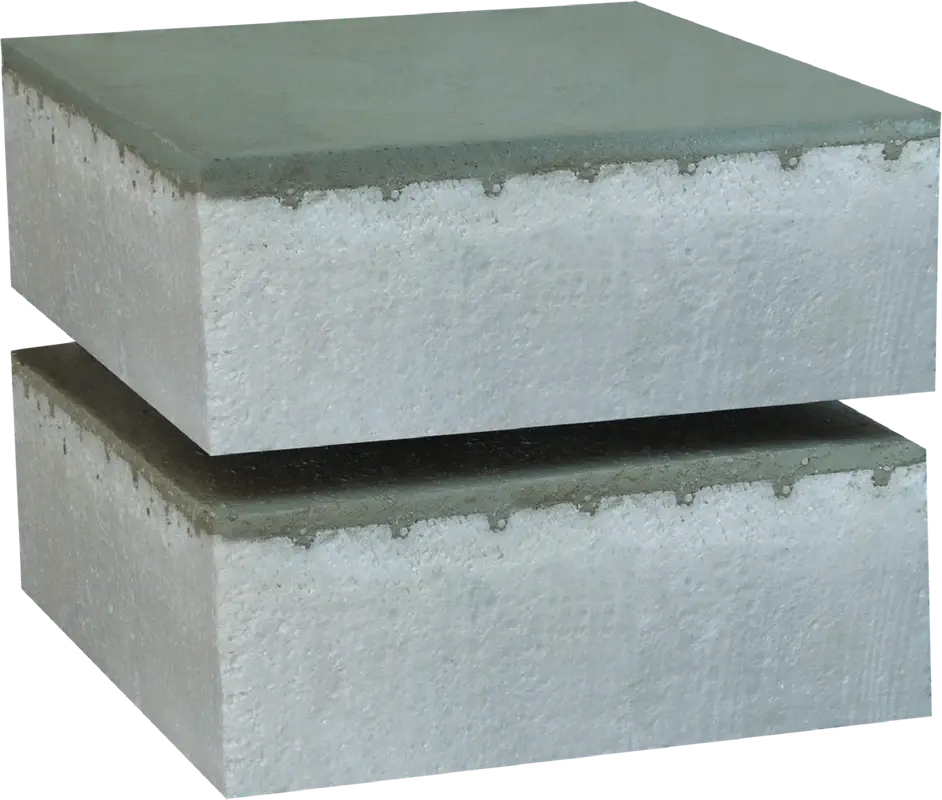
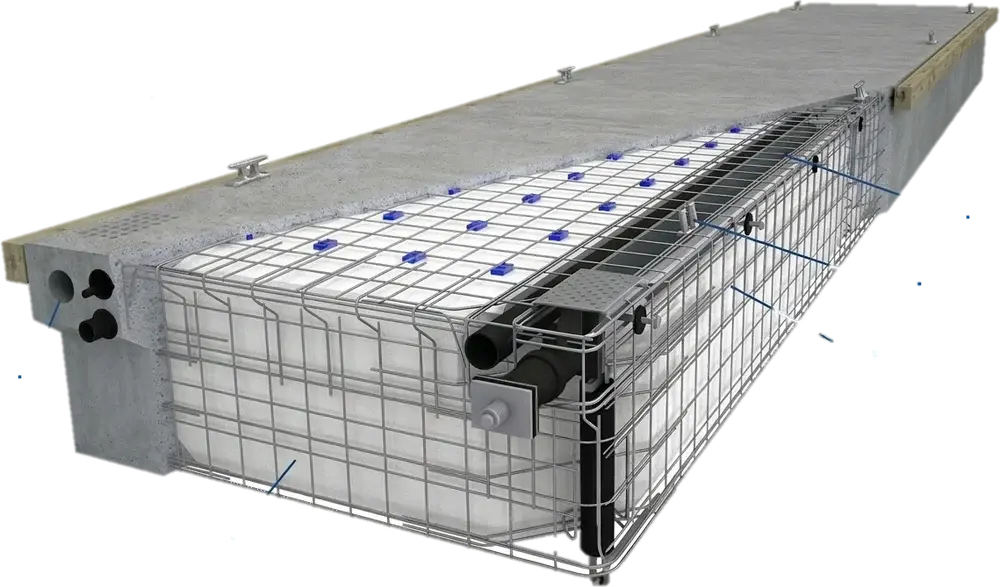
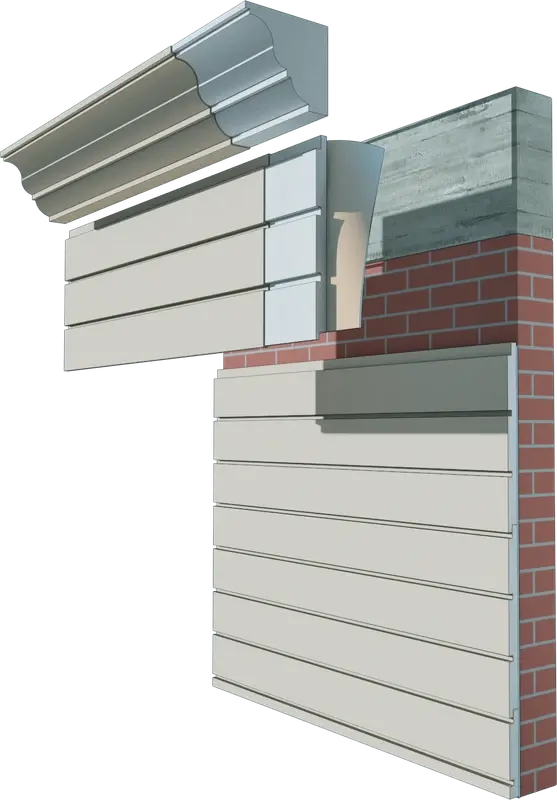
FOAMINA
FOAMINA is a lightweight decorative product designed for exterior and interior architectural decoration.
View product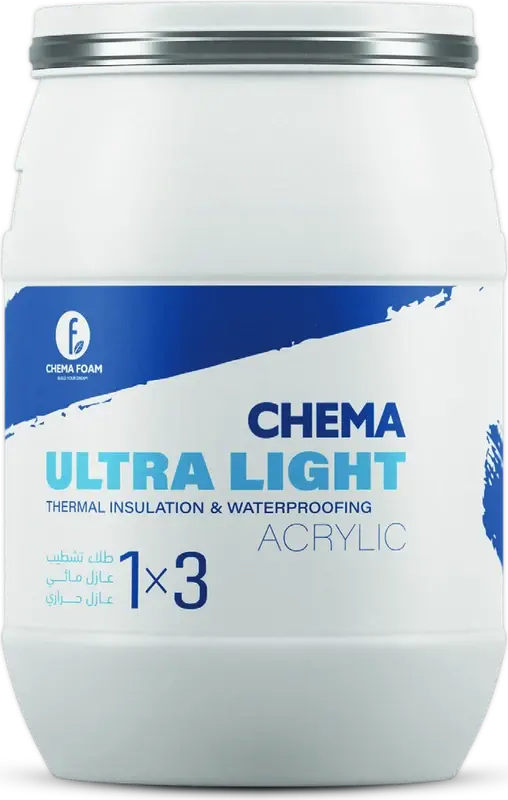
Chema Ultra Light
Chema Ultra Light is a ready-to-use, single-component flexible acrylic coating designed for thermal insulation and waterproofing.
View productBUILDING TOGETHER
Still Have A Question?
Share your application, quantities and project location to discuss the next step.