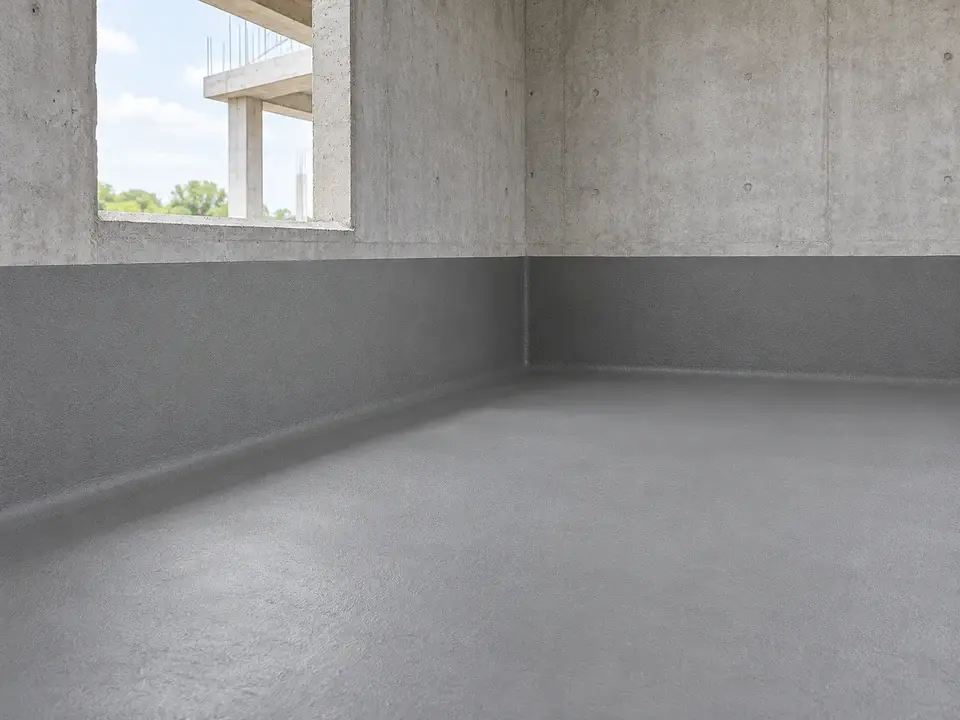
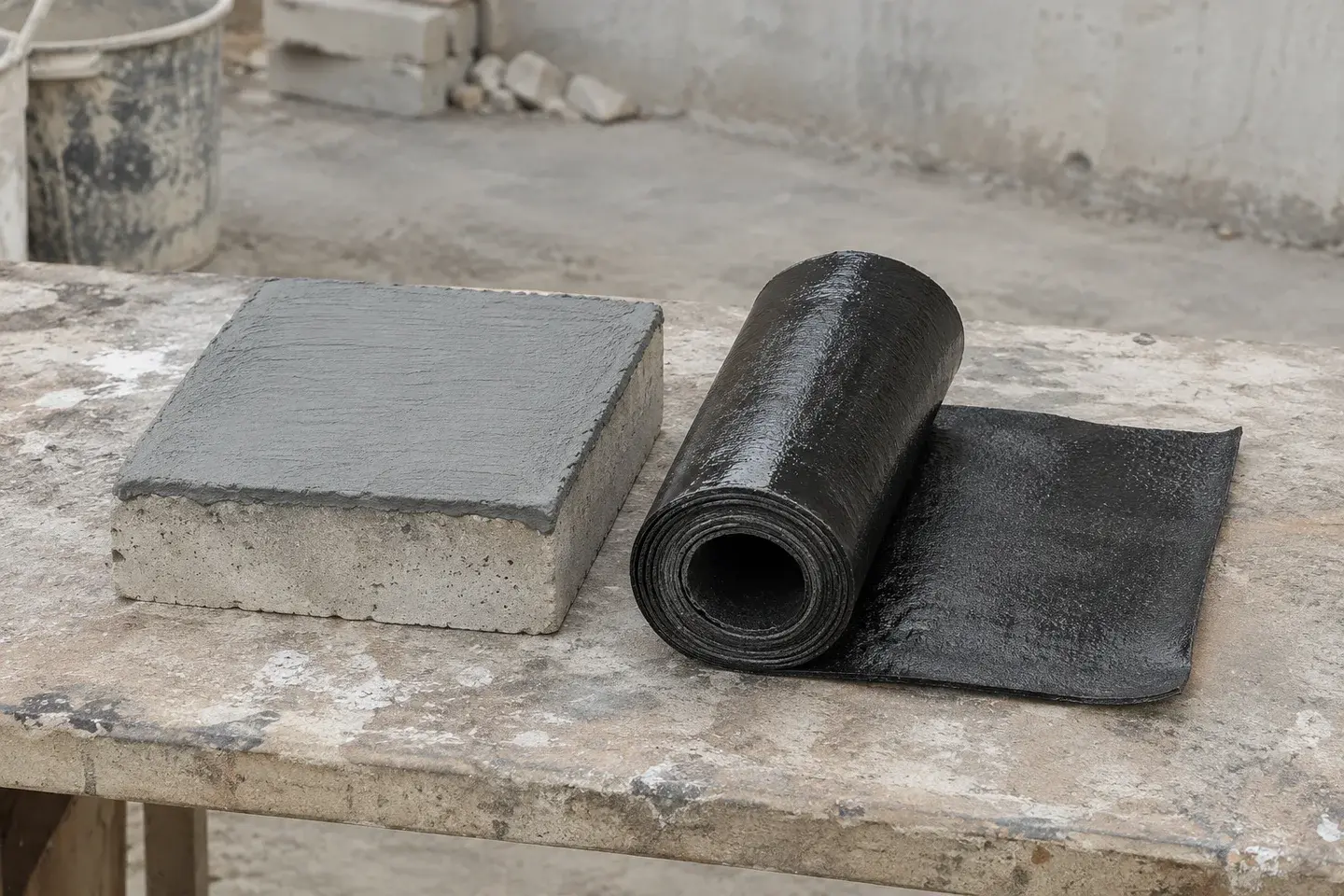
 Cementitious waterproofing sample beside a roll of bituminous membrane
Introduction
Is the most expensive waterproofing system automatically the best—or can a more practical, easier-to-apply solution deliver the exact protection your project needs?
In construction, specifying a waterproofing system is never a trivial call. A minor execution flaw can turn into water leaks, ruined finishes, and steep repair bills just months after handover.
In the Egyptian market, two of the most widely used options are Chema Proof cementitious waterproofing and bituminous membrane rolls.
So how do they compare—and when is Chema Proof from Chema Foam the smarter choice?
What Is The Difference Between Chema Proof And Bituminous Membranes?
Chema Proof by Chema Foam is a range of cementitious waterproofing products, including flexible polymer-modified grades, applied directly to concrete by brush or trowel to form a continuous protective barrier.
Bituminous membranes, by contrast, are prefabricated sheet rolls typically installed via torch-on heating or self-adhesive backing, requiring careful detailing and sealing at every overlap and seam.
Chema Proof Vs. Bituminous Membrane Comparison
| Comparison Criteria | Chema Proof | Bituminous Membrane |
|---|---|---|
| Material Type | Polymer-modified cementitious waterproofing (varies by grade) | Reinforced bituminous sheet rolls |
| Application Method | Brush or trowel | Torch-on flame or self-adhesive |
| Joints & Seams | Continuous seamless coating without roll overlaps | Requires overlapping seams between rolls |
| Corners & Detailing | Easily conforms around complex shapes and penetrations | Requires cutting, welding, and specialized detailing |
| Bond to Concrete | Direct adhesion to properly prepared substrates | Depends on primer and installation method |
| Movement Accommodation | Varies by Chema Proof grade | Depends on membrane type and formulation |
| Use Under Tiles | Suitable within approved tiling assemblies | Possible in systems specifically designed for it |
| Hot Works | No open flame required | Torch-on grades require an open flame |
5 Reasons Chema Proof Outperforms In Many Applications
1. Eliminating Roll Seam Vulnerabilities
In many waterproofing systems, the weakest link isn't the material itself—it's the seam between two sheets.
Bituminous rolls rely on tightly sealed overlaps; any lapse in torching or bonding can create a direct pathway for water ingress.
Chema Proof, however, is applied as continuous coats, eliminating traditional roll seams altogether.
That said, corners, structural joints, and pipe penetrations still require dedicated detailing.
2. Effortless Detailing Around Corners and Pipes
In bathrooms, water tanks, and balconies, intricate junctions are among the most common sources of leakage.
Chema Proof can be brushed or troweled cleanly around corners, floor drains, and pipe penetrations without the hassle of cutting and shaping sheet rolls around every fixture.
3. Flame-Free Installation
Does it really make sense to bring an open torch onto every waterproofing job?
Many sites—especially renovation projects or areas near flammable materials—strictly restrict hot works.
Chema Proof requires no torch during application, offering a clear safety and logistical advantage over torch-on bituminous membranes.
Note that self-adhesive bituminous membranes also avoid open-flame installation.
4. Tailored Grades for Different Project Demands
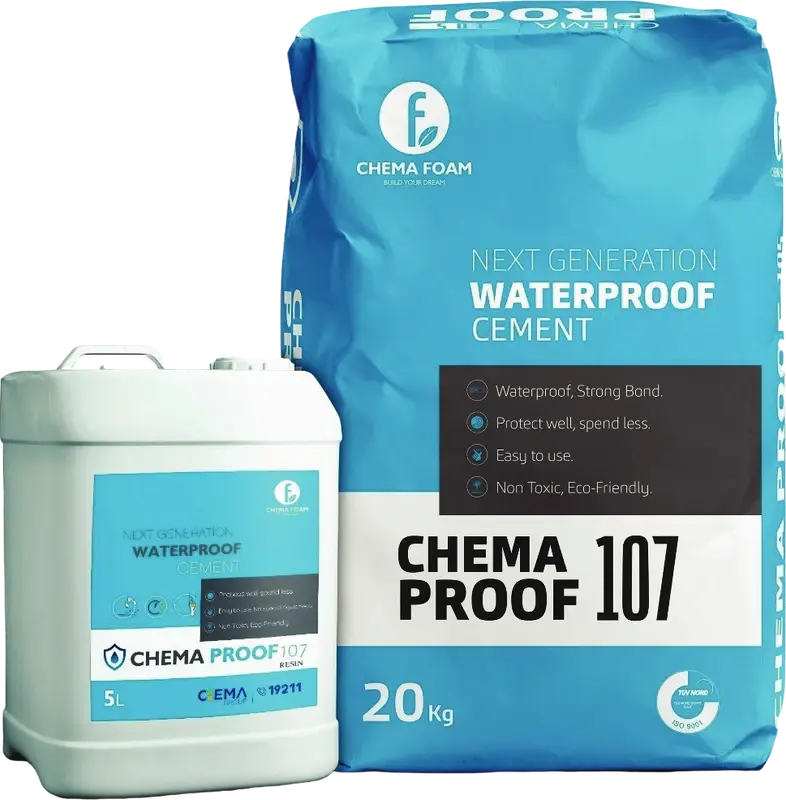
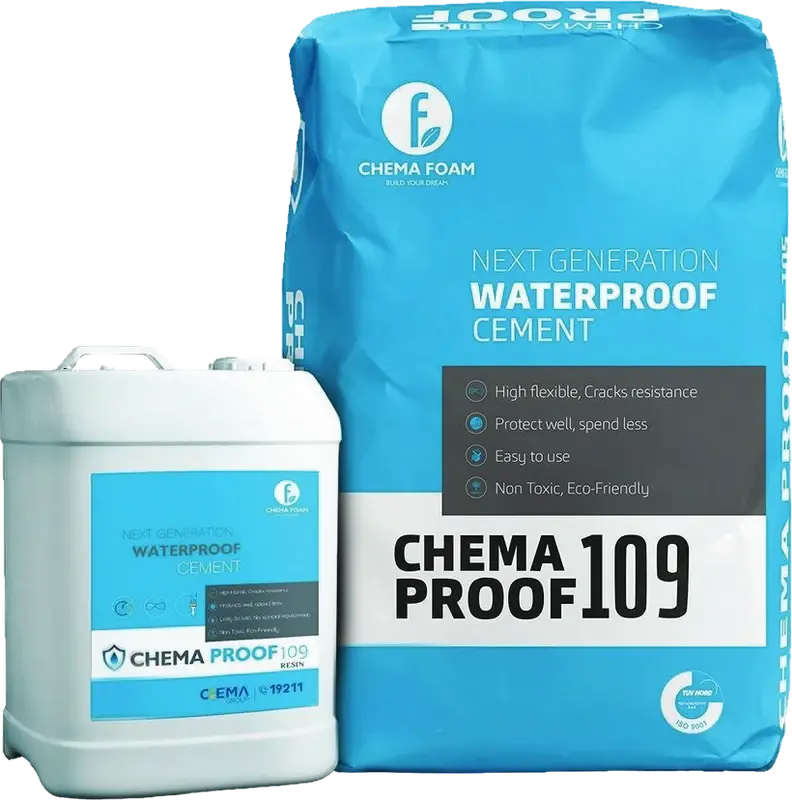
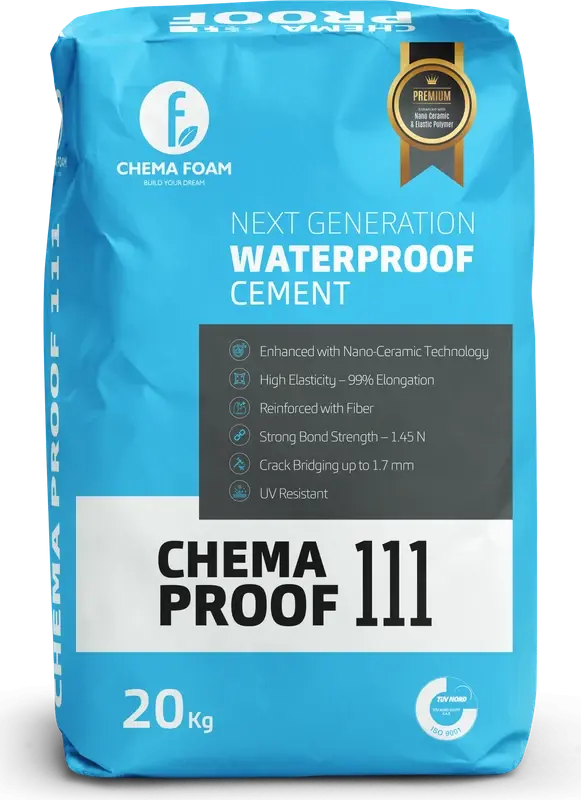
Chema Foam offers Chema Proof 107, 109, and 111 to address a broad spectrum of cementitious waterproofing needs. Chema Proof 105 is also listed in the table below as a reference to a legacy formulation.
5. Strong Compatibility with Concrete Substrates and Water Tanks
Chema Proof bonds reliably to properly prepared cementitious substrates, with specialized grades formulated for water tanks and swimming pools.
Always verify potable-water contact approvals before specifying any product inside drinking-water reservoirs.
Selecting The Right Chema Proof Grade
Not all Chema Proof grades offer the same flexibility or serve the same applications.
| Product | Key Characteristic | Recommended Application |
|---|---|---|
| Chema Proof 105 (Legacy Reference) | Single-component cementitious | Stable foundations, retaining walls, and basements |
| Chema Proof 107 | Semi-flexible | Bathrooms, balconies, and roofs |
| Chema Proof 109 | Highly flexible | Roofs, water tanks, and areas subject to limited movement |
| Chema Proof 111 | Ultra-flexible | Water tanks, swimming pools, and demanding environments |
According to published technical data, crack-bridging capability reaches up to 0.5 mm for Proof 107 and up to 1.5 mm for Proof 109 and 111 under specified test conditions.
These figures do not mean the coatings replace proper treatment of expansion joints or active structural cracks.
Chema Proof Vs. Bituminous Membrane: Which Fits Your Project?
There is no single material for every scenario—the right choice is the system engineered for the specific structure.
| Application | Option Worth Evaluating | Why |
|---|---|---|
| Bathrooms & Kitchens | Chema Proof | Easy application around corners and plumbing details |
| Concrete Water Tanks | Appropriate Chema Proof grade | Direct concrete adhesion and immersion-rated grades |
| Balconies | Chema Proof | Seamless coverage suited to multiple junctions and edges |
| Roofs with Complex Detailing | Flexible Chema Proof | Simplifies waterproofing around upstands and penetrations |
| Large, Open, Regular Roofs | Depends on design; membrane may suit well | Fast roll layout across wide, unobstructed surfaces |
| Basements Under Hydrostatic Pressure | Engineering evaluation of both systems | Depends on water pressure, structural movement, and site access |
Is Chema Proof More Cost-Effective Than A Bituminous Membrane?
The lowest material price per square meter does not necessarily mean the lowest total waterproofing cost.
An accurate comparison must account for the entire installed system: substrate preparation, primers, material consumption rates, labor, detailing work, protective layers, and flood testing.
Chema Proof often proves more economical in complex or corner-heavy areas, though neither option can be declared universally cheaper without a project-specific BOQ comparison.
Conclusion: Why Choose Chema Proof From Chema Foam?
If your project involves tight corners, intricate concrete detailing, or calls for seamless cementitious waterproofing without roll welding, Chema Proof from Chema Foam is a compelling solution.
Getting waterproofing right from day one doesn't just shield the structure from water ingress—it protects your budget from rework and ongoing maintenance costs.
Request a technical consultation and quote from Chema Foam to select the right Chema Proof grade for your project.
This comparison is based on published technical data for Chema Proof grades and Sika's bituminous sheet membrane system descriptions, rather than a direct head-to-head laboratory trial.
Product-specific design and application must follow approved project specifications and current technical documents.