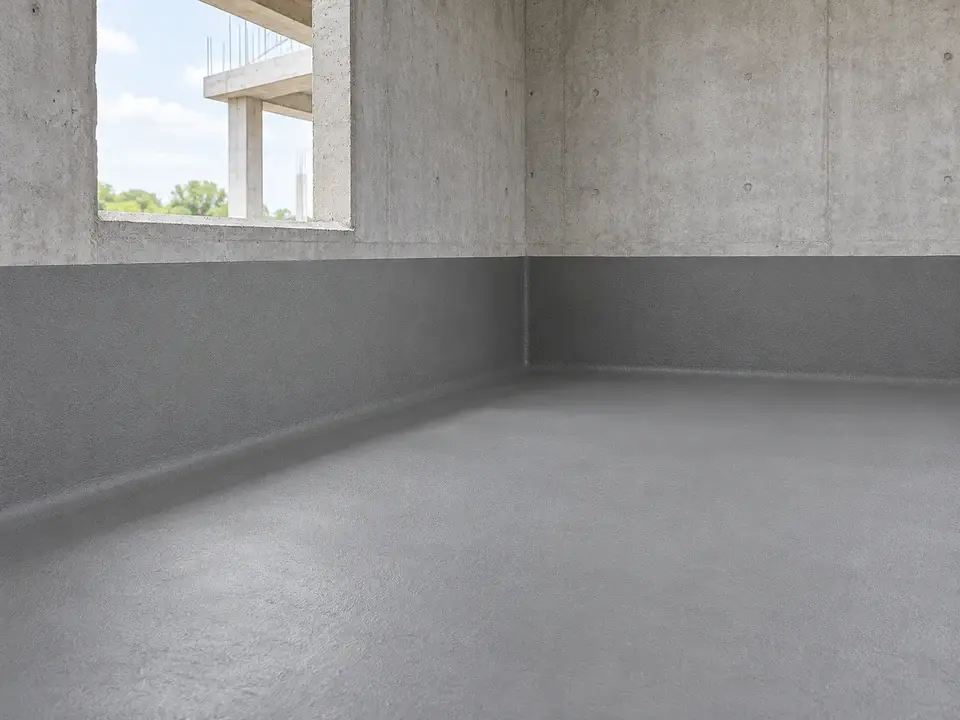
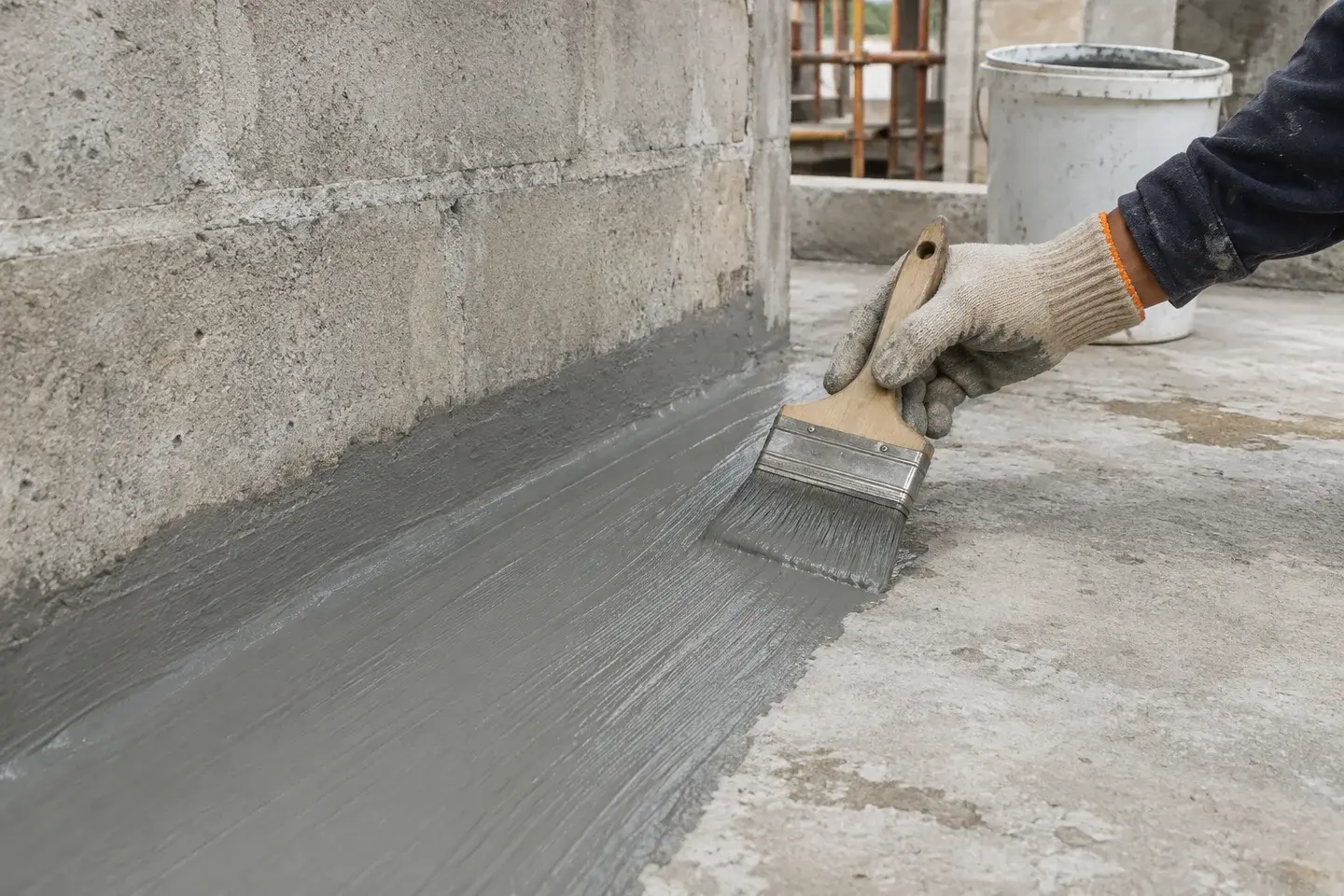
 Cementitious waterproofing brushed onto a wall and floor junction
Introduction
A small damp stain on a ceiling can be the first warning sign of a far bigger problem.
Water ingress is never just about peeling paint or stained walls. When moisture continuously reaches reinforced concrete, it can trigger rebar corrosion and ruin interior finishes—driving up repair and maintenance costs.
Specifying a reliable cementitious waterproofing system during construction is therefore a critical investment in long-term building protection.
To address these demands, Chema Foam offers the Chema Proof waterproofing range, providing tailored solutions that match each project's exposure conditions and required flexibility.
What Is Chema Proof Cementitious Waterproofing?
Chema Proof is a range of cementitious waterproofing products engineered to form a protective barrier that prevents water penetration into concrete substrates and building structures.
Some grades in the range are polymer-modified cementitious mortars, while others are two-component systems combining a cementitious powder with a polymer resin mixed on site prior to application.
Across the line, the products deliver strong adhesion to concrete substrates, with varying degrees of flexibility and hydrostatic pressure resistance depending on the selected grade.
However, not every Chema Proof grade delivers the same performance—which makes choosing the right product just as important as the quality of workmanship.
Comparing Chema Proof 105, 107, 109, And 111
Not every surface requires maximum elasticity, and no single waterproofing coating suits every condition.
Chema Proof 105: One-Component Cementitious Waterproofing (Legacy Reference)
Chema Proof 105 was a specially modified cementitious powder requiring only water for mixing. The current Chema Proof range features grades 107, 109, and 111.
It was used for waterproofing walls, floors, foundations, and structurally stable basements.
It is not suitable for expansion joints or active, moving cracks.
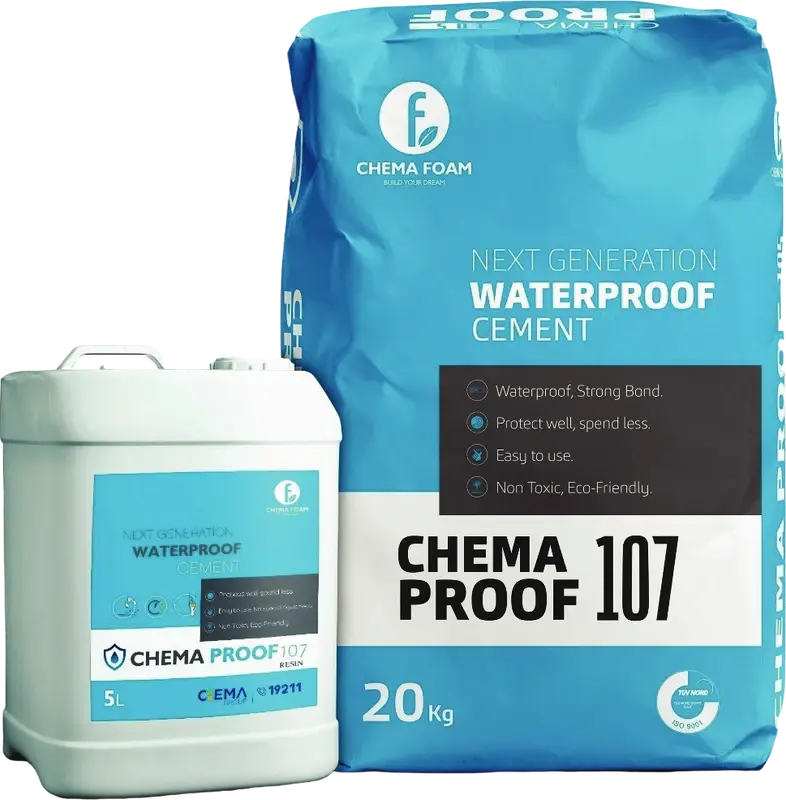
Chema Proof 107: Semi-Flexible Cementitious Waterproofing
Chema Proof 107 is a two-component system consisting of a cementitious powder and an acrylic resin, forming a semi-flexible waterproofing membrane.
It is well suited for roofs, basements, balconies, and swimming pools, with technical data indicating crack-bridging capability of up to 0.5 mm under specified test conditions.
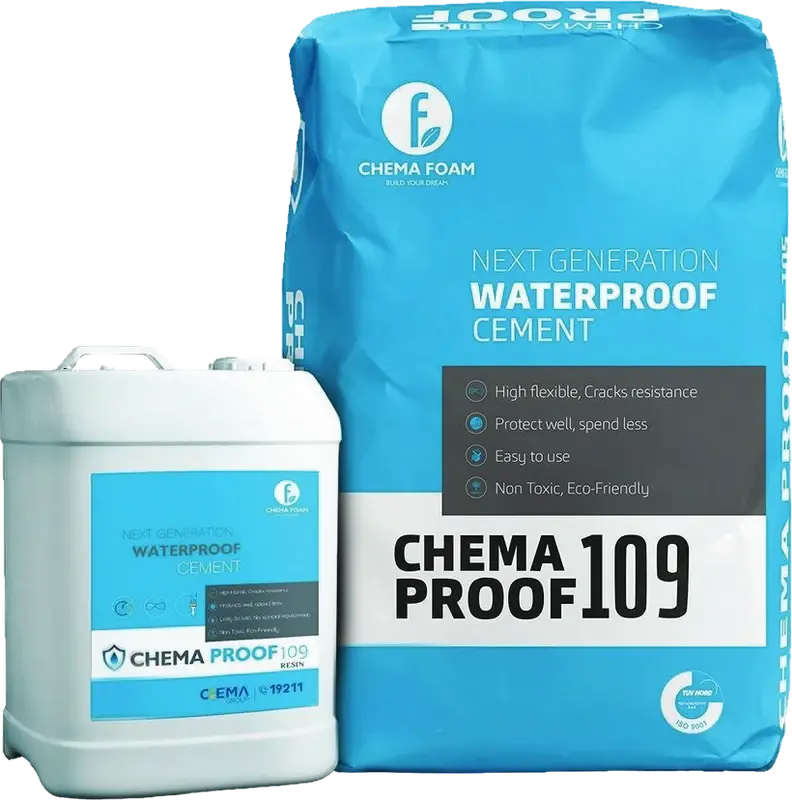
Chema Proof 109: High-Flexibility Waterproofing
When a project demands greater movement accommodation, Chema Proof 109 steps in.
According to published test data, it bridges cracks up to 1.5 mm and is used on roofs, water tanks, facades, and planter boxes in accordance with application requirements.
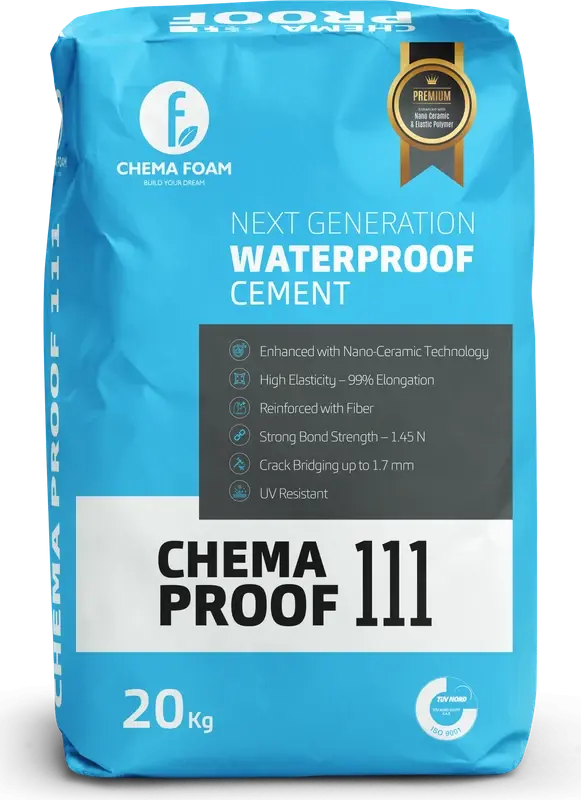
Chema Proof 111: Super-Flexible Cementitious Waterproofing
Chema Proof 111 Elastic is formulated for demanding applications requiring high elasticity and dependable protection under hydrostatic pressure.
Its technical data sheet reports an elongation at break of 75.7%, crack-bridging capability of 1.5 mm, and resistance to water penetration up to 5 bar under test conditions.
Typical applications include water tanks, swimming pools, concrete roofs, and select renovation works over existing tiles once substrate suitability is verified.
Where Should Chema Proof Be Used?
Effective waterproofing isn't a one-size-fits-all coating—it's the right system matched to site conditions.
Depending on the selected grade, Chema Proof systems are used across a wide range of applications:
- Concrete roofs and balconies.
- Bathrooms and wet areas within an appropriate waterproofing assembly.
- Foundations, basements, and retaining walls.
- Water tanks and swimming pools.
- Structures exposed to hydrostatic water pressure.
Always verify each grade's suitability for potable water contact or continuous immersion before final specification.
How To Ensure A Reliable Cementitious Waterproofing Application
Even a top-tier waterproofing material can leak if it is poorly applied.
Achieving peak performance with Chema Proof starts with thorough surface preparation: removing dust and friable concrete, repairing honeycombing and cracks, and properly detailing wall-to-floor junctions.
Next, mix the product strictly in accordance with the technical data sheet for the chosen grade, and apply the coats at the specified thickness and consumption rate.
For two-coat systems, apply the second coat perpendicular to the first after the recommended recoat interval.
Finally, complete the installation with proper curing, protective layers, and flood testing—where applicable—in line with system guidelines and engineering specifications.
Protect Your Project From Water Damage With Chema Proof
Whether you are a consultant, contractor, or real estate developer, specifying the right waterproofing system safeguards build quality and minimizes future repair liabilities.
With Chema Proof by Chema Foam, you have multiple grades tailored to distinct project demands.
Request a quote from Chema Foam and consult our technical team to select the optimal waterproofing system for your project.
All technical figures cited above have been verified against the official product pages and technical data sheets for all four grades, particularly crack-bridging and hydrostatic pressure values.
Product-specific design and application must follow approved project specifications and current technical documents.