Waterproofing

MOISTURE & WATER PROTECTION SYSTEMS

Waterproofing

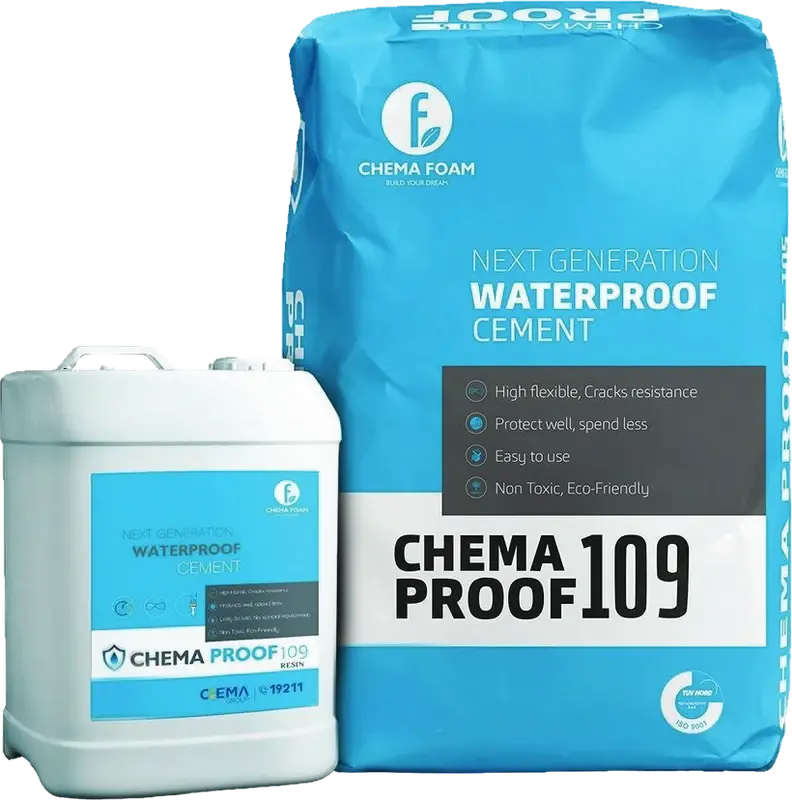
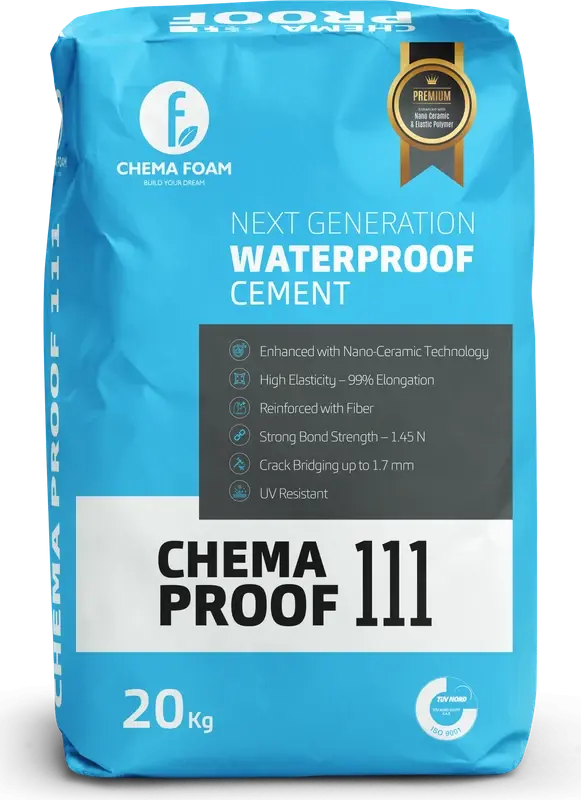
Protect roofs, foundations and water-retaining concrete with a continuous barrier that combines cement hydration with polymer flexibility. Chema Proof 105, 107, 109 and 111 address progressively different movement demands; Proof 111 provides positive-pressure resistance up to 7 bar and crack bridging >1.5 mm. Reflective Chema Ultra Light and CG1 Chema Tile Grout complete the exposed or tiled zones.

Up to 7 bar
Chema Proof 111 · positive water pressure resistance
> 1.5 mm
Chema Proof 111 · crack bridging
6 products
From single-component mortars to super-elastic systems

The Challenge & Our Approach

System & approach

Continuous Protection From Structural Concrete To Final Finish.

Water follows capillary pores, cold joints and pipe sleeves long before a leak becomes visible indoors. Hydrostatic pressure drives this flow through below-grade concrete, while thermal cycling opens cracks at parapets and floor-wall junctions. A coating applied over laitance, sharp internal corners or unsealed penetrations loses continuity precisely where the hydraulic and movement stresses concentrate.

Repair the substrate, form coving fillets and seal penetrations before applying two perpendicular slurry coats. Select 105 for stable mineral substrates, 107 for fiber-reinforced semi-flexibility, and 109 or 111 for greater movement. Proof 111 performance is referenced to EN 12390-8 and ASTM C1305; complete curing and water testing before reflective coating, protection screed or CG1 tile jointing.

  • Continuous protection bonded to properly prepared concrete and mortar.
  • Semi-flexible, elastic and super-elastic grades for different movement demands.
  • Chema Proof 111 resists positive pressure up to 7 bar and bridges cracks >1.5 mm.
  • Coordinated detailing with XPS insulation, protective screeds and tile finishes.

SYSTEM COMPONENTS

One waterproof envelope, every component in place

Five coordinated details connect coving, drainage, protection, falls and CHEMA PROOF cementitious waterproofing. Markers indicate the relevant zones; the screed and protective build-up include concealed layers.

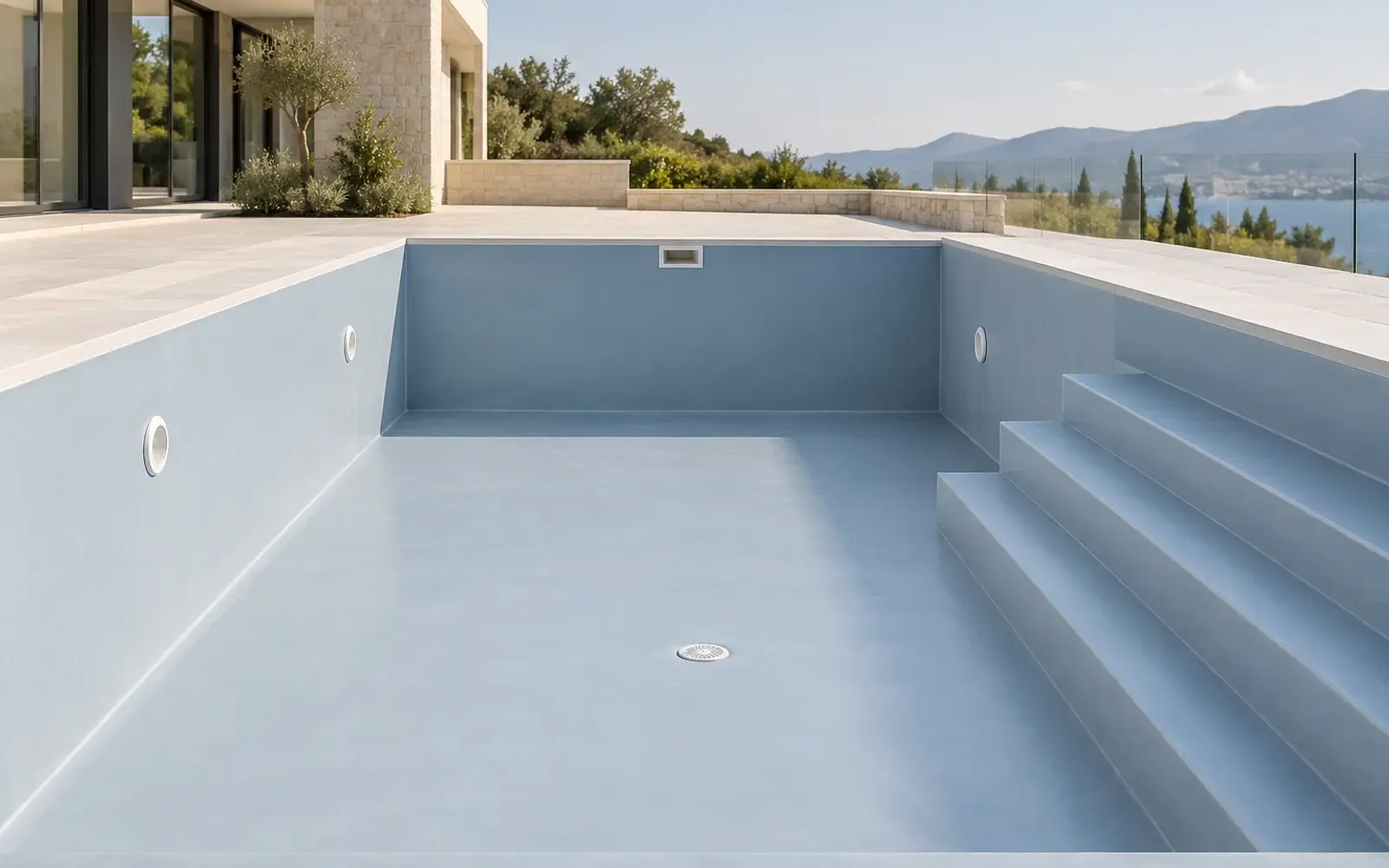
Pool shell with coving, a floor drain and zones for finishes, screed to falls and cementitious waterproofing.

Select a numbered component to review its role, specification and related products.

01 · COVING

Coving at the wall–floor junction

A curved mortar fillet provides a continuous transition for the cementitious waterproofing.

  • Form a smooth concave fillet along the internal wall–floor junction.
  • Use a compatible repair mortar on a sound, prepared substrate.
  • Continue the waterproofing across the fillet and onto the adjoining surfaces.
  • Coving geometry and joint reinforcement follow the approved pool detail.

Waterproofing application

Where It Works

01

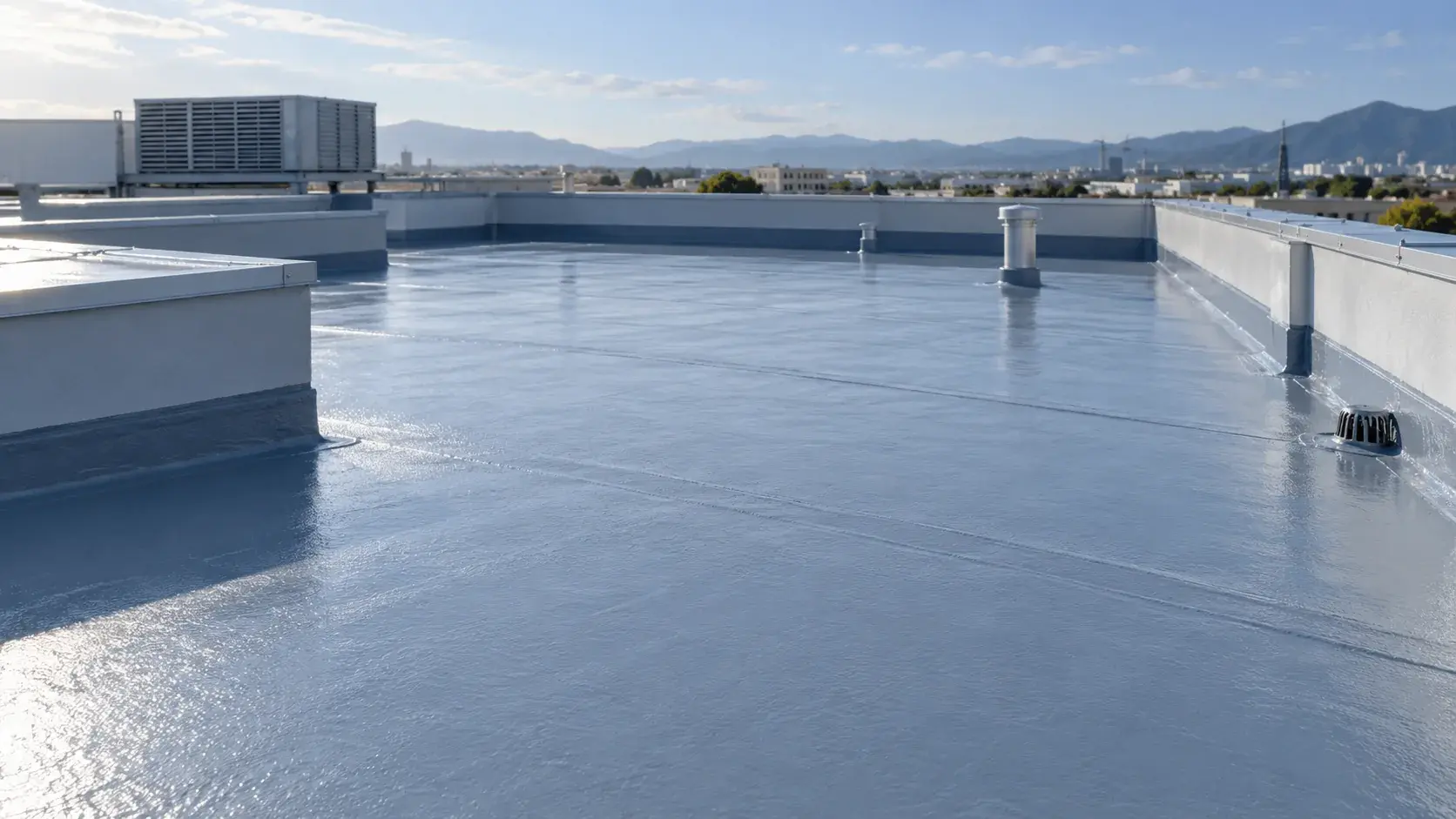
Exposed & Inverted Roofs

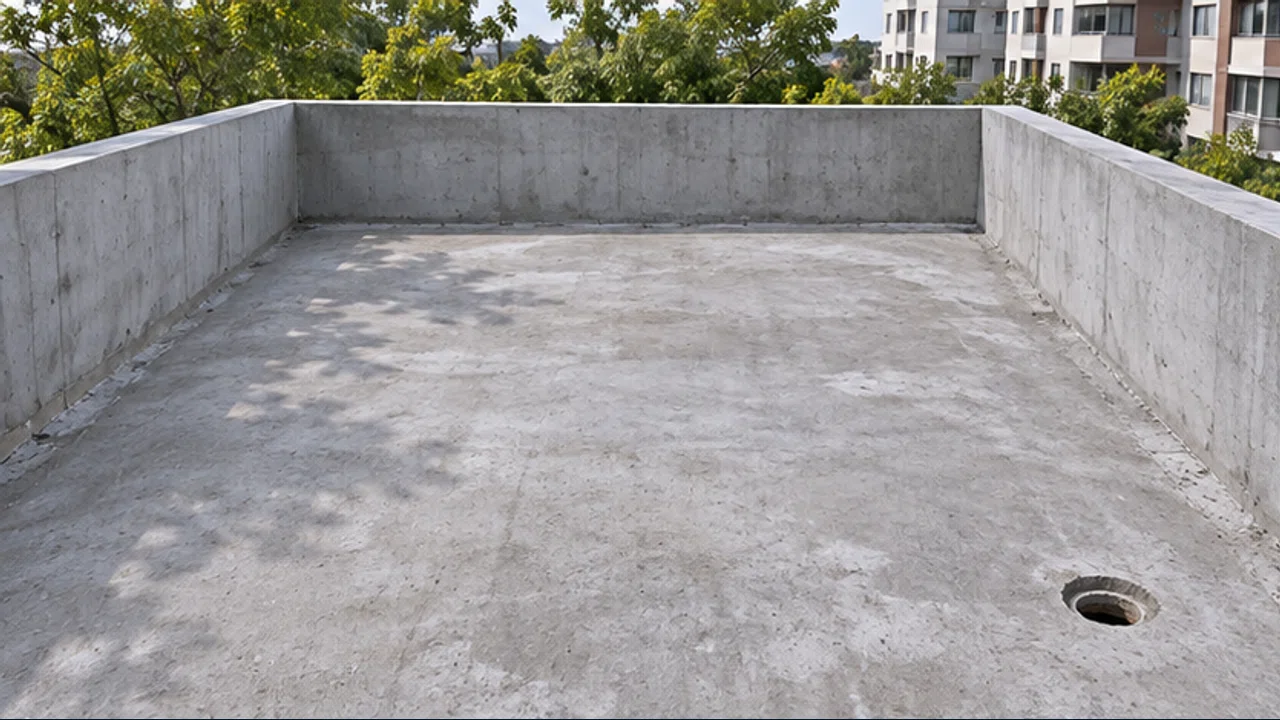
Protect concrete roofs against rain with a coating suited to the exposure. Coordinate falls, drains, parapet upstands and penetrations before insulating or finishing.

Chema Ultra LightChema Proof 109
Chema Ultra Light · Chema Proof 109
02

Foundations & Below-Grade Structures

Protect footings, retaining walls and basements against ground moisture and seepage. Assess water pressure and provide joint treatment, drainage and protection before backfilling.

Chema Proof 105Chema Proof 107
Chema Proof 105 · Chema Proof 107
03

Bathrooms, Kitchens & Wet Areas

Install under-tile waterproofing in wet rooms and balconies. Secure drain connections and floor-to-wall transitions before tiling and jointing.

Chema Proof 107Chema Tile Grout
Chema Proof 107 · Chema Tile Grout
04

Water Tanks & Swimming Pools

Use the specified elastic grade for water-retaining concrete structures, with Chema Proof 111 rated up to 7 bar positive pressure. Detail joints and penetrations, and confirm the required water-contact documentation before service.

Chema Proof 111Chema Proof 109
Chema Proof 111 · Chema Proof 109

Materials & Quick Selection

2-component · semi-flexible + fiberglass

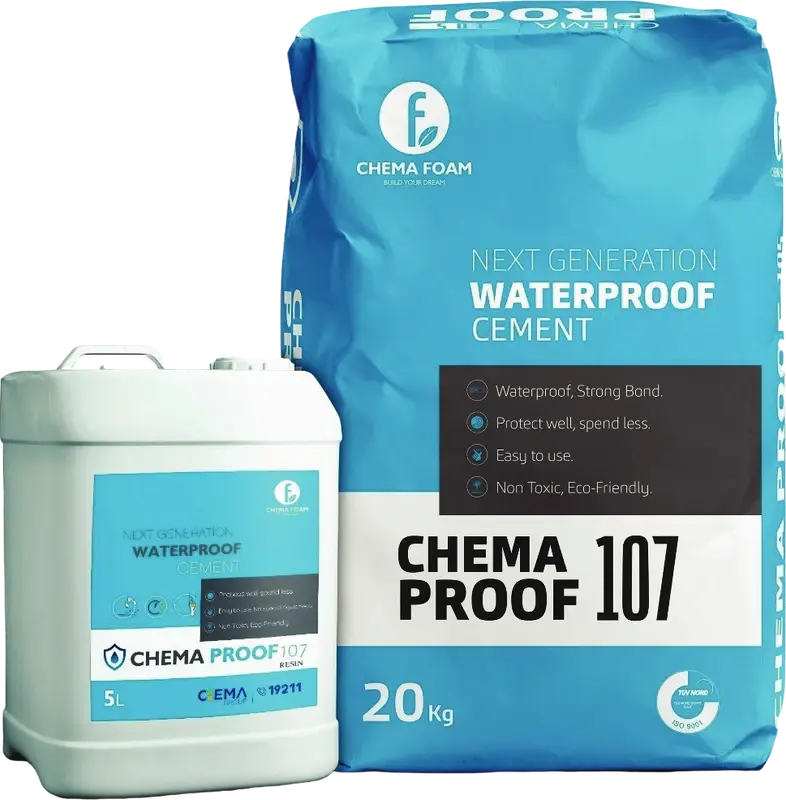
Chema Proof 107

Semi-flexible, two-component cementitious waterproofing system.

When to specify

For general waterproofing needing partial flexibility and fiber reinforcement. Semi-flexible, fiber-reinforced cementitious slurry; 25 kg kit: 20 kg powder + 5 kg resin. Resin : powder 1:4; mix supplied components without additional water. Consumption 2.5 kg/m² for two perpendicular coats, 2 mm total; about 10 m² per 25 kg kit.

Packaging
25 kg kit: 20 kg powder + 5 kg resin
Mixing ratio
Resin : powder = 1:4; mix on site
Compressive strength
> 38 N/mm²
Explore product & TDS

2-component · elastic + fiberglass

Chema Proof 109

Flexible, two-component cementitious waterproofing system.

When to specify

For roofs and terraces subject to thermal cycling and moderate substrate movement. Elastic fiber-reinforced slurry; 20 kg kit (15 kg powder + 5 kg resin) or 40 kg (30 + 10 kg). Resin : powder 1:3; no additional water. Consumption 2.5 kg/m² for two crossed coats, 2 mm total: about 8 / 16 m² per 20 / 40 kg kit.

Packaging
20 kg kit: 15 kg powder + 5 kg resin
Mixing ratio
Resin : powder = 1:3; mix on site
Compressive strength
> 40 N/mm²
Explore product & TDS

2-component · super-elastic · 7 bar

Chema Proof 111

Two-component, polymer-modified, super-elastic waterproofing slurry.

When to specify

For tanks, pools and prepared existing tiles needing crack bridging greater than 1.5 mm. 30 kg kit: 20 kg powder + 10 kg resin; resin : powder 1:2, without added water. Positive water pressure: impermeable up to 7 bar (EN 12390-8). Nominal consumption 2 kg/m²: about 15 m² per 30 kg kit; actual coverage depends on the substrate.

Packaging
30 kg kit: 20 kg powder + 10 kg resin
Nominal coverage
15 m² per 30 kg kit; area coverage, not layer thickness; actual coverage may vary
Mixing ratio
Resin : powder = 1:2; no additional water required
Explore product & TDS

Acrylic coating · reflective finish

Chema Ultra Light

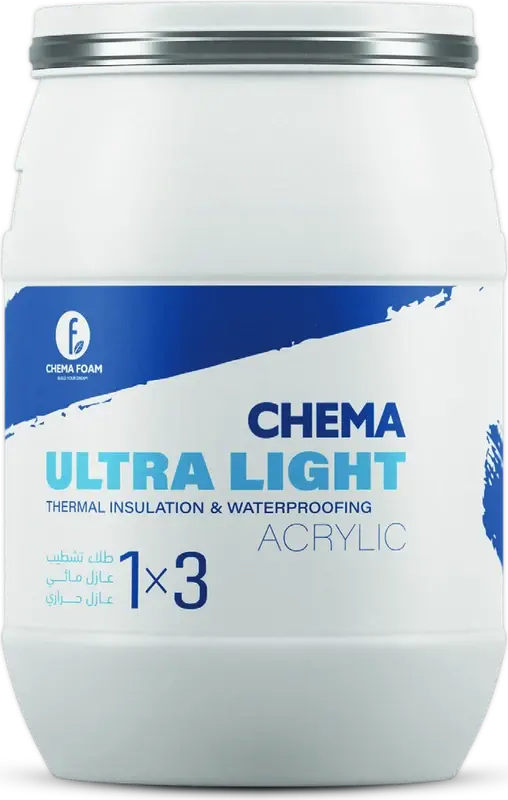
Ready-to-use, single-component flexible acrylic coating for thermal insulation and waterproofing.

When to specify

For exposed roofs requiring a continuous white reflective waterproofing coat. Packaging: 30 kg plastic drum Consumption rate: 4 ± 0.5 kg/m²

Packaging
30 kg plastic drum
Opened packaging
If not fully used, close the lid tightly and use plastic wrap to help protect the product from air and drying.
Consumption rate
4 ± 0.5 kg/m²
Explore product & TDS

CG1 · cementitious joint grout

Chema Tile Grout

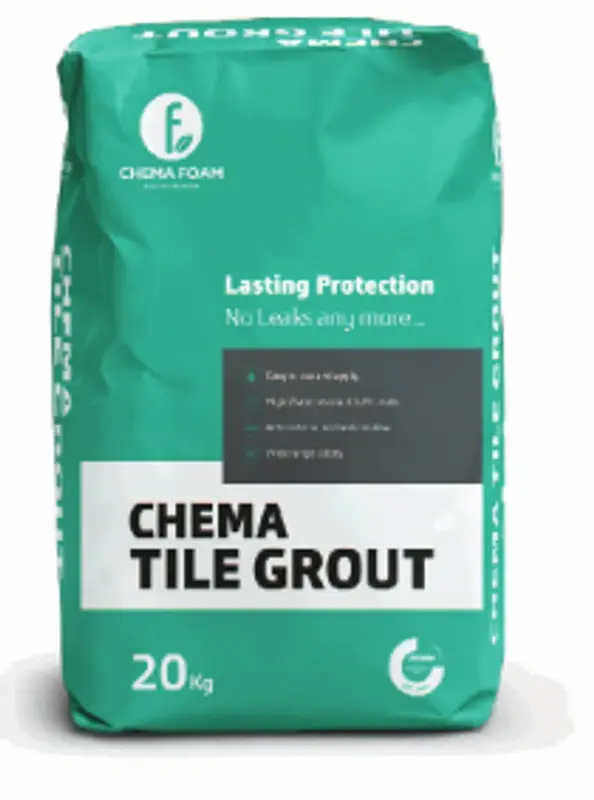
Premixed cementitious tile grout, classified CG1, for ceramic, mosaic, stone and marble joints.

When to specify

For tile joints above a suitable waterproofing system, not as a standalone membrane. CG1 cementitious tile grout; standard EN 13888. Mixing water per 20 kg: 7 L Working time: 60 minutes

Packaging
20 kg bag
Approximate coverage
100 m² of 30 × 30 cm tiles per 20 kg bag + 7 L water
Grade classification
CG1
Explore product & TDS

From Planning To Application

01

Prepare The Substrate & Details

Remove dust, oil and laitance, repair honeycombing and form mortar fillets. Complete joint and penetration detailing before coating.

02

Select The Grade & Mix

Match the grade to pressure and movement demands. Mix at low speed to its data-sheet ratio; do not add water to two-component kits.

03

Apply Perpendicular Coats

Pre-wet cementitious substrates and apply the first coat uniformly. Apply the perpendicular second coat after the prescribed interval and protect during curing.

04

Test & Protect The Finish

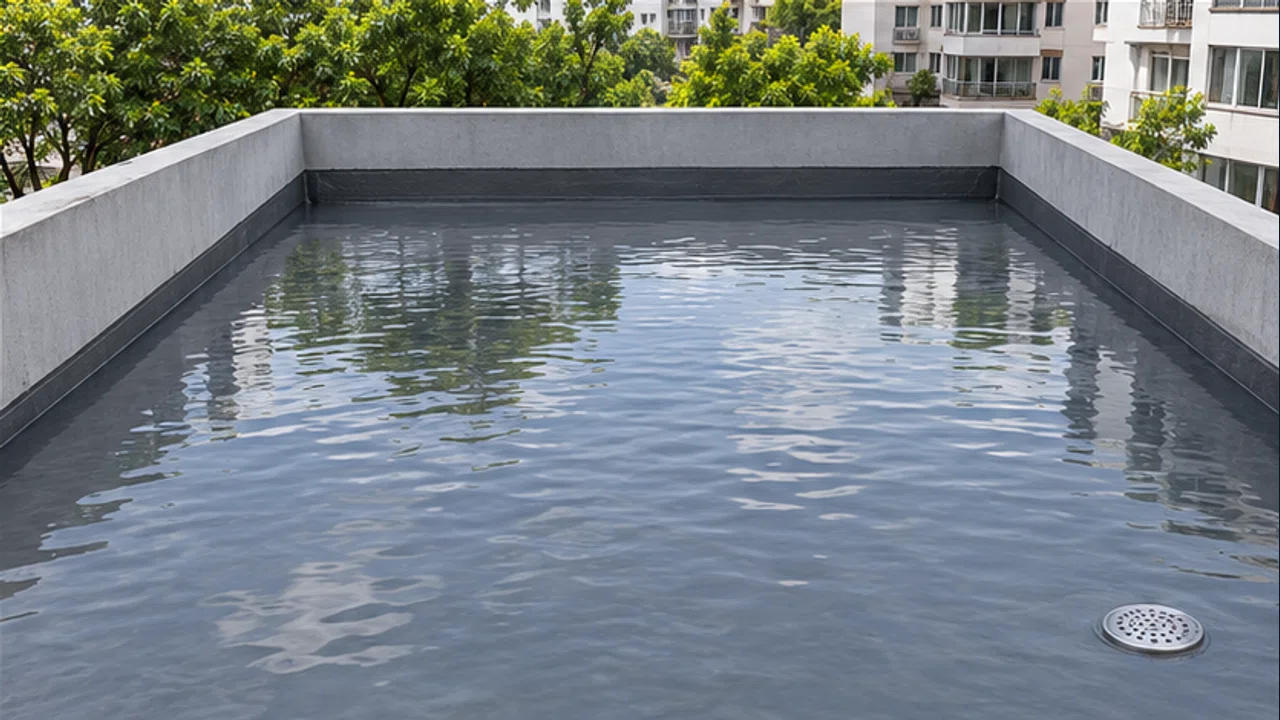
After the specified cure, complete a 48-hour ponding test where required by the project. Inspect drains and details before protective screed, insulation or tiling.

Project Case Study

New Cairo, Egypt

New Cairo, Egypt

Palm Hills New Cairo

Low-rise homes and shared landscape edges call for lightweight EPS details that follow changing roof profiles without interrupting insulation…

View the case study

BUILDING TOGETHER

Let’S Plan Your Next Project.

Share your application, quantities and project location to discuss the next step.

Request a quote

Frequently asked questions

How do Chema Proof 105, 107, 109 and 111 differ?

105 is water-mixed and single-component; 107 is a semi-flexible two-component grade. 109 is elastic and 111 super-elastic; choose by exposure, movement and the current product data sheet.

Can waterproofing be applied over existing tiles?

Chema Proof 111 lists prepared existing tiles among its substrates. Check adhesion, remove loose tiles and contaminants, and complete the specified preparation and a trial area before full application.

Should water be added to two-component kits?

No additional water is required for the Chema Proof two-component kits. Mix each kit’s supplied resin and powder at its own specified ratio; the ratios differ between grades.

How does waterproofing integrate with Chema XPS?

In an inverted roof, the waterproofing sits below the XPS and the separation and ballast layers. Complete the membrane’s cure and integrity test first, and protect drainage paths and compatible interfaces.

What is the scope of the Waterproofing solution?

Protect roofs, foundations and water-retaining concrete with a continuous barrier that combines cement hydration with polymer flexibility. Chema Proof 105, 107, 109 and 111 address progressively different movement demands; Proof 111 provides positive-pressure resistance up to 7 bar and crack bridging >1.5 mm. Reflective Chema Ultra Light and CG1 Chema Tile Grout complete the exposed or tiled zones.

All questions