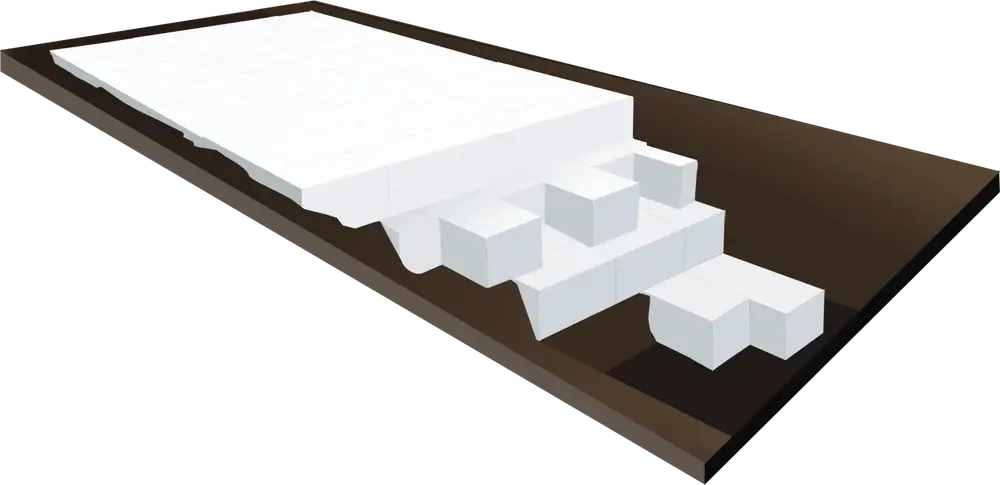
01
Road Embankments On Soft Soil
Replace heavy embankment fill to reduce stress on compressible ground. Verify settlement, overall stability and the designed pavement load distribution.
Chema Geo Foam
Chema Geo Foam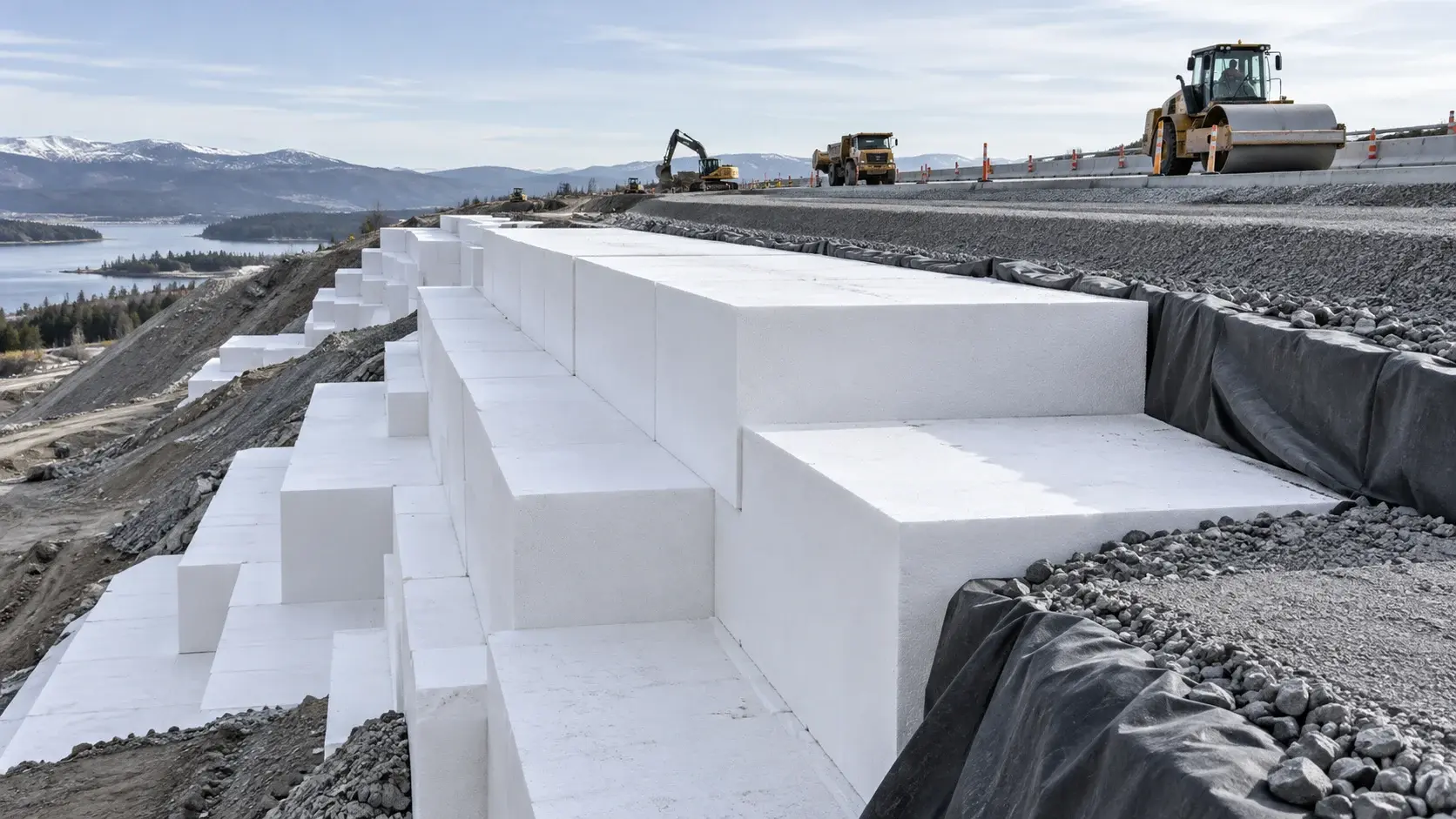
LIGHTWEIGHT FILL & GROUND LOAD MANAGEMENT
Chema Geo Foam is engineered EPS lightweight fill in five grades, GF15–GF35. The TDS lists resistance at 1% deformation from >25 kPa for GF15 to >150 kPa for GF35 (ASTM D6817). Choose the grade for the complete dead and live loads; assess settlement, creep, groundwater uplift and the designed load-distribution cover.
System & approach
Adding conventional fill raises effective vertical stress in compressible subgrades, driving consolidation and differential settlement beside rigid structures. Earth pressure also increases behind retaining walls and bridge abutments, while utilities and tunnel roofs receive additional permanent loading. Replacing the fill requires a complete section design because traffic loads, groundwater uplift and construction plant still act on the lightweight assembly.
Establish allowable service stress and settlement, then choose the Geo Foam grade using resistance at one percent deformation and long-term creep behavior. Place tight-fitting blocks in staggered courses on a leveled, drained bed. Add a designed load-distribution slab and compatible hydrocarbon barrier, checking groundwater uplift and stability before the permanent pavement provides restraint.
SYSTEM COMPONENTS
Trace the embankment from its soil formation and toe drain to the geofoam blocks, protective layer and pavement construction.
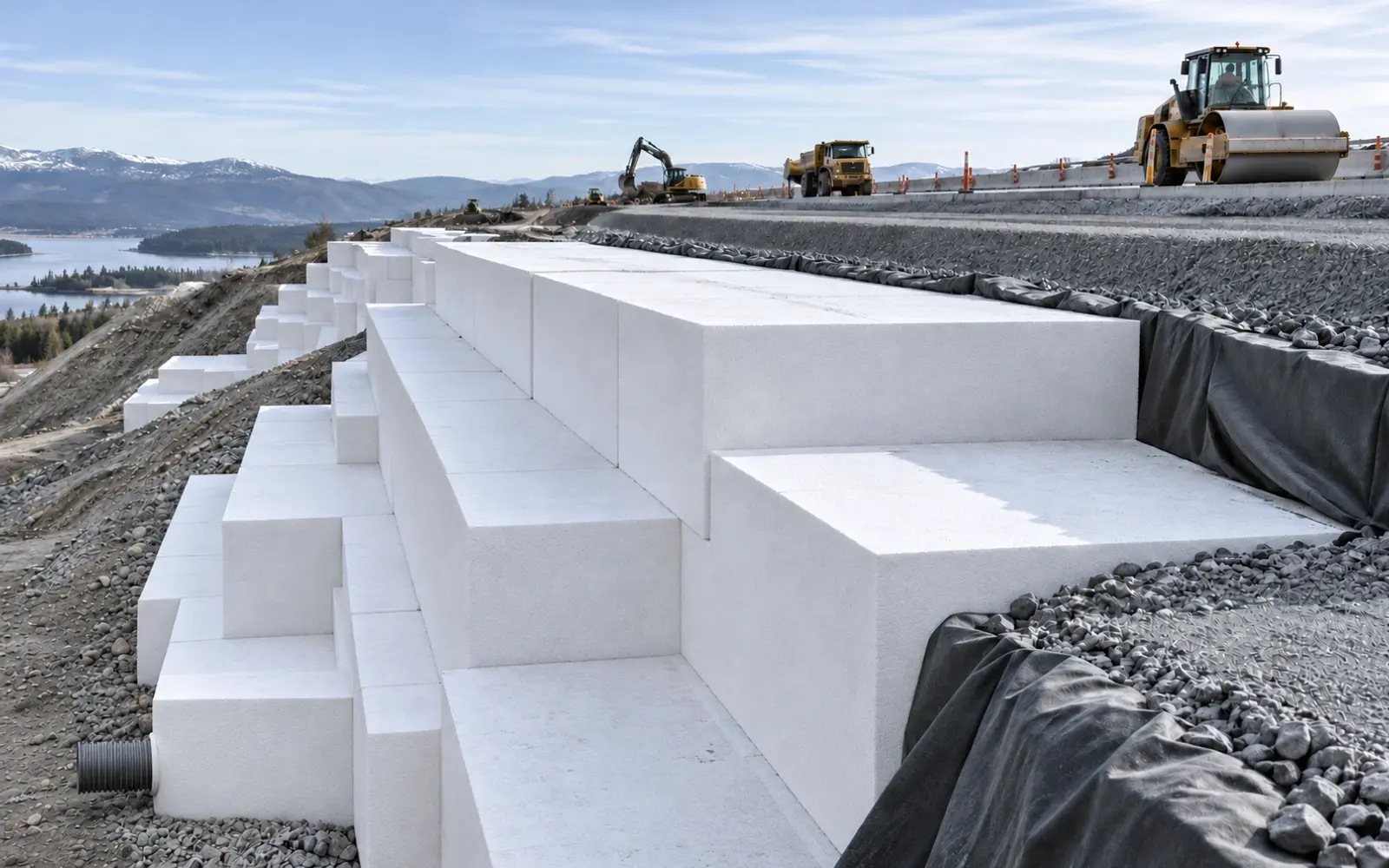
Select a numbered component to review its role, specification and related products.
01 · SOIL LAYER
The prepared ground supports the lightweight geofoam embankment.
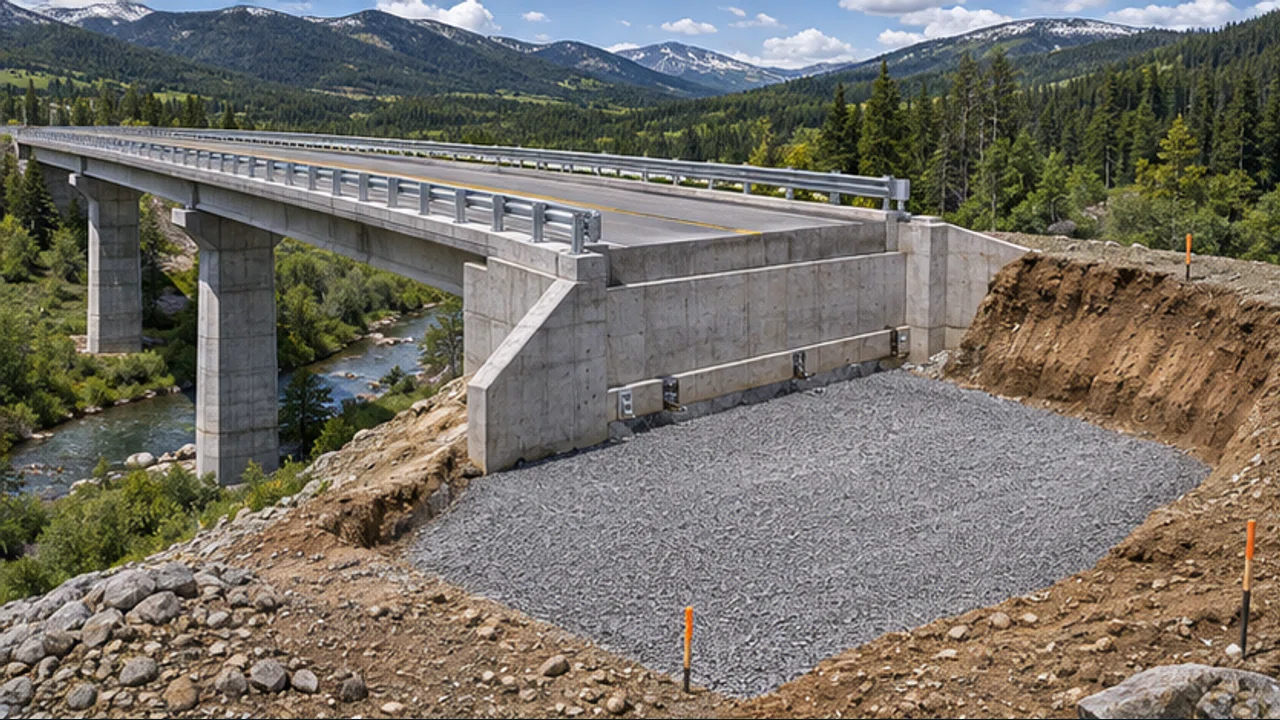
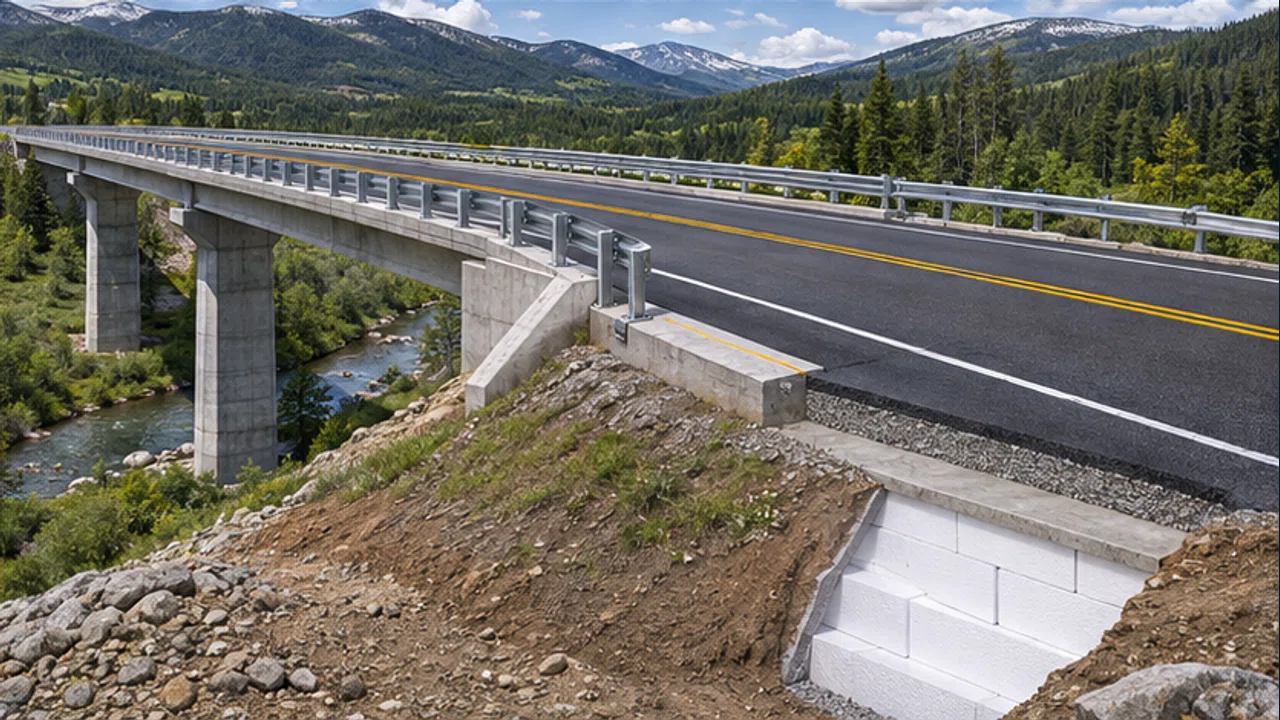
Replace heavy embankment fill to reduce stress on compressible ground. Verify settlement, overall stability and the designed pavement load distribution.
Reduce approach fill weight adjacent to bridge abutments. Coordinate differential settlement, transition slabs and drainage at the rigid-to-flexible interface.
Limit overburden above sensitive buried structures and services. Confirm allowable loads, access requirements and load-spreading details with the asset owner.
Reduce fill self-weight behind retaining walls and within designed slope repairs. Check lateral pressures, sliding, flotation and groundwater drainage for the complete section.
Structural EPS · GF15–GF35
High-density EPS geofoam blocks for structural applications and lightweight ground fill.
For engineered lightweight fill, selecting grade from service stress, resistance at 1% strain and long-term creep checks. Grades: GF15 / GF20 / GF25 / GF30 / GF35 Resistance at 1% strain, ASTM D6817: GF15 >25, GF20 >45, GF25 >70, GF30 >100, GF35 >150 kPa.
Establish ground conditions, groundwater and allowable settlement. Compare conventional fill weight with the proposed lightweight section.
Check service stresses, creep, uplift and global stability. Approve the block layout, load-spreading layer, drainage and chemical barrier.
Level the bearing bed and place blocks with staggered, tight joints. Protect EPS from fuel, open flame and unapproved construction traffic.
Install the specified barrier and load distribution system before pavement work. Record grade certificates, levels and drainage inspections.
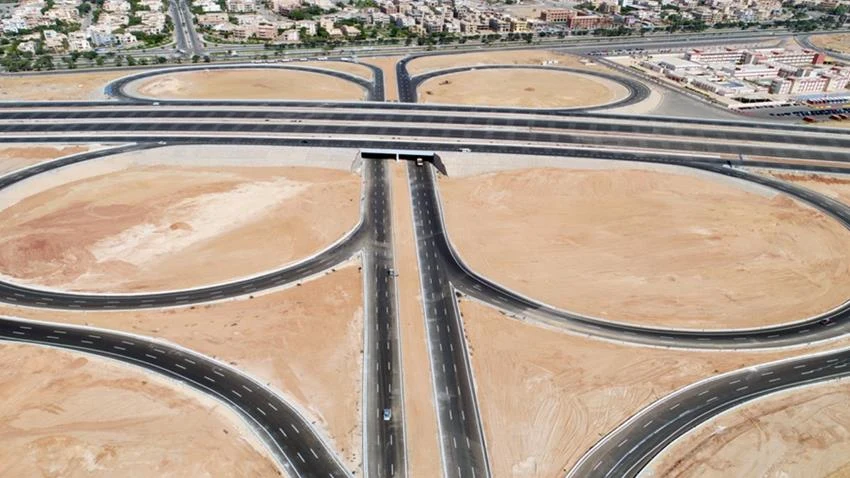 El Shorouk City, Egypt
A road tunnel between growing eastern communities requires lightweight-fill decisions to account for surcharge, water pathways and…
View the case studyBUILDING TOGETHER
Share your application, quantities and project location to discuss the next step.
It compares EPS fill self-weight with the same volume of conventional soil fill. It does not mean a 95% reduction in all foundation or traffic loads; calculate the complete section using actual densities.
Use the grade’s resistance at 1% deformation with service stress and long-term creep checks. A high-strain short-term compression value alone is insufficient for settlement-sensitive design.
Yes: EPS is buoyant, so evaluate water levels, drainage and uplift restraint. Include the construction stage before permanent cover is installed.
Fuels and some solvents can attack EPS. Use the specified compatible geomembrane and sealed details wherever hydrocarbon exposure is possible.
Chema Geo Foam is engineered EPS lightweight fill in five grades, GF15–GF35. The TDS lists resistance at 1% deformation from >25 kPa for GF15 to >150 kPa for GF35 (ASTM D6817). Choose the grade for the complete dead and live loads; assess settlement, creep, groundwater uplift and the designed load-distribution cover.