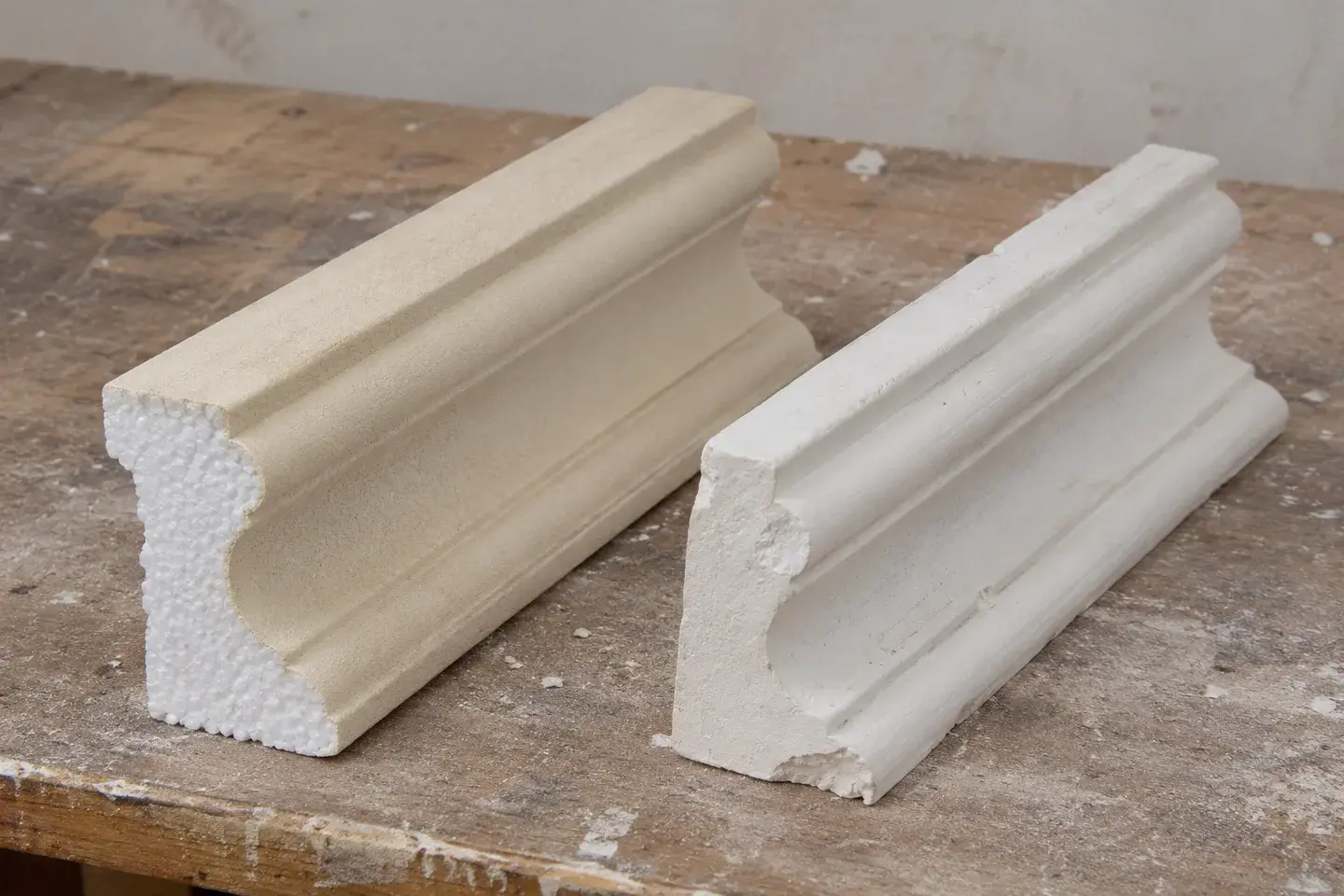
 Coated foam cornice offcut beside a traditional cast gypsum sample
Introduction
Do you really have to choose between architectural elegance and practical execution?
Cornices and decorative mouldings give a building unmistakable architectural character, both on exterior facades and in interior spaces. Relying on traditional gypsum for every application, however, often introduces serious challenges related to dead load, moisture exposure, installation time, and ongoing maintenance.
Advances in building materials have introduced lighter, purpose-built alternatives for demanding environments—including FOAMINA by Chema Foam, engineered to deliver architectural mouldings with greater design and site flexibility.
So is FOAMINA genuinely better than traditional gypsum, and when does each material make the most sense?
What Is The Difference Between FOAMINA And Traditional Gypsum?
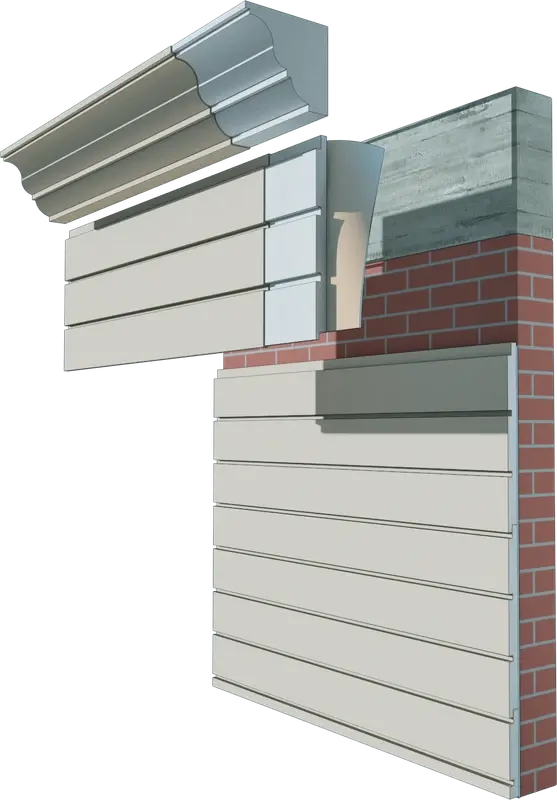
FOAMINA is an architectural moulding system built around a flame-retardant expanded polystyrene (EPS) core finished with a crack-resistant protective coating, designed for cornices, window surrounds, and decorative columns.
Traditional gypsum, by contrast, is a mineral-based plaster mixed with water and cast in moulds or run in situ, widely used for interior ceiling cornices and ornamental plasterwork.
FOAMINA Vs. Traditional Gypsum: Side-By-Side Comparison
| Comparison Criteria | FOAMINA | Traditional Gypsum |
|---|---|---|
| Weight | Extremely lightweight | Significantly heavier |
| Exterior Use | Purpose-built for exterior facades | Standard gypsum is unsuitable for direct rain exposure |
| Installation Speed | Prefabricated profiles that are easy to handle | Depends on casting, piece weight, and on-site shaping |
| Moisture Resistance | Protective coating engineered for outdoor exposure | Vulnerable to sustained water and dampness |
| Design Flexibility | Wide range of profiles and custom shapes | Excels at fine, intricate hand-crafted detailing |
| Thermal Insulation | EPS core helps reduce localized heat transfer | Not a dedicated thermal insulation solution |
| Fixing Method | System adhesive plus mechanical anchors as specified | Adhesives and mechanical fixings based on piece weight |
| Maintenance | Periodic cleaning and coating touch-ups as needed | Crack repair, patching damaged sections, and refinishing |
Why Is FOAMINA Better Suited For Exterior Facades?
A facade isn't judged only on handover day—what matters is how well it holds up years later.
1. Lightweight Construction and Reduced Dead Load
Large gypsum profiles can add substantial dead weight to a facade, especially when oversized or repetitive mouldings span multiple elevations.
FOAMINA exterior profiles are remarkably light, simplifying transport, hoisting, and site handling while reducing structural dead loads compared with gypsum elements of similar dimensions.
2. Superior Weather Resistance
Traditional gypsum deteriorates under prolonged exposure to rain and moisture, which is why it is primarily specified for interior applications.
By contrast, FOAMINA by Chema Foam is specifically formulated for exterior environments with a protective outer coating that limits water ingress and resists weathering.
According to Chema Foam's technical data, the system passed EN 13497 impact resistance testing up to 20 joules with no visible damage under test conditions.
3. Faster Installation and Time Savings
Every extra day spent on facade finishing directly affects project overheads and handover schedules.
FOAMINA profiles can be prefabricated and precision-cut to required dimensions ahead of installation, minimizing time-consuming on-site shaping.
Traditional gypsum requires casting or forming, curing, heavy fixing, and joint finishing—with schedules varying widely depending on profile complexity.
4. Architectural Versatility
From classical cornices to window frames and decorative pilasters, FOAMINA offers versatile profiles suited to private villas, commercial buildings, and residential developments.
For projects requiring ultra-fine artisanal ornamentation, traditional gypsum remains a strong choice—particularly in protected interior settings.
Cost Comparison: FOAMINA Vs. Traditional Gypsum
Is the lowest upfront material price actually the most economical option once installed?
To make an accurate decision, evaluate the total installed system cost rather than the unit price per linear meter alone.
| Cost Component | FOAMINA | Traditional Gypsum |
|---|---|---|
| Material Price | Depends on profile cross-section and dimensions | Depends on gypsum grade and ornamental detail |
| Transport & Handling | Easier and more efficient due to low weight | Requires greater care to prevent breakage |
| Labor | Can shorten on-site installation time | Depends on artisan skill and design complexity |
| Finishing | Paint-ready protective surface coating | Often requires priming, skimming, and painting |
| Maintenance | Depends on exposure level and installation quality | Higher risk of deterioration when exposed to moisture |
Bottom line: FOAMINA can lower overall project costs—especially on facades with repetitive architectural mouldings—though verifying actual savings requires a project-specific BOQ comparison per linear meter or per piece.
How Is FOAMINA Installed On Exterior Facades?
Even the best architectural moulding system can underperform if installed incorrectly.
Installation begins by measuring and mitre-cutting the profiles to the required angles while verifying that the substrate is structurally sound, clean, and dry.
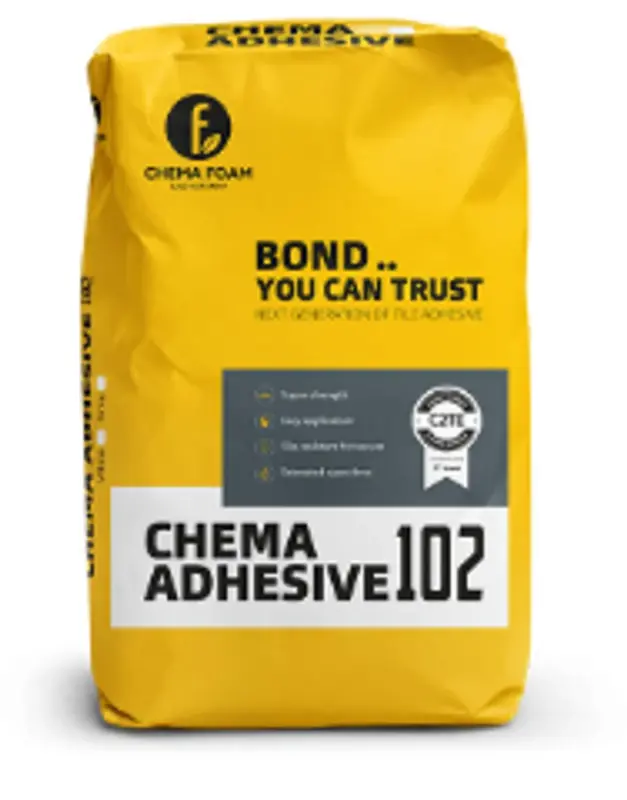
Next, an approved system adhesive—such as Chema Adhesive 102 in accordance with manufacturer guidelines—is applied to bond the elements securely in place.
Approved mechanical anchors are then installed as specified, joints and fixing points are treated with the system's dedicated finishing compound, and the surface is prepared for final exterior paint.
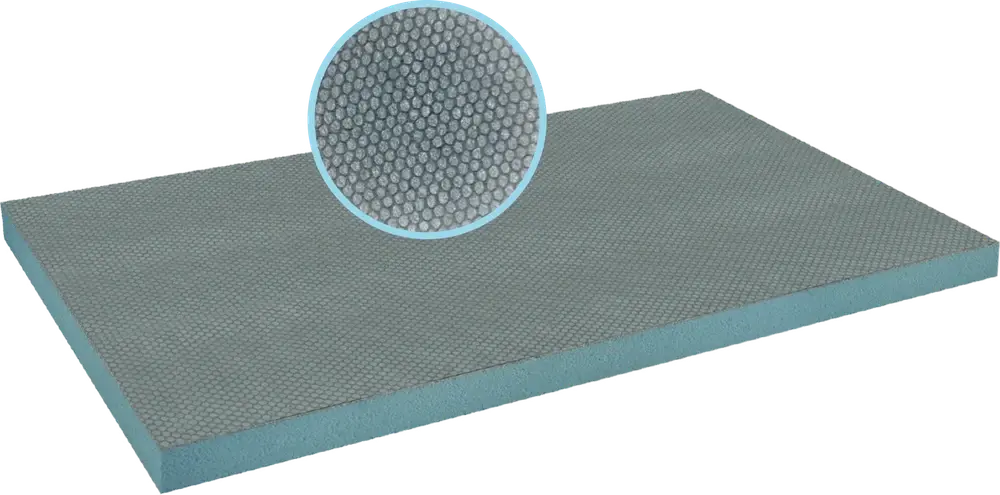
For projects requiring finish-ready thermal insulation boards, Chema XBoard can also be evaluated—bearing in mind that its thermal insulation role is distinct from FOAMINA's decorative moulding function.
When To Choose FOAMINA Vs. Traditional Gypsum
| Project Application | Typically Recommended Choice |
|---|---|
| Villa facade cornices | FOAMINA |
| Exterior window surrounds | FOAMINA |
| Large, lightweight decorative elements | FOAMINA |
| Traditional interior ceiling mouldings | Gypsum or FOAMINA, depending on the design |
| Restoration of historic plasterwork | Gypsum compatible with the original fabric |
| Facades exposed to direct sun and rain | FOAMINA with an approved fixing and protection system |
Conclusion: FOAMINA By Chema Foam—Architectural Impact Without The Weight
If your project calls for exterior cornices, window surrounds, or large-scale decorative profiles, FOAMINA delivers decisive advantages over traditional gypsum—particularly in weight reduction, ease of installation, and outdoor durability.
For fine interior ornamentation, traditional gypsum may remain the right fit depending on the architectural brief.
Explore FOAMINA by Chema Foam and request a project quote to select the right profiles and dimensions for your facade.
This comparison is based on official FOAMINA technical specifications and Association of the Wall and Ceiling Industry (AWCI) guidance regarding gypsum performance and moisture exposure.
Product-specific design and application must follow approved project specifications and current technical documents.