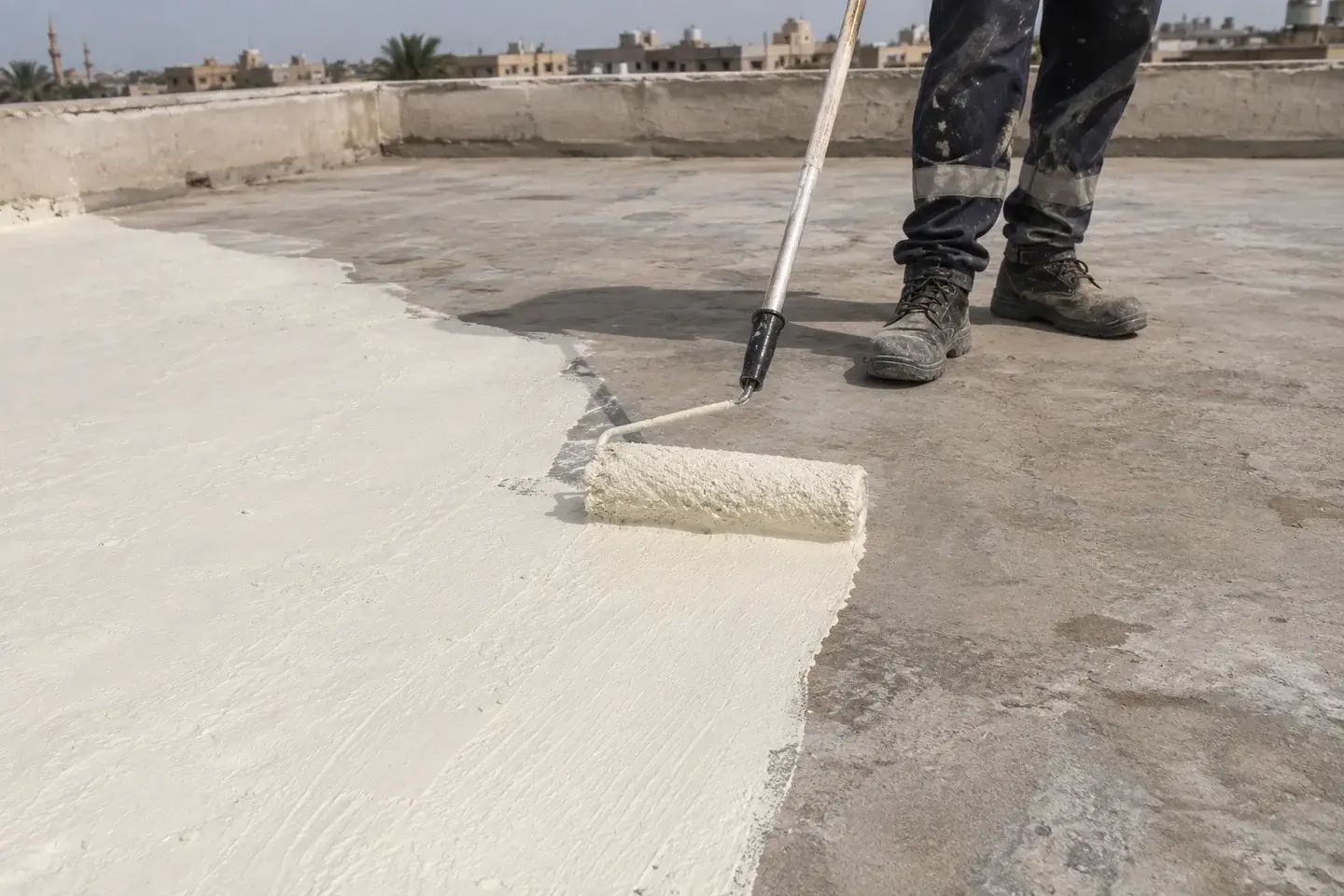
 White roof coating applied with a roller on a concrete roof
Introduction
A building's roof can be the main source of indoor heat gain—and the very first point where water leaks begin.
Across Egypt, roofs endure prolonged solar exposure alongside seasonal weather shifts and rainfall, creating demanding conditions that affect both occupant comfort and the longevity of interior finishes.
Does protecting a roof against both heat and water always require two separate systems?
This is where Chema Ultra Light by Chema Foam stands out: an elastomeric acrylic coating engineered to deliver reliable waterproofing while contributing to thermal insulation, with straightforward application across multiple roof substrates.
What Is Chema Ultra Light?
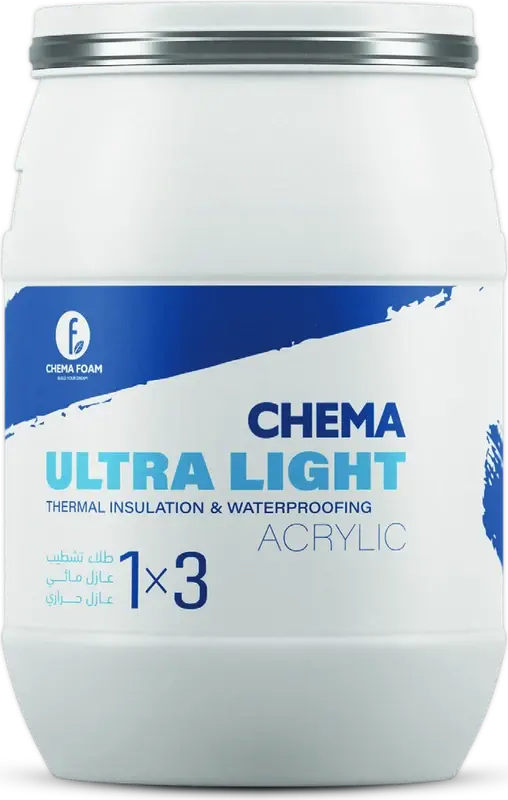
Chema Ultra Light is a ready-to-use, single-component elastomeric acrylic coating that requires no two-part mixing on site.
Once applied, it forms a seamless protective membrane resistant to moisture and water ingress, combined with thermal properties that improve the performance of sun-exposed roofs.
Its bright white finish, strong UV and weathering resistance, and dependable adhesion allow it to perform effectively across diverse substrates when properly prepared.
Why Combined Waterproofing And Thermal Protection Matters
Water ingress is only half the problem—daily solar heat gain carries an ongoing operational cost as well.
Sun-exposed roof slabs absorb solar radiation and gradually transfer heat into the building interior, driving up cooling loads—especially on top floors and in industrial facilities.
When installed as part of a properly specified system, a dual-purpose coating like Chema Ultra Light helps reduce heat gain while shielding the roof deck from moisture.
That said, actual thermal performance depends on dry film thickness, application specifications, and the overall roof assembly; an insulating coating should not automatically be treated as a direct substitute for thick rigid thermal insulation boards.
Key Benefits Of Chema Ultra Light
What makes Chema Ultra Light worth specifying for your next project?
The coating offers several practical engineering advantages:
- Combined Waterproofing and Thermal Support: Pairs reliable water resistance with reduced solar heat transfer.
- Elastomeric Flexibility: Accommodates minor substrate movement within the system's rated performance limits.
- UV Resistance: Formulated for long-term exterior exposure under intense sunlight.
- Easy Application: Single-component, ready-to-use formulation that streamlines site work.
- Strong Adhesion: Bonds effectively to multiple roof substrates following proper surface preparation.
- Reflective White Finish: Helps reflect a portion of incoming solar radiation.
Equally important, selecting the right system and executing it cleanly can help reduce future moisture-related maintenance costs.
Where Can Chema Ultra Light Be Used?
Not every roof is concrete—so can one coating system adapt to different substrates?
Chema Foam specifies Chema Ultra Light for a wide range of roof applications, including:
1. Concrete Roofs
Applied as a protective membrane over weather-exposed concrete slabs, provided cracks, honeycombing, and drainage or ponding issues are repaired beforehand.
2. Metal Roofs
Suitable for metal roofing on factories, warehouses, and industrial hangars, provided a compatible anti-corrosion primer system is applied prior to coating.
3. Wooden Roofs
Forms a flexible protective layer on suitable timber roof decks once the surface is confirmed dry, properly prepared, and compatible with the coating system.
4. Roof Tiles
Can be applied over suitable roof tile types, taking joint detailing, slope, and exposure conditions into account.
How To Apply Chema Ultra Light Properly
Even the highest-grade waterproofing coating will underperform if the substrate is not properly prepared.
Application begins with thorough surface cleaning to remove dust, oil, grease, and loose material, followed by repairing any defects that could compromise adhesion.
Once the substrate is ready, stir Chema Ultra Light thoroughly to achieve a uniform, homogeneous consistency.
Apply the first coat by trowel, brush, or suitable spray equipment, then allow it to cure completely before applying the second coat to achieve the target film thickness.
Always adhere to the project's approved consumption rates, film thickness, and recoat intervals, paying particular attention to joints, corners, upstands, and roof drains.
Does Chema Ultra Light Replace Blue XPS Foam Boards?
This is a critical question for engineers specifying a complete roof insulation build-up.
Chema Ultra Light is an elastomeric acrylic coating designed to combine waterproofing with thermal-insulating properties.
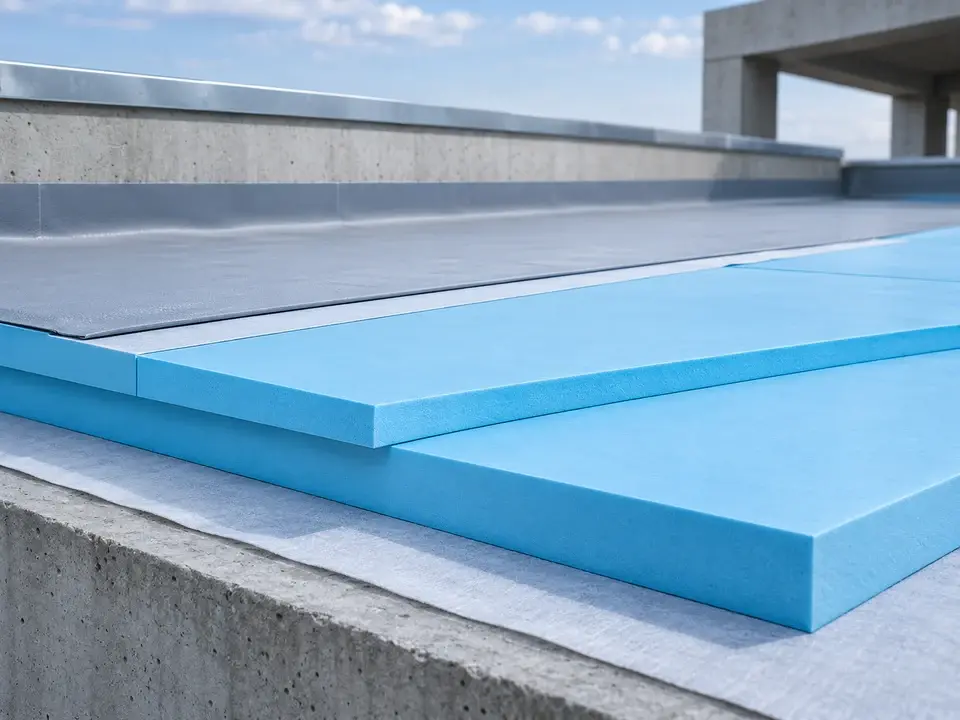
By contrast, Chema XPS (blue extruded polystyrene foam) consists of rigid boards engineered to deliver calculated thermal resistance (R-value) based on board thickness and material conductivity.
Accordingly, rigid XPS boards remain the preferred choice when the design mandates a specific calculated thermal resistance, whereas Chema Ultra Light is evaluated according to surface protection and roof performance requirements.
If your primary objective is purely acrylic waterproofing, you can also review Chema Flex 200 and compare technical specifications before making a final selection.
Can A Protective Topcoat Be Applied Over Chema Ultra Light?
Yes—Chema Foam offers Chema Color Shield, a decorative and protective finish coat formulated to be applied over Chema Ultra Light in suitable applications.
It enhances exterior aesthetics while offering color options and additional weather resistance in line with its technical specifications.
Chema Ultra Light: Roof Protection That Starts At The Surface
Whether you are a project owner, consultant engineer, or contractor, choosing the right roof insulation system is essential to long-term building performance and asset protection.
With Chema Ultra Light from Chema Foam, you have a flexible, practical option that combines waterproofing and thermal-insulating benefits across diverse roof types.
Request a quote from Chema Foam and consult our technical team to evaluate whether Chema Ultra Light is the right fit for your project.
Product-specific design and application must follow approved project specifications and current technical documents.