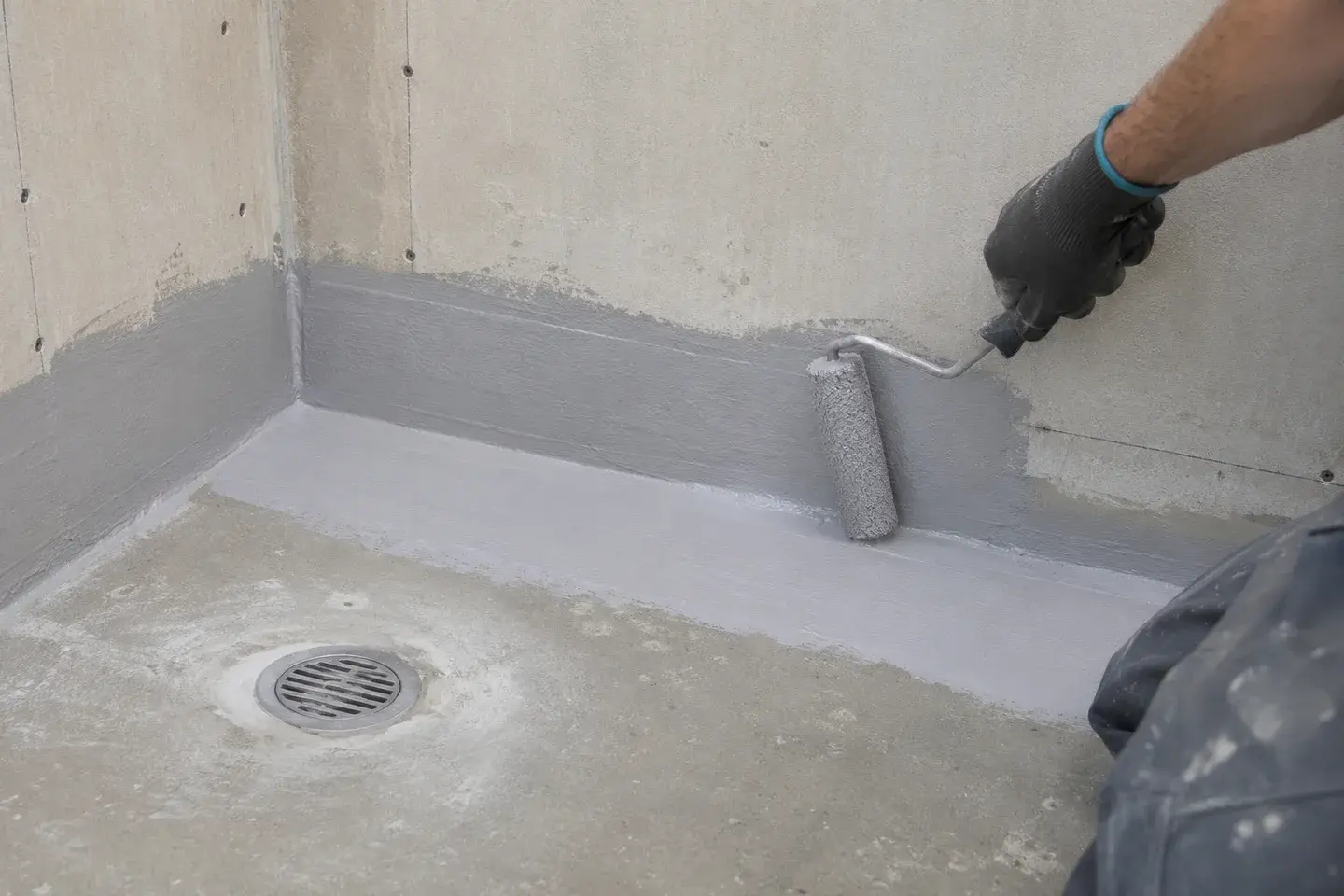
 Flexible waterproof coating rolled onto the edge of an unfinished bathroom floor
Introduction
A minor water leak today can turn into a major repair bill tomorrow.
Damp patches, blistering paint, and damaged finishes are rarely just cosmetic issues—they are often early warning signs that moisture has breached areas that should have been protected from day one.
Choosing the right waterproofing system for roofs and bathrooms therefore depends on substrate conditions, membrane flexibility, and long-term exposure requirements.
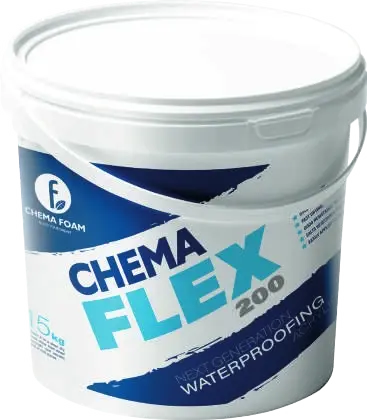
That is where Chema Flex 200 by Chema Foam stands out: a high-flexibility acrylic waterproofing coating formulated to shield concrete roofs and wet areas from water ingress.
What Is Chema Flex 200?
Chema Flex 200 is a single-component acrylic waterproofing coating that cures into a seamless, flexible protective membrane.
Because it is supplied ready to use, there is no two-part mixing required—simply stir the product thoroughly before application in line with manufacturer instructions.
It resists water, humidity, and UV exposure while delivering reliable adhesion to properly prepared substrates, making it a practical choice for both exterior and interior waterproofing.
Why Choose Chema Flex 200 For Waterproofing?
Not every waterproof coating can accommodate minor substrate movement.
One of Chema Flex 200's defining strengths is its high elasticity, which is essential for surfaces subject to thermal cycling and minor in-service movement.
Based on published product data, key performance highlights include:
- Elongation at break exceeding 200% under standard test conditions.
- Crack-bridging capability up to 1.5 mm per published test data.
- Adhesion strength of 1.8 N/mm² according to published technical specifications.
- Weather resistance: Withstands direct sunlight, UV rays, and moisture exposure.
- Easy application: Applies smoothly by brush or paint roller.
- Relatively fast drying: Supports efficient recoat intervals when applied as directed.
Keep in mind that high flexibility does not make the coating a substitute for proper structural crack repair or engineered movement-joint treatments.
Where Can Chema Flex 200 Be Used?
Can one waterproofing coating work across roofs, balconies, and bathrooms?
Chema Foam notes that Chema Flex 200 is suitable for multiple applications when paired with proper surface preparation and system detailing.
1. Concrete Roofs
Forms a seamless, flexible waterproof barrier on concrete roof slabs, provided drainage slopes, parapet upturns, and drain outlets are properly detailed.
2. Bathrooms and Kitchens
Used within under-tile waterproofing systems in bathrooms and kitchens to prevent water seepage into structural concrete and adjacent finishes.
3. Balconies and Terraces
Balconies face constant rain, washdown water, and thermal swings; Chema Flex 200 can be specified as part of a complete balcony waterproofing buildup.
4. Metal Roofs and Roof Tiles
Offers good adhesion to suitably primed or coated metal surfaces, and Chema Foam also notes its suitability for timber roofs and certain types of roof tiles.
How To Apply Chema Flex 200 For Best Results
Even a top-tier waterproofing coating will fail if applied over a poorly prepared substrate.
Start by thoroughly cleaning the substrate to remove dust, oils, and loose or weak concrete, then repair cracks, honeycombing, and critical junctions before coating.
Stir Chema Flex 200 to a uniform consistency and apply the first coat evenly by brush or roller.
Per Chema Foam's guidelines, apply the second coat after roughly 4 hours—or once the first coat is dry—in a perpendicular direction to ensure full, uniform coverage.
Published approximate consumption is 1 kg/m² for two coats, though actual coverage varies with surface roughness and site conditions.
Perform the required quality checks before installing final finishes, and do not expose the membrane to standing water until full drying and curing are complete.
Chema Flex 200 Vs. Chema Proof: Which One Fits Better?
The core difference lies in the chemistry of each material and the system it belongs to.
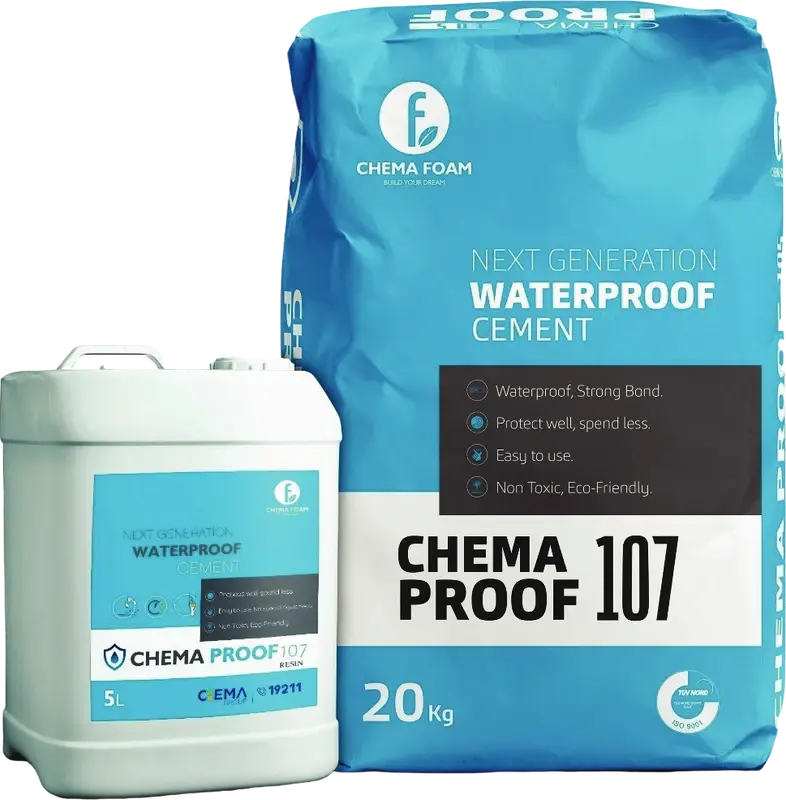
Chema Flex 200 is a single-component acrylic coating, whereas Chema Proof 107 is a two-component polymer-modified cementitious waterproofing system composed of a cementitious powder and an acrylic resin.
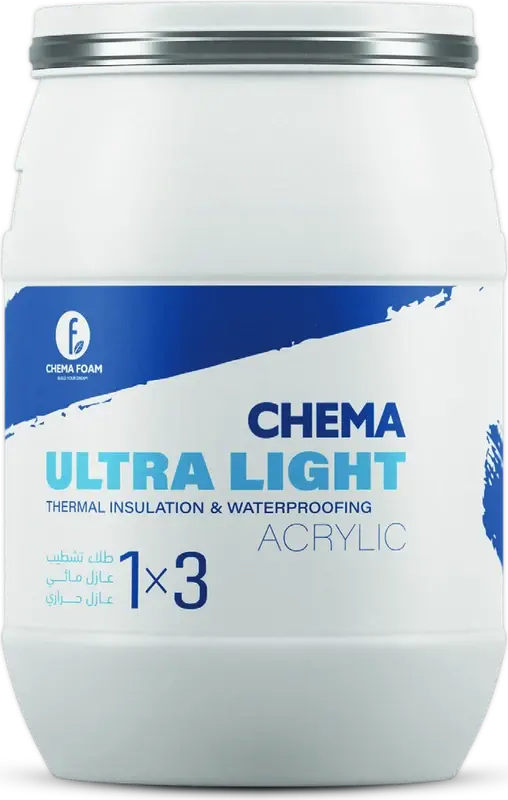
If your roof project also calls for reducing solar heat gain, you can evaluate Chema Ultra Light and compare its performance data.
The right choice is never just the most familiar product name—it is the system engineered for your specific site conditions.
Chema Flex 200: Reliable Protection Starts With The Right System
Effective waterproofing is more than rolling a coating onto concrete—it requires matching the material to the substrate, executing every step cleanly, and inspecting quality at each stage.
With Chema Flex 200 by Chema Foam, engineers and contractors gain a flexible acrylic waterproofing option for protecting roofs and wet areas.
Request a quote from Chema Foam and speak with our technical team to select the right waterproofing system for your project.
Product-specific design and application must follow approved project specifications and current technical documents.