01
Marina Walkways & Finger Piers
Provide floating pedestrian access between berths and the shore. Coordinate live loads, freeboard, flexible connections and shore gangway movement.
Chema Pontoons
Chema Pontoons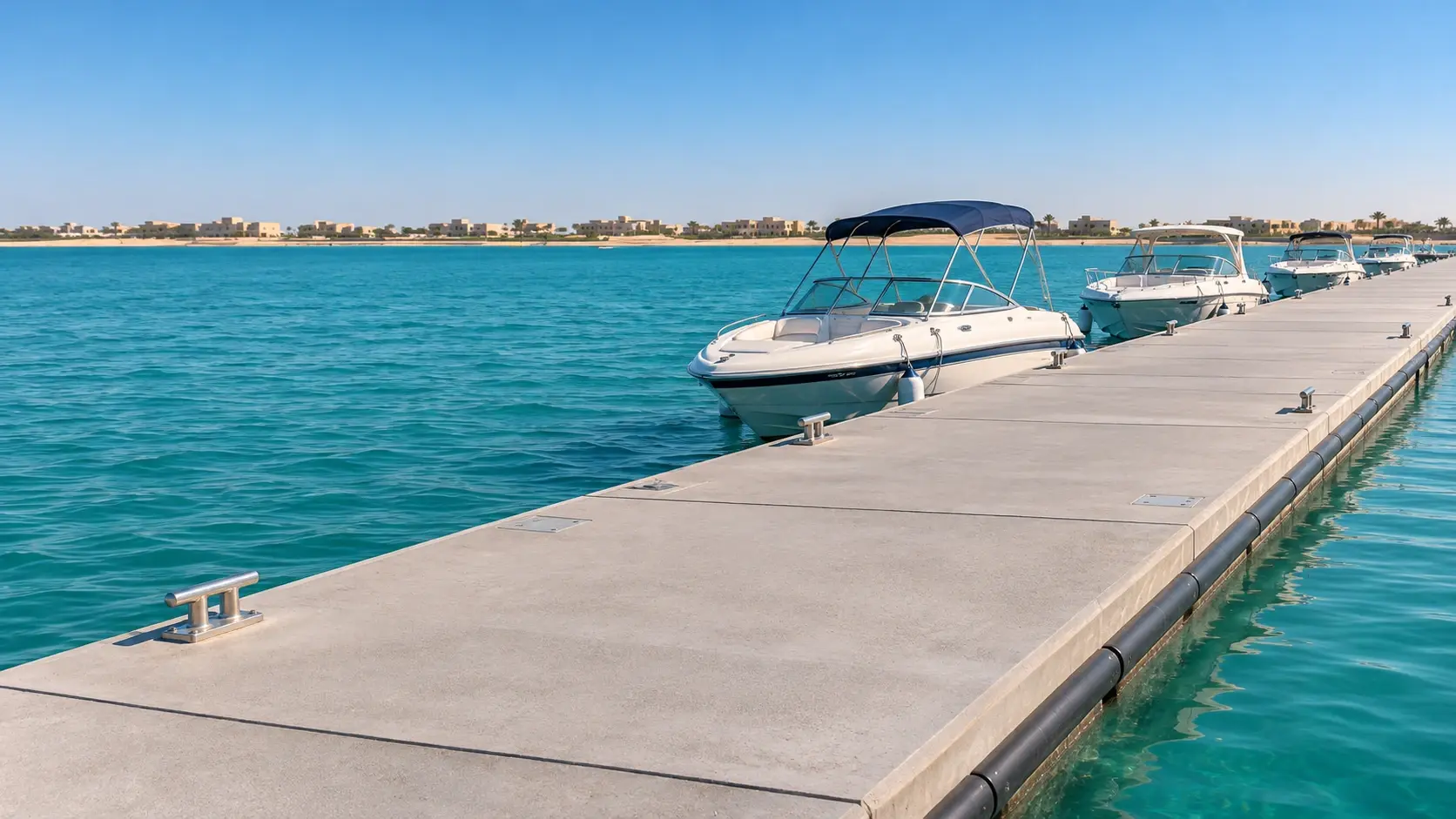
EPS FLOTATION & MARINA ACCESS SYSTEMS
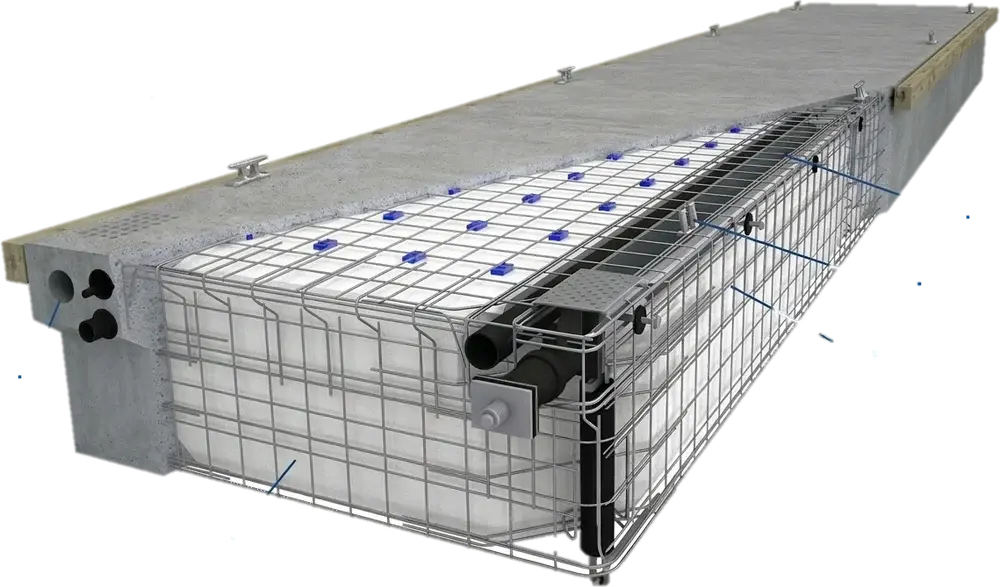
Chema Pontoons uses an EPS flotation core of 15–35 kg/m³ and a protective reinforced-concrete shell. Geometry and connections follow the project design. Calculate net buoyancy after deducting the complete shell, deck and service dead loads, then verify freeboard and stability under the specified traffic and marine conditions.
System & approach
A floating walkway must support people gathering on one edge as well as evenly distributed pedestrian traffic. Waves, fluctuating water levels and mooring reactions impose repeated loads on deck connections and shell interfaces. An undersized flotation layout loses freeboard under crowding, while exposed foam is vulnerable to abrasion, ultraviolet light and incompatible fuel or solvent contamination.
Calculate net buoyancy from displaced water minus the complete shell, frame and deck dead load, then verify freeboard under uneven loading. Distribute the EPS cores beneath a structural frame that spreads local deck forces. Integrate protective encapsulation, corrosion-resistant connections, articulated access and site-designed moorings, with inspection routes that reveal changes in trim or shell condition early.
SYSTEM COMPONENTS
Explore the ten integrated pontoon components: the main cutaway shows the EPS core, reinforcement, services and connections; side views show the guide pile and anchor.
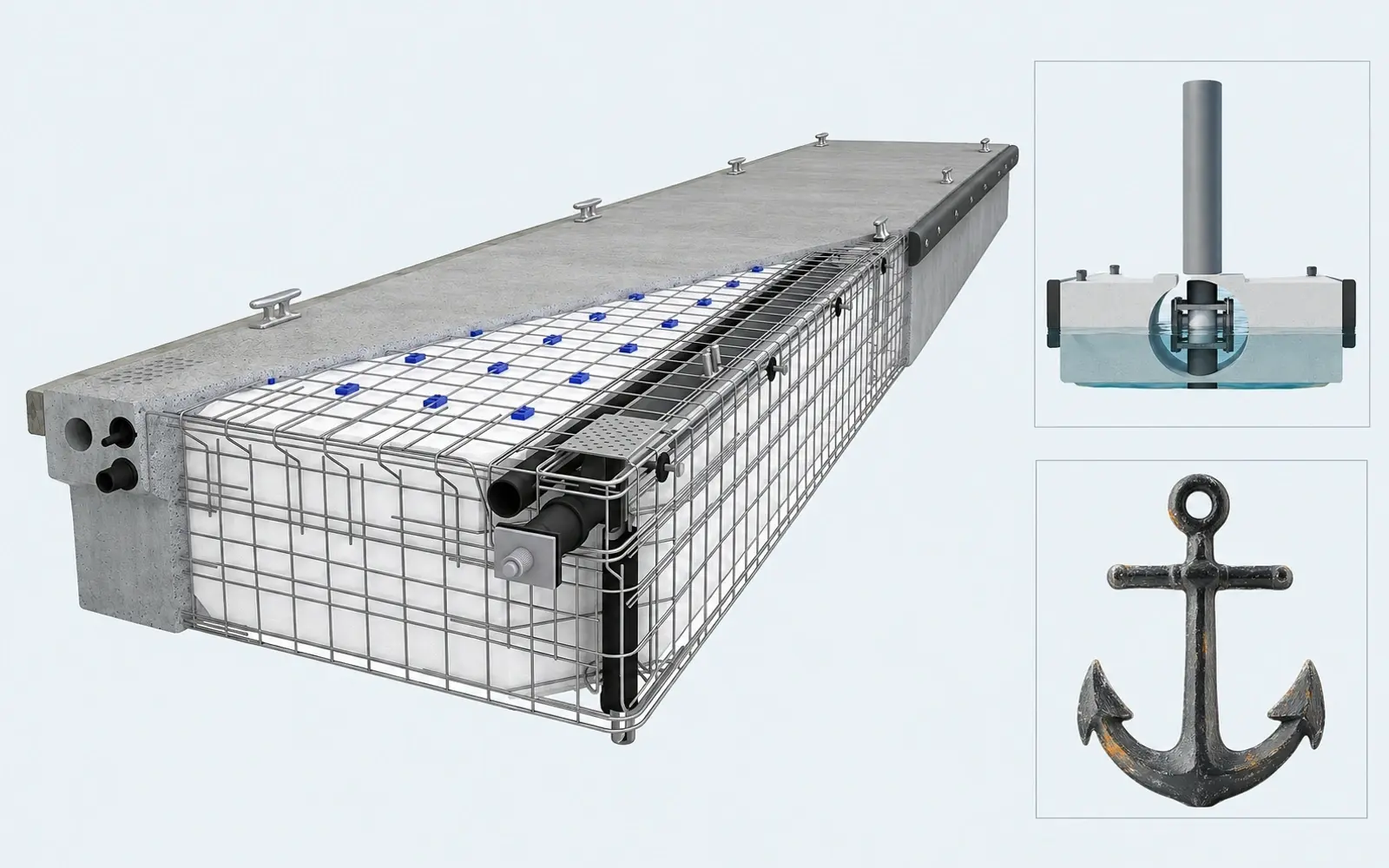
Select a numbered component to review its role, specification and related products.
01 · HDPE SERVICE CONDUITS
Integrated conduits provide routes for electrical, telecommunications and drainage services.
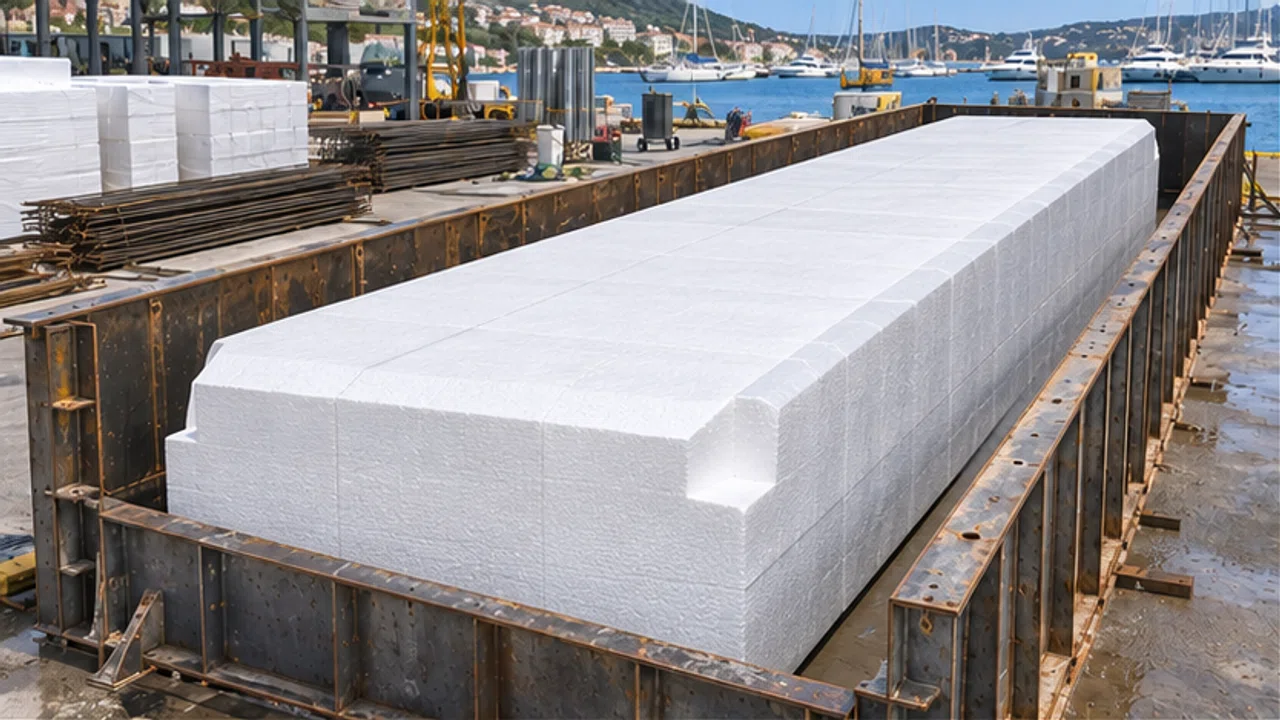
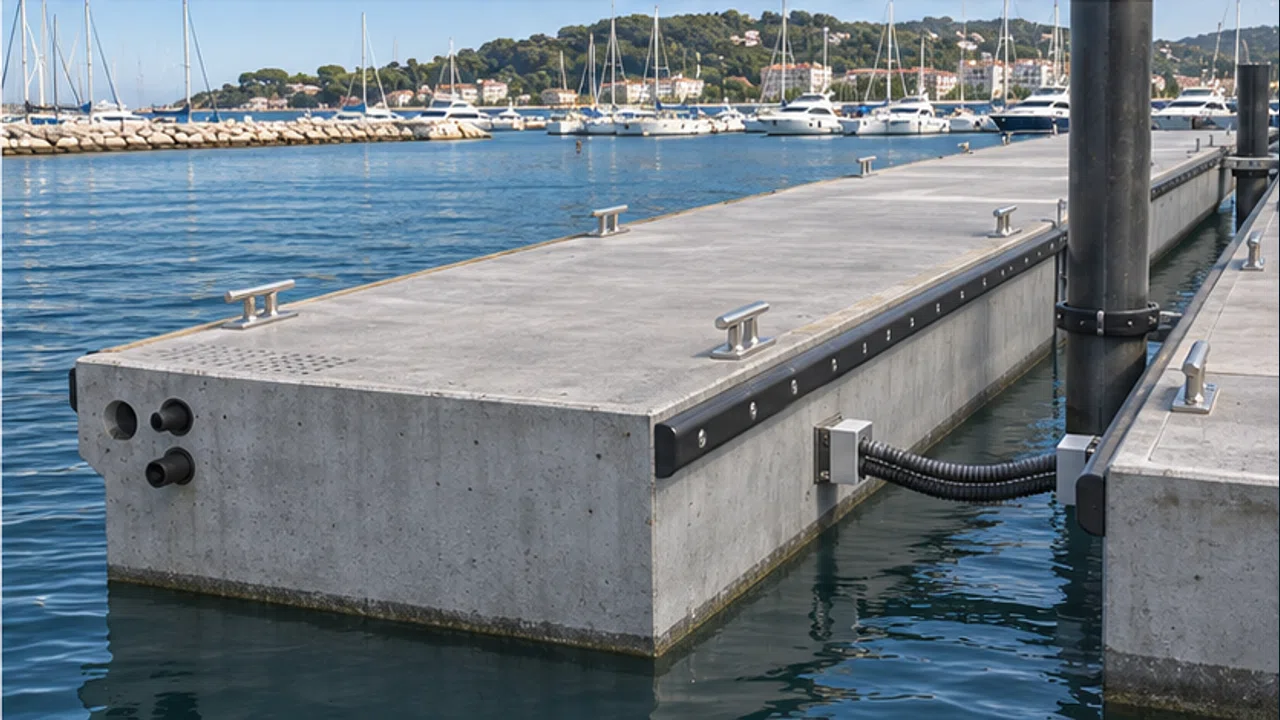
Provide floating pedestrian access between berths and the shore. Coordinate live loads, freeboard, flexible connections and shore gangway movement.
Configure flotation units for the required berth geometry and water levels. Design moorings and connections for local wind, current and wave actions.
Support project-designed service platforms with distributed flotation. Check equipment loads, stability, access and operating limits before use.
Create floating access for waterfront recreation within a defined operating envelope. Detail slip resistance, edge safety and inspection access for public use.
Closed-cell EPS · designed encapsulation
EPS and reinforced-concrete floating systems for marinas and pontoons.
For flotation units sized by displacement, dead load, live load, reserve buoyancy and site exposure. Core: Expanded polystyrene (EPS) EPS core density: 15–35 kg/m³
Record water levels, wave exposure and access requirements. Establish live loads, freeboard and the operating envelope with the marine designer.
Approve core geometry, density and protective shells. Check displacement, stability, framing and mooring forces together.
Fit protected flotation units and designed frame connections. Install decking and service routes without damaging the encapsulation.
Verify freeboard, stability and connection movement under the specified checks. Inspect moorings and document the maintenance schedule.
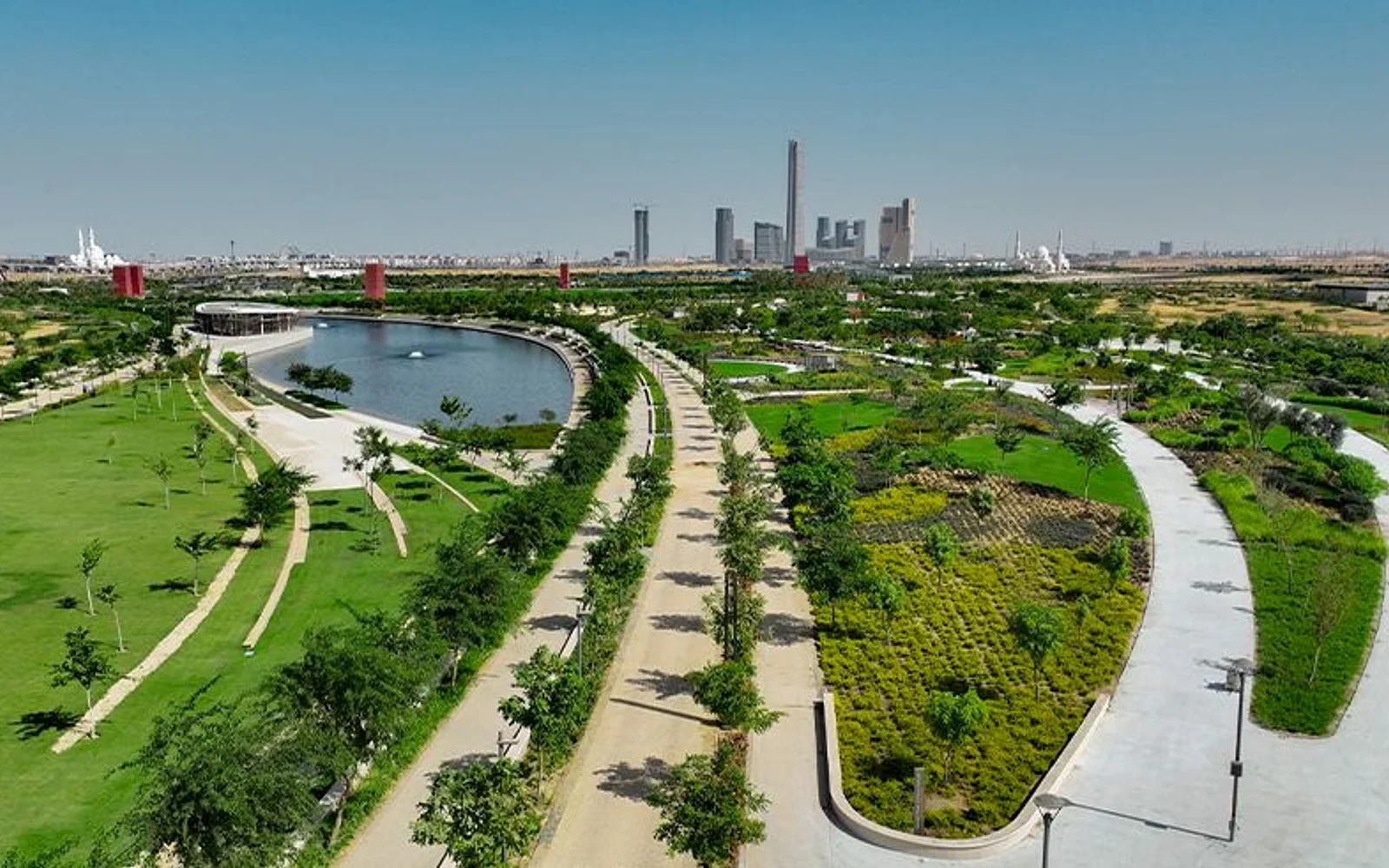 New Administrative Capital, Egypt
A continuous metropolitan landscape crosses structures and service zones, making protection layers and drainage coordination central to the…
View the case studyBUILDING TOGETHER
Share your application, quantities and project location to discuss the next step.
No: capacity depends on displaced water volume minus the complete system dead load. The design must also check reserve buoyancy, freeboard and stability under uneven loading.
Use the specified protective encapsulation. It protects against impact, abrasion, UV and incompatible contaminants while limiting foam release into the water.
Wave climate, currents, wind and water-level range vary by site. A marine designer must confirm the arrangement and operating limits before the system is specified.
Inspect shells, deck fixings, flexible connections and moorings for wear or damage. Check freeboard changes and clear service and drainage routes according to the maintenance plan.
Chema Pontoons uses an EPS flotation core of 15–35 kg/m³ and a protective reinforced-concrete shell. Geometry and connections follow the project design. Calculate net buoyancy after deducting the complete shell, deck and service dead loads, then verify freeboard and stability under the specified traffic and marine conditions.