01
Ribbed & Hollow-Block Slabs
Use EPS blocks to form lightweight voids between reinforced concrete ribs. Confirm rib geometry, temporary support and restraint against movement during pouring.
Chema Block
Chema Block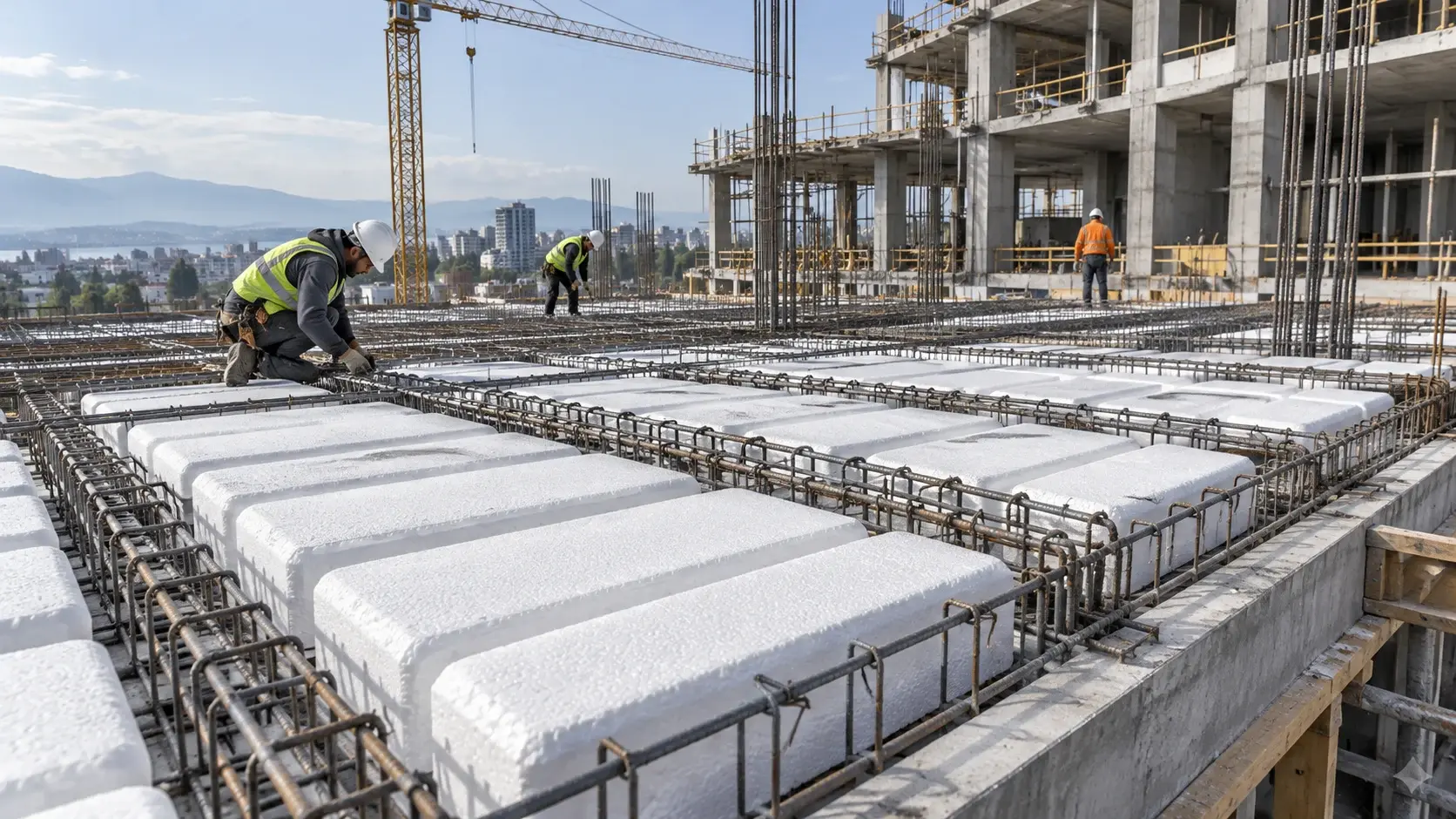
LIGHTWEIGHT CONCRETE, BONDING & PRECISION GROUTING
Coordinate lightweight slab infill, roof screeds and precision structural interfaces with materials that perform distinct physical roles. Chema Block EPS void formers reduce concrete volume in designed one-way or two-way ribbed slabs; Chema Beads and Chema Foam Crete create lightweight mixes. Chema Bond SBR improves cementitious bonding, while Chema Grout 214 provides non-shrink support beneath baseplates and around anchors.
System & approach
Solid concrete infill adds permanent weight without always contributing efficiently to the designed load path. Roof falls made with dense screeds increase this burden, while poorly bonded repair interfaces and voided baseplate bedding create local stress concentrations. Lightweight mixes also lose consistency if fresh density, water demand and curing are uncontrolled, making separate material selection essential for each construction task.
Set out Chema Block to the structural rib design; the lightweight concrete facing is 1–1.5 cm. Foam Crete uses a product : water dilution of 1:14, with pre-foam mixed into mortar for 3–5 minutes; target density is established by site trials. Grout 214 complies with ASTM C1107 and requires 3–3.5 L water per 25 kg, at +5 to +35 °C.
SYSTEM COMPONENTS
Three structural zones distinguish Chema Block void formers, reinforced-concrete ribs and the solid downstand beam.
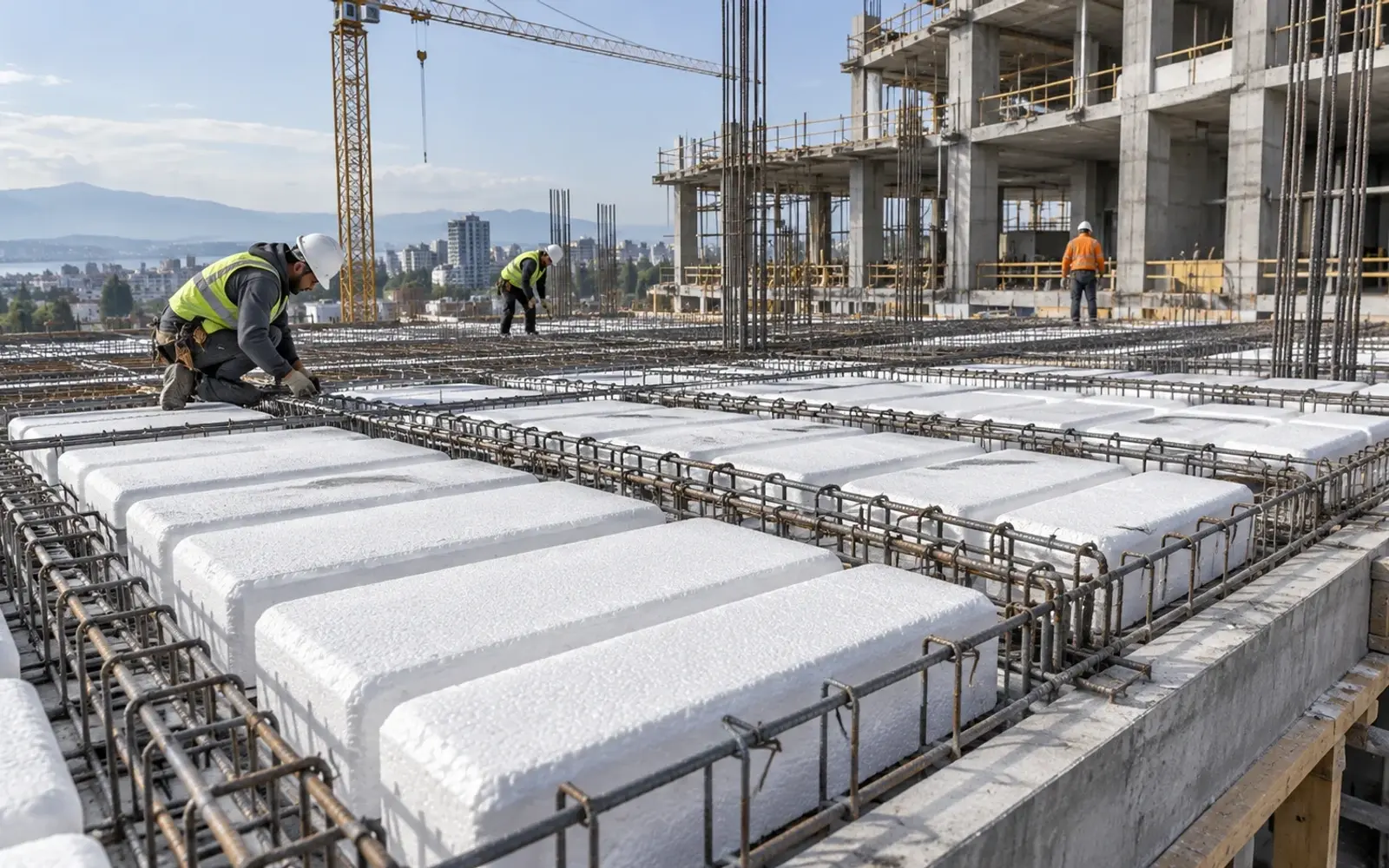
Select a numbered component to review its role, specification and related products.
01 · CHEMA BLOCK
Lightweight EPS void formers occupy the spaces between the structural ribs.

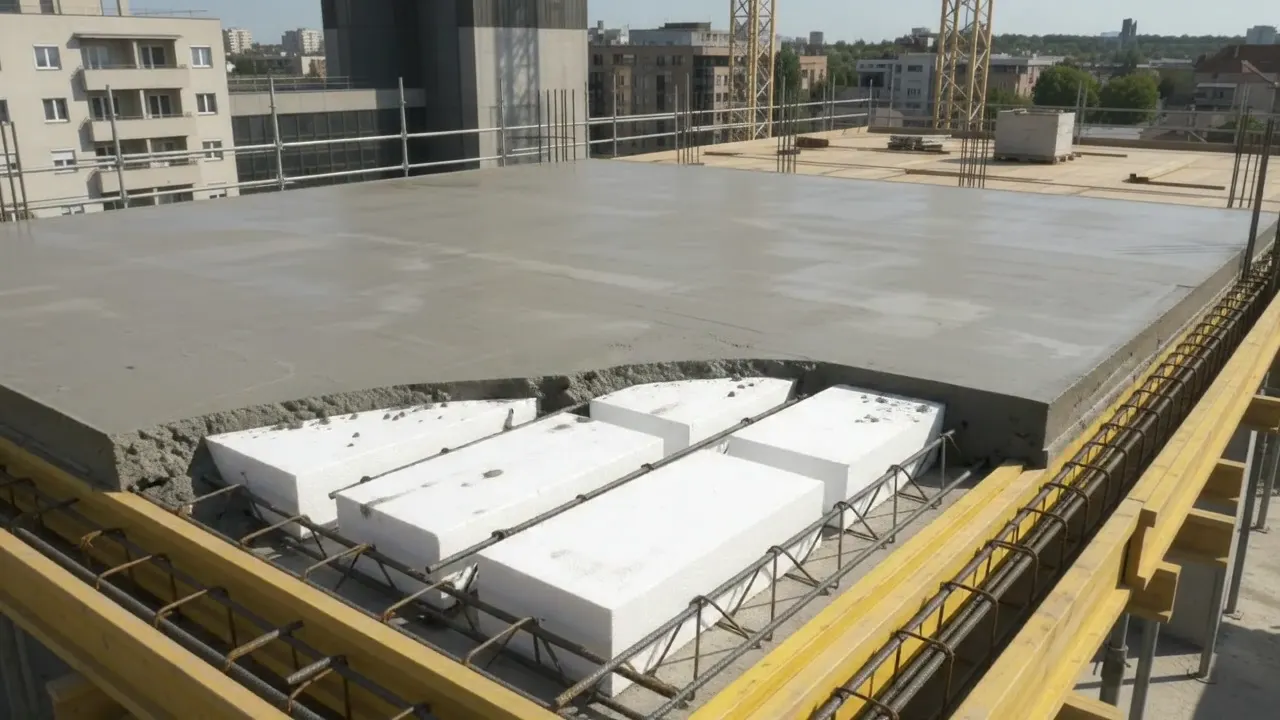
Use EPS blocks to form lightweight voids between reinforced concrete ribs. Confirm rib geometry, temporary support and restraint against movement during pouring.
Produce approved lightweight fill using EPS aggregate or a cellular-concrete process. Trial the density and strength, then coordinate falls, curing and subsequent waterproofing.
Use SBR latex in the specified bonding slurry or modified mortar. Prepare sound concrete, remove contamination and respect the required wet-on-wet timing.
Bed designed baseplates and anchor pockets with non-shrink cementitious grout. Detail shuttering, venting and a continuous pour to avoid trapped air beneath supports.
EPS void former · ribbed slabs
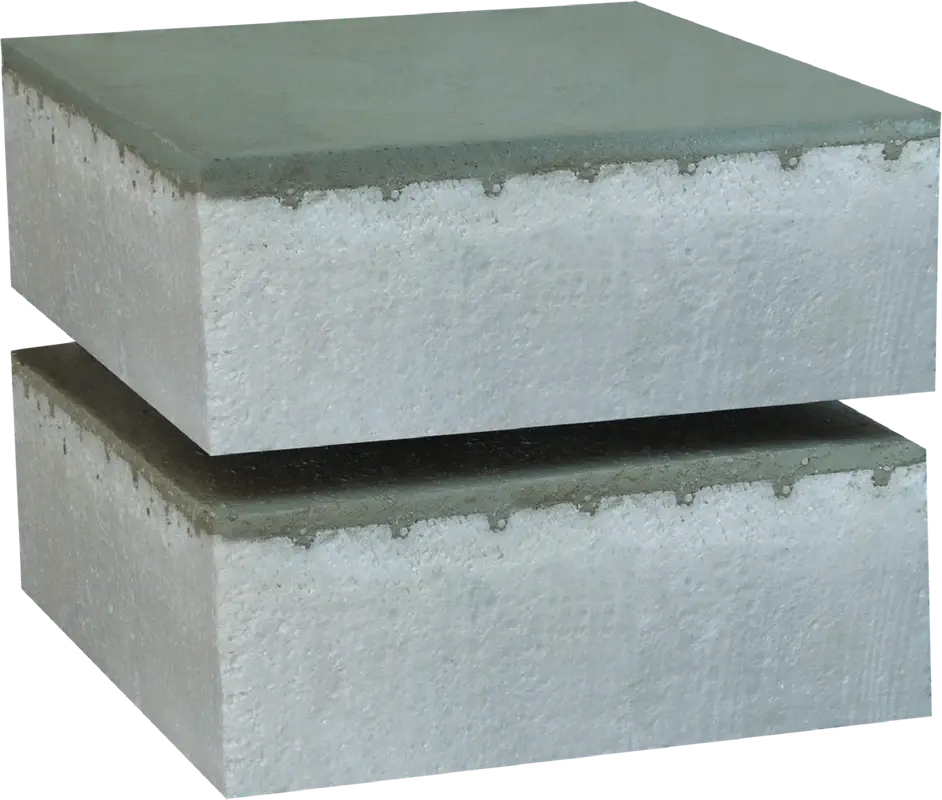
Lightweight EPS blocks with a polymeric concrete facing for ribbed slabs, bridge slabs, tunnel ceilings and interior level raising.
For non-load-bearing slab infill set out within a designed reinforced concrete structure. Core: Expanded polystyrene (EPS) Facing: Lightweight polymeric concrete, one or two sides
EPS aggregate · lightweight mixes
Lightweight EPS beads for lightweight concrete and thermal insulation applications.
For trial-designed lightweight concrete and slope screeds using EPS aggregate. Material: Expanded polystyrene beads Colour: White
Foaming agent · cellular concrete
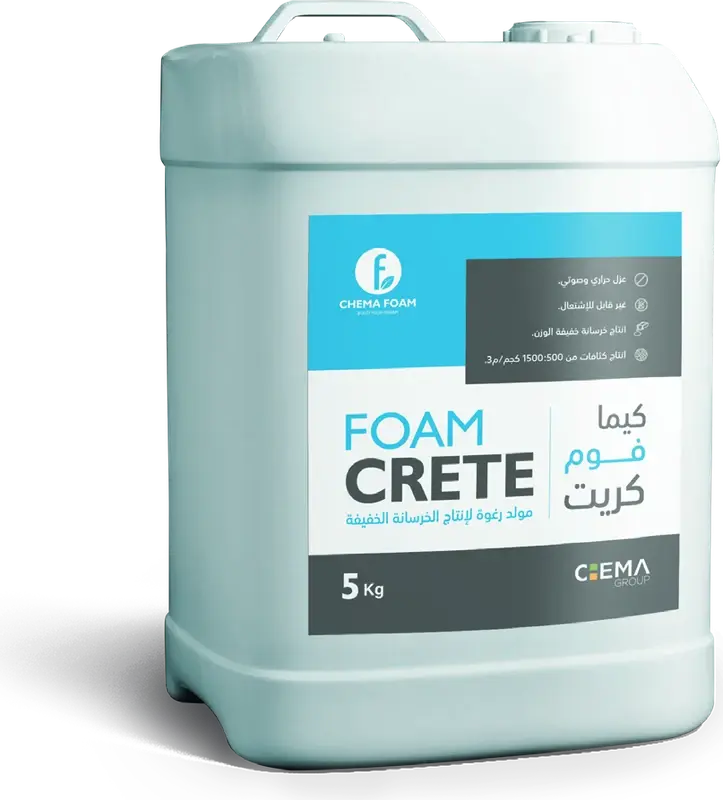
Liquid foaming admixture for lightweight and foamed concrete.
For cellular concrete produced with the specified foam generation and mix control. Form: Colourless liquid Density: 1.010 g/cm³
SBR latex · bonding & mortar modification
Water-based SBR bonding agent and modifying admixture for concrete and mortars.
For compatible cementitious bond coats and mortar modification at the specified dilution. Base: Water-based styrene-butadiene rubber (SBR) Appearance: Milky-white liquid
Non-shrink cementitious grout · ASTM C1107
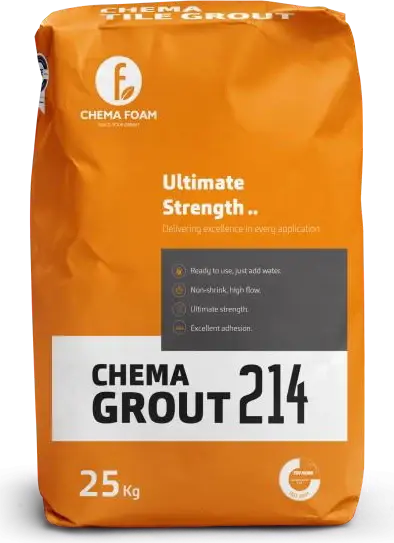
Non-shrinkage, high-flow cementitious grout for anchoring, equipment grouting and concrete repairs.
For designed baseplate bedding and anchor pockets within the product’s placement limits. Appearance: Grey powder Listed standard: ASTM C1107
Separate structural concrete, void infill, lightweight screed and support bedding on the drawings. Confirm loads, target densities and interface requirements.
Check product ratios and approve trial mixes for lightweight concrete. Verify formwork, restraint and substrate preparation for the selected task.
Secure Chema Block during casting and control lightweight mix density. Apply SBR interfaces and grout pours separately to their prescribed timing and methods.
Protect fresh cementitious work and record density and strength checks. Remove temporary supports and apply loads only after the required acceptance criteria are met.
 New Administrative Capital, Egypt
A major parliamentary edifice introduces complex concrete forms, where foam-block dimensions and restraint must be coordinated before enclosing…
View the case studyBUILDING TOGETHER
Share your application, quantities and project location to discuss the next step.
Chema Block forms non-load-bearing voids within a designed ribbed slab. Reinforced concrete ribs and topping carry the loads, and the casting support and restraint must be designed accordingly.
No: Beads is EPS aggregate, while Foam Crete is a foaming agent for cellular concrete. Each route needs its own trial mix, density control, strength verification and curing method.
Bond SBR modifies specified cementitious bonding slurries and mortars. Grout 214 is a separate non-shrink bedding product; select it for the designed support geometry and placement conditions.
Prepare the substrate and use leak-tight formwork with the specified head and venting. Place grout continuously from one side within its working time, then cure before loading.
Coordinate lightweight slab infill, roof screeds and precision structural interfaces with materials that perform distinct physical roles. Chema Block EPS void formers reduce concrete volume in designed one-way or two-way ribbed slabs; Chema Beads and Chema Foam Crete create lightweight mixes. Chema Bond SBR improves cementitious bonding, while Chema Grout 214 provides non-shrink support beneath baseplates and around anchors.